
Last updated September 23, 2026
Free visual inspection and a written scope of work before any mitigation begins - photos, moisture readings, and drying logs go in your claim file
The scope we write is the scope we bill. Anything new gets shown to you, in writing, before we touch it.
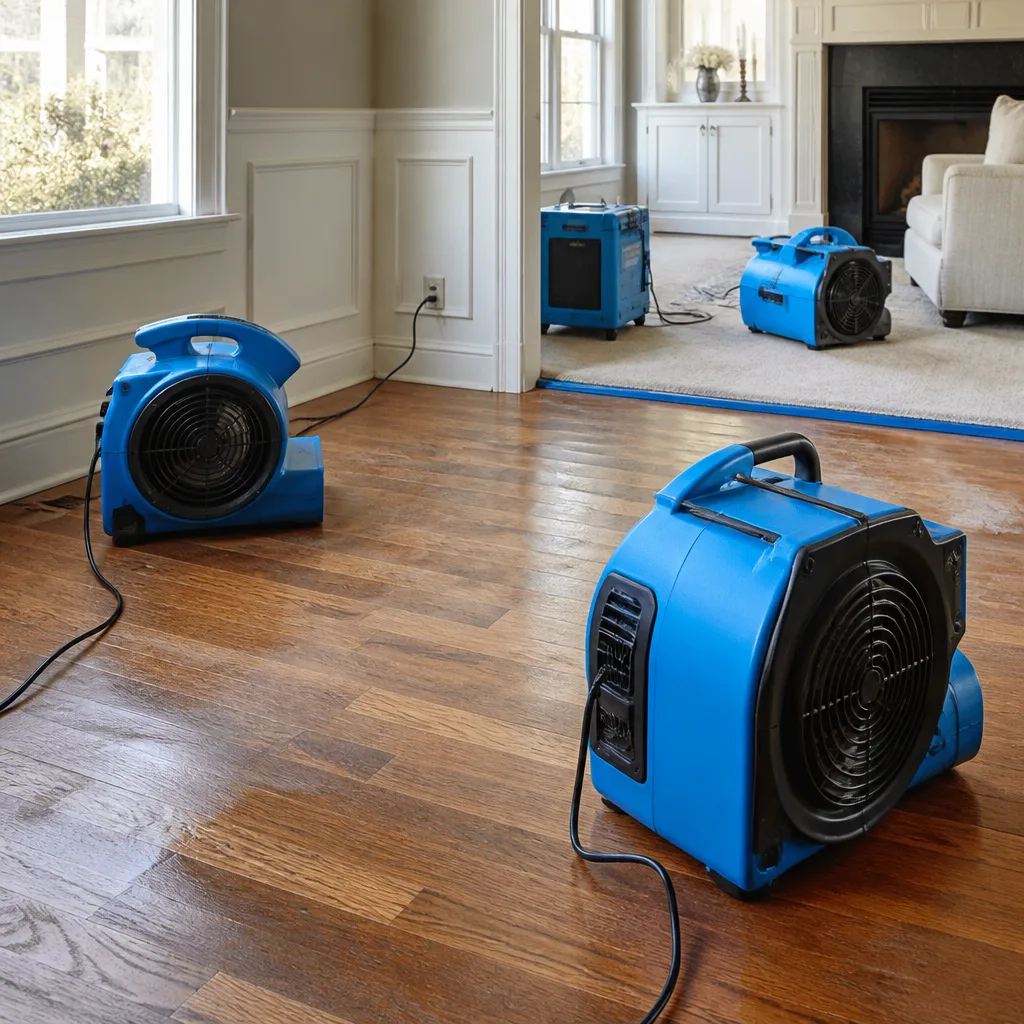
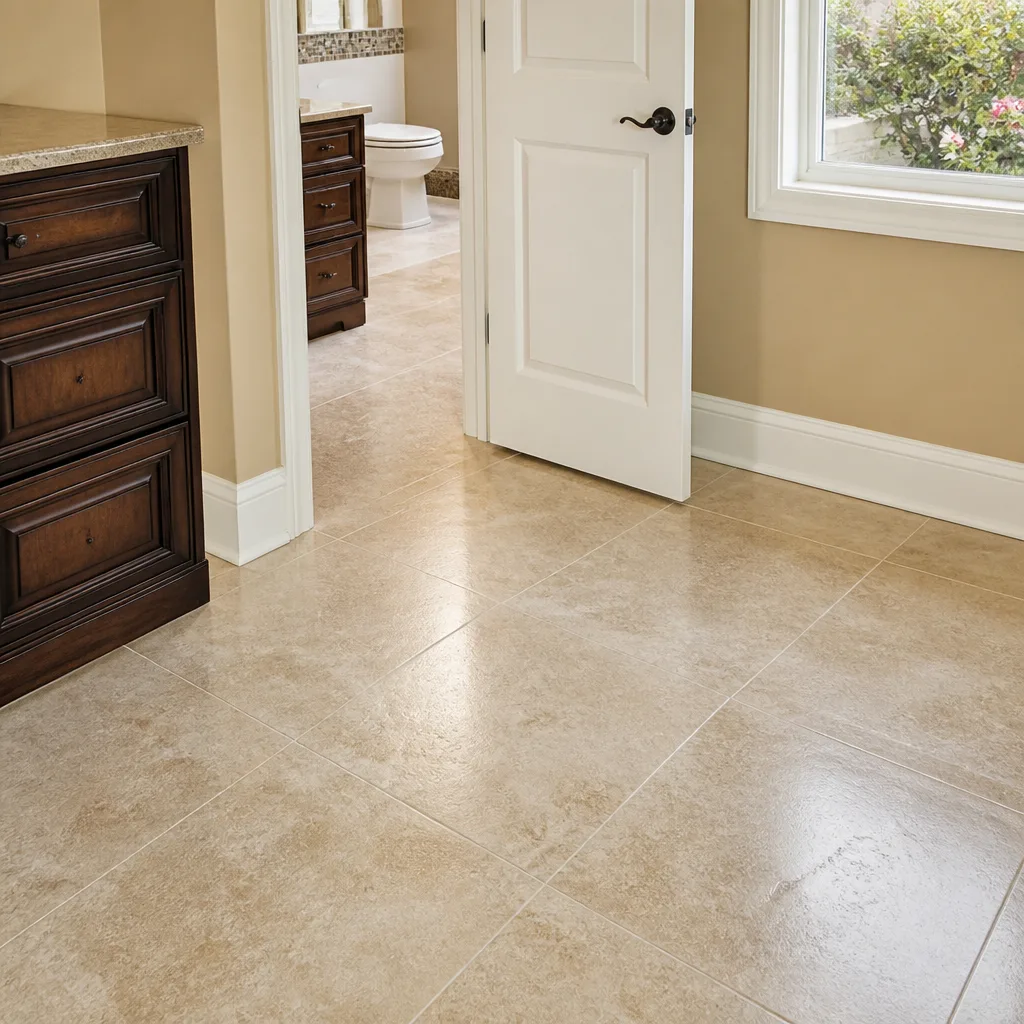
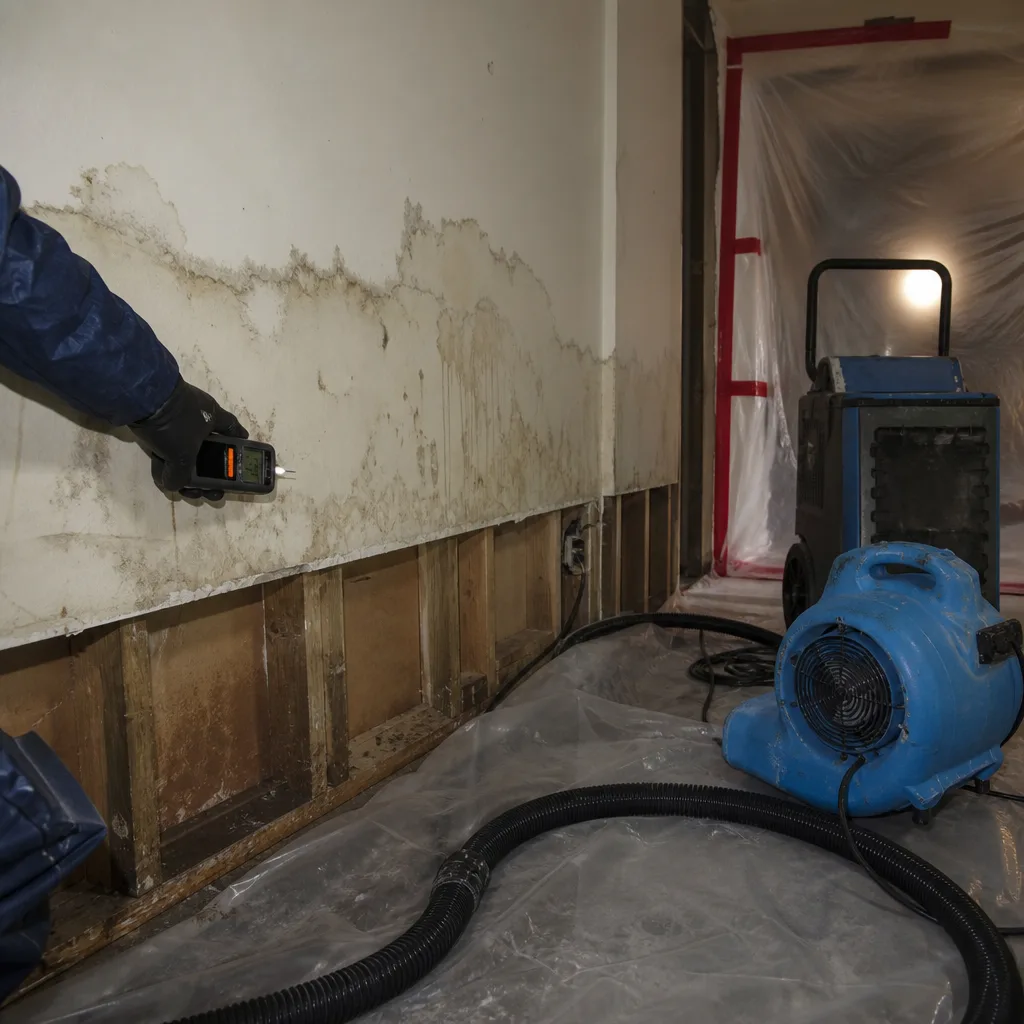 Before
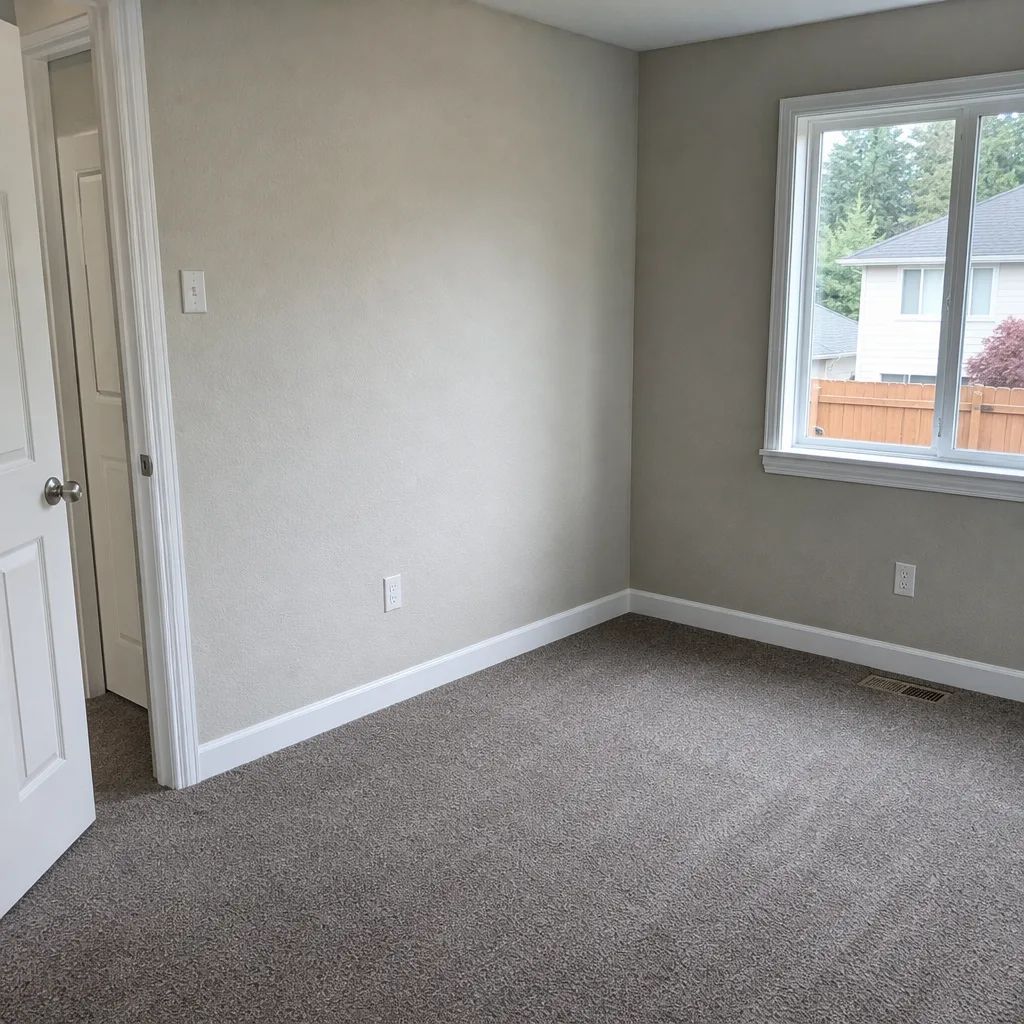 After
After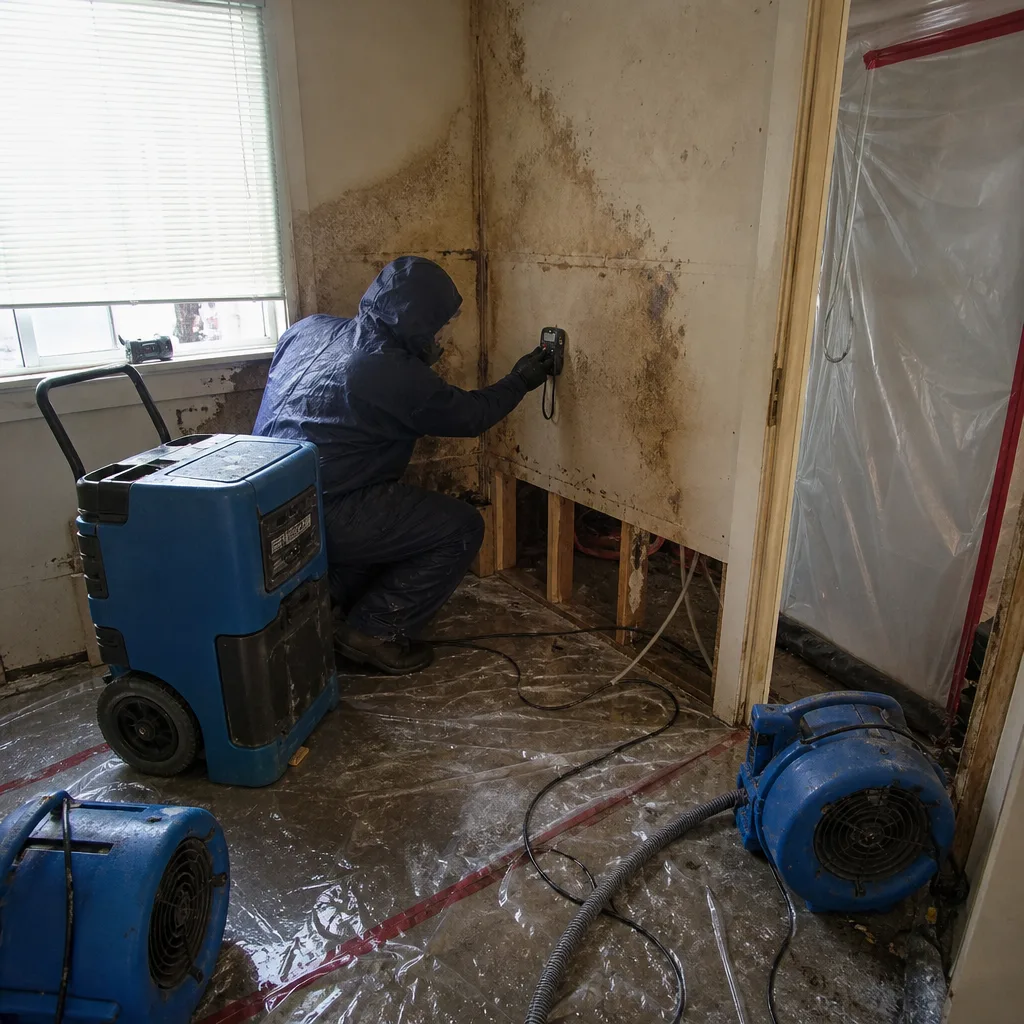 Before
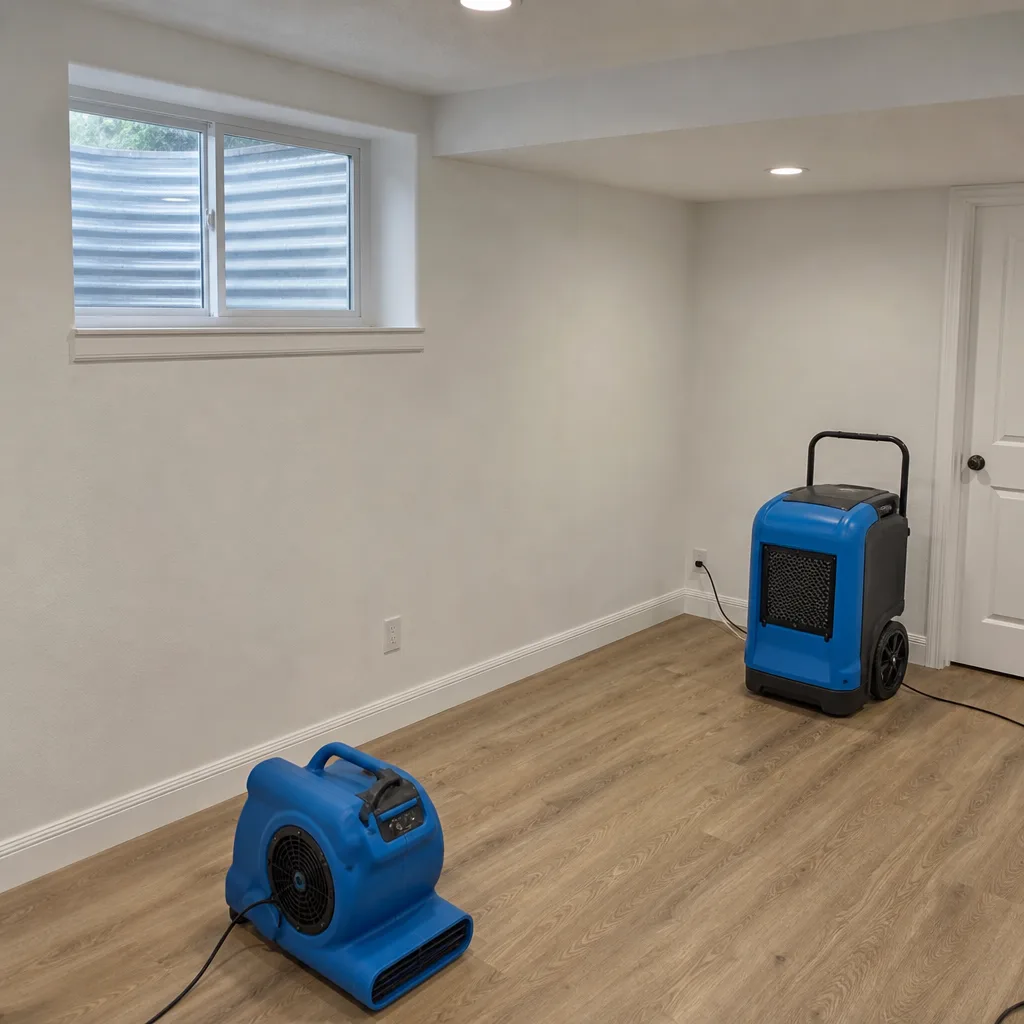 After
After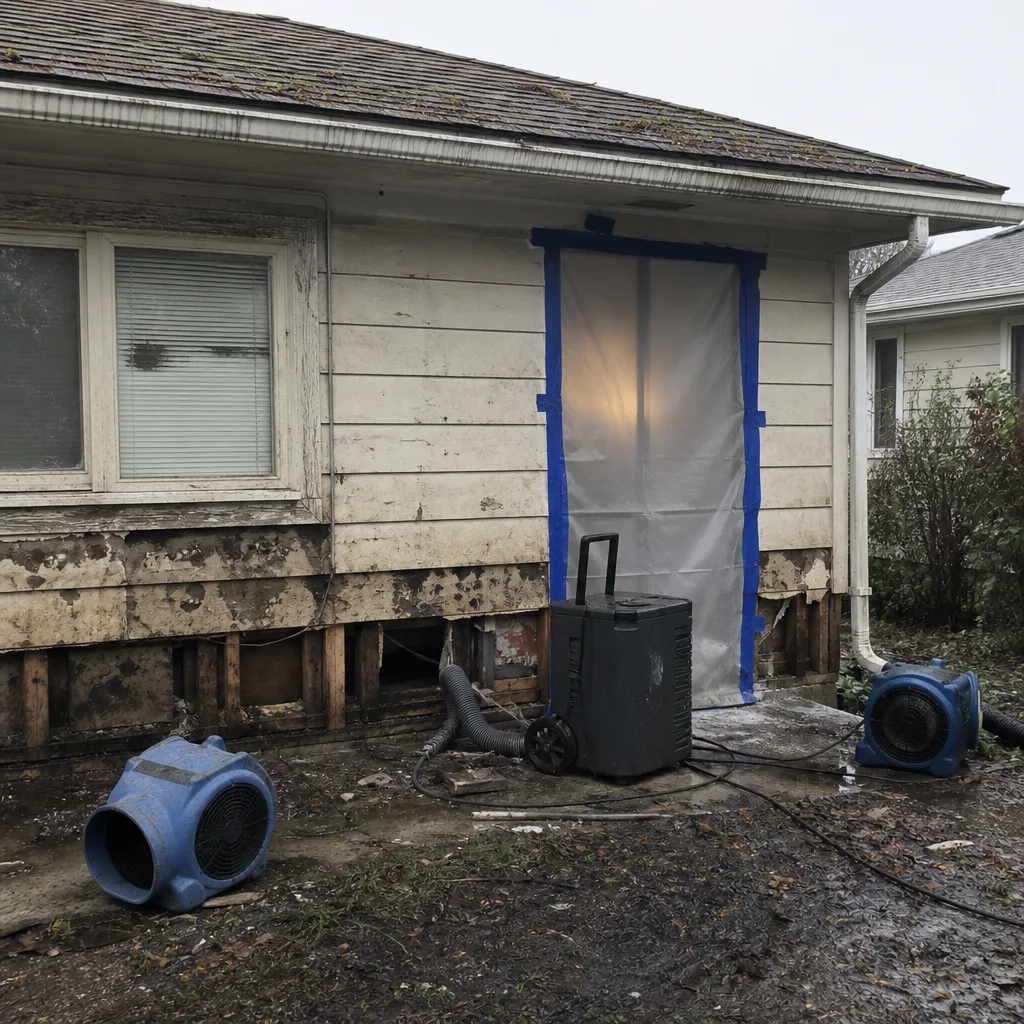 Before
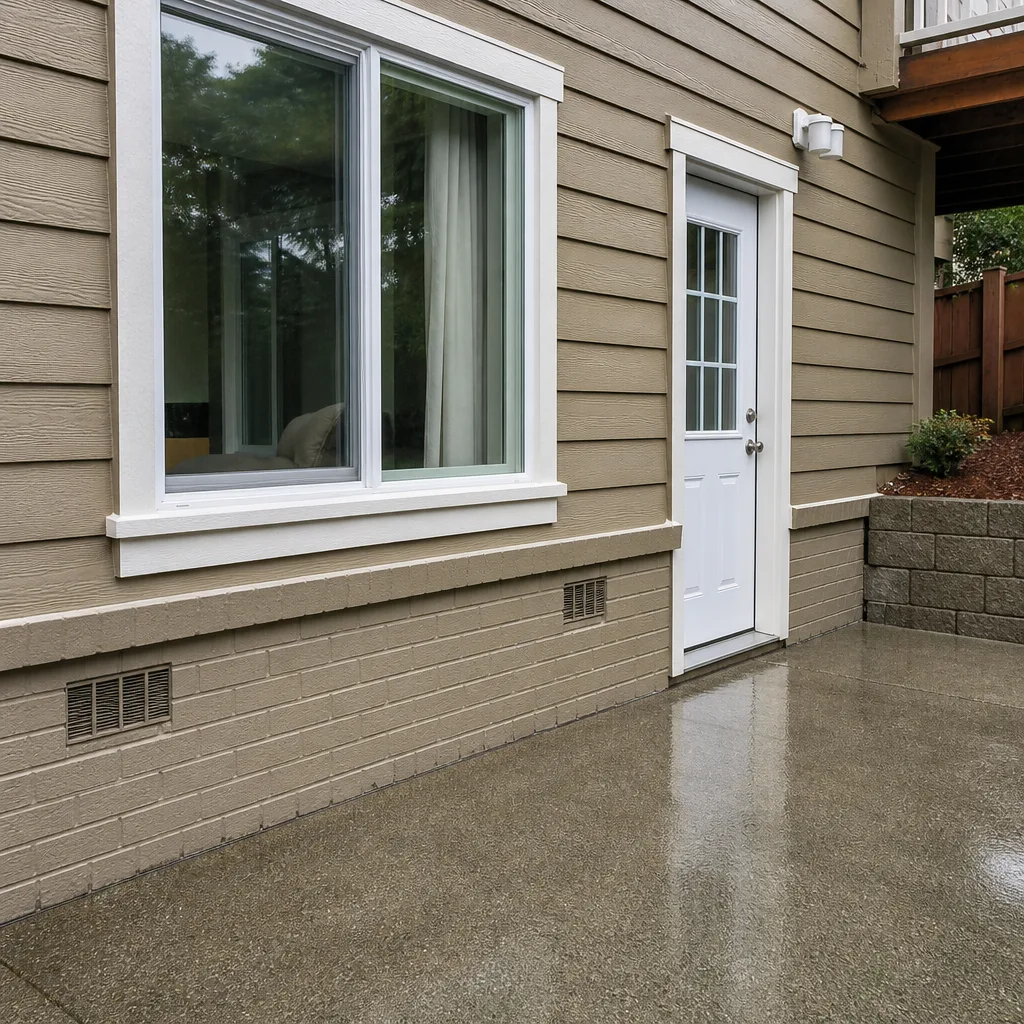 After
AfterThe Complete Guide to Damage Restoration in Puyallup
A restoration job closed without a final moisture reading is not a closed job - it is an open liability. Puyallup’s wet climate means secondary damage claims are common, and the homeowners who win those claims are the ones who can produce a room-by-room drying log, not just a receipt. In our experience restoring over 12,000 homes since 2011, the difference between a fully paid claim and a denied supplemental isn’t the quality of the drying - it’s whether someone documented the quality of the drying. This guide maps every phase of damage restoration in Puyallup, from the first emergency call to the final signed release, so nothing falls through the chain. For Damage Restoration Warning Signs: A Puyallup Homeowner’s Reference Guide, see our companion resource.
Quick Answer
Damage restoration in Puyallup is a five-phase documented process: emergency mitigation, moisture mapping, structural drying, reconstruction, and final documentation. Each phase produces specific deliverables - written scope, daily drying logs, psychrometric readings, photo records - that together form the job file an insurer needs to approve payment. Because Puyallup receives over 38 inches of annual rainfall concentrated October through April, post-job moisture monitoring is more critical here than in drier regions, and gaps in documentation, especially missing readings on day 2 or 3 of drying, are the most common reason adjusters reduce supplemental claims. Our Damage Restoration Cost Breakdown: The Puyallup Homeowner’s Reference for 2026 shows how documentation gaps translate to out-of-pocket costs.
Table of Contents
- The Five Phases of Restoration (And What You Should Receive at Each)
- Moisture Thresholds That Define ‘Dry’ in Western Washington
- How Puyallup’s Rainfall Pattern Creates Recurring Risk Windows
- What a Complete Job File Looks Like
- Why Documentation Gaps Cost Homeowners Their Claims
- Choosing a Restoration Contractor in Puyallup
- Working With Insurance: The Documentation Chain
- Common Mistakes to Avoid
- When to Call a Professional
- Frequently Asked Questions
 Before
 After
AfterThe Five Phases of Restoration (And What You Should Receive at Each)
Most homeowners in Puyallup think of restoration as a single event: the day the trucks show up. In reality, it is a chain of documented handoffs, and a gap anywhere in that chain is what an insurer uses to underpay or deny. Here are the five phases, with the deliverable you should receive at each.
Phase 1: Emergency Mitigation
This is the stop-the-bleeding phase. The crew extracts standing water, removes compromised materials that cannot be dried in place, and sets up containment if Category 2 or 3 water is present. The deliverable is a written emergency scope, signed by you before work begins, with a price attached. Haven Standard, Clause 1: written price before work starts. No exceptions.
What this looks like in practice: A crew arrives at a home in South Hill Puyallup after a washing machine supply line fails on the second floor. They extract water from the carpet and pad, remove the pad because it is Category 2 gray water, and cut drywall 24 inches above the visible water line to expose the wall cavity. You receive a one-page emergency scope with line items: extraction, pad removal, disposal, initial equipment set. The price is $X. You sign. Work begins.
Phase 2: Moisture Mapping
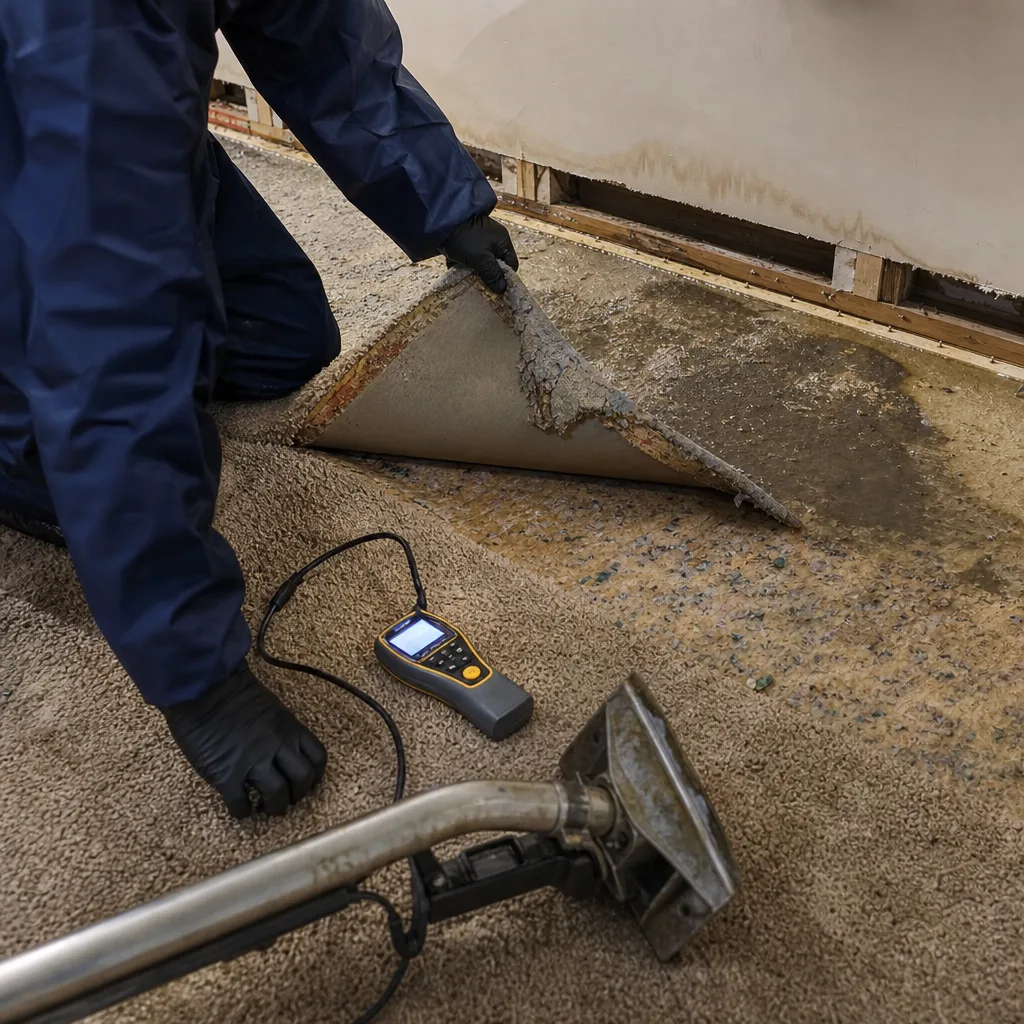
Once standing water is gone, the crew maps what remains. This means penetrating moisture meters on framing, non-penetrating meters on drywall and flooring, and thermal imaging to find trapped moisture in wall cavities and subfloors. The deliverable is a moisture map - a floor plan with readings keyed to each room, dated and initialed.
In Puyallup’s older neighborhoods like the downtown historic district, we regularly find balloon framing that allows vertical moisture migration across multiple floors. A moisture map that only captures the obvious room misses the stud bay two floors down. The map should show every reading, every location, every time.
Phase 3: Structural Drying
This is where equipment runs and the real documentation begins. Professional-grade drying systems from Dri-Eaz, Phoenix, and XPOWER produce air movement; dehumidifiers manage vapor pressure. The crew adjusts equipment daily based on psychrometric data - temperature, relative humidity, and specific humidity readings that tell us whether the air in the drying chamber can still absorb moisture from wet materials.
The deliverable is a daily drying log. Every visit, every reading, every equipment adjustment. In our Puyallup jobs, these logs typically run 5-10 days for a standard water loss, longer if we hit the November-January period when outdoor humidity slows drying. The log should show:
- Date and time of each visit
- Equipment type, serial number, and placement
- Psychrometric readings at multiple points in the affected area
- Moisture content readings for each material class (wood framing, drywall, subfloor)
- Technician initials
Phase 4: Reconstruction
Drying ends when materials hit their dry standard. Reconstruction begins with a new written scope - this is not the emergency scope, because now we know exactly what was damaged and what remains. The deliverable is a line-item rebuild estimate, signed before work begins, with material specifications (brand, grade, dimension) and a completion timeline.
Reconstruction in Puyallup often involves matching materials in subdivisions built during the 1990s-2000s growth boom. A written scope that specifies “replace with equivalent” is not enough. The scope should name the product: 1/2-inch USG Sheetrock Brand Plus Lightweight, or equivalent approved in writing by the homeowner. This prevents the “close enough” problem that generates complaints six months later.
Phase 5: Final Documentation
The last phase is not a construction phase. It is a documentation phase. The deliverable is a complete job file: all scopes, all logs, all photos, the signed completion certificate, and the 365-Day Done Right Promise under The Haven Standard. This is what you keep. This is what your insurer keeps. This is what protects you if secondary damage appears six months later.
Moisture Thresholds That Define ‘Dry’ in Western Washington
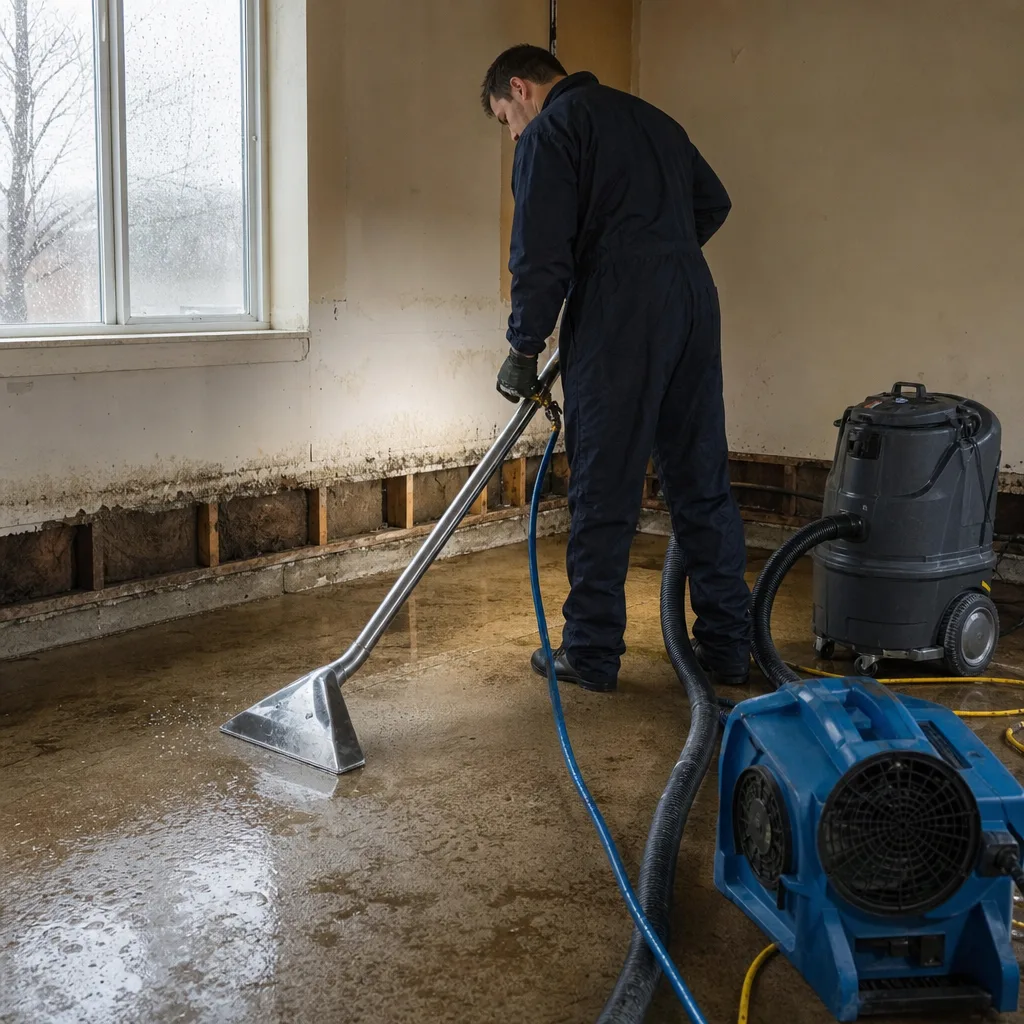
“Dry” is not a feeling. It is a number, and the number changes by material and by climate zone. In Puyallup’s marine west coast climate, with average relative humidity of 75-85% in winter months, the drying target must account for ambient conditions that would be considered “wet” in Phoenix or Denver.
Here are the moisture content (MC) percentages we use as dry standards for Puyallup jobs, documented to IICRC S500 standards:
| Material | Dry Standard (% MC) | Measurement Method |
|---|---|---|
| Softwood framing (fir, pine) | 12-15% | Pin-type moisture meter, insulated pins |
| Hardwood flooring (oak, maple) | 9-12% | Pin-type meter, species correction |
| OSB subfloor | 13-16% | Pin-type meter, 7/16″ depth setting |
| Plywood subfloor | 12-15% | Pin-type meter, adjusted for adhesive layers |
| Drywall (paper face) | 0.5-1.0% above baseline | Non-penetrating meter, baseline reading from unaffected area |
| Concrete slab | 4.0 lbs/1000 sq ft/24 hr (calcium chloride test) | ASTM F1869 or in-situ RH probe per ASTM F2170 |
These numbers matter because an insurer will ask for them. A job file that states “area was dry” without citing the specific MC percentage and the baseline reading from an unaffected area is a job file that an adjuster can challenge. We have seen supplemental claims reduced by 30-50% because the original drying log stopped at “equipment removed” without a final moisture reading.
Vapor pressure differential is the engine that drives drying. It is the difference between the vapor pressure in the wet material and the vapor pressure in the air. When we set dehumidification capacity in Puyallup jobs, we calculate the grains of moisture per pound of air that must be removed to maintain a vapor pressure differential sufficient to pull moisture from the materials. In October, when outdoor air might carry 80 grains, we need more dehumidification capacity than in July, when outdoor air might carry 55 grains. The daily drying log should show these calculations, or the technician is guessing.
How Puyallup’s Rainfall Pattern Creates Recurring Risk Windows
Puyallup averages over 38 inches of annual rainfall, with roughly 75% falling October through April. This is not a statistic for the weather report. It is a risk schedule for your home. Before work begins, understand Damage Restoration Permits, Codes & Inspections in WA: What You Need to Know.
The concentrated wet season creates three specific conditions that affect restoration work in Puyallup differently than in drier or more evenly distributed climates:
- Slower natural drying in winter losses. When outdoor relative humidity runs 85-95% for weeks, opening windows to “air out” a water-damaged room introduces more moisture than it removes. Mechanical dehumidification becomes the only viable drying method, and equipment must run longer. A drying plan written for summer conditions will fail in January.
- Ground saturation and hydrostatic pressure. By February, the water table in the Puyallup Valley is typically at its highest. Basement and crawl space losses that might dry from below in August will wick continuously from saturated soil in winter. The moisture map must include sub-slab or crawl space readings, and the drying plan must address the ongoing moisture source, not just the visible damage.
- Post-job monitoring is more critical. In a climate where ambient humidity regularly exceeds the equilibrium moisture content of wood framing, materials that test “dry” on day 10 can reabsorb moisture from the air if the HVAC system is not maintaining controlled conditions. We recommend 30-day follow-up moisture readings for Puyallup jobs completed November through March, documented and added to the job file.
In the Sumner-Bonney Lake area just east of Puyallup, we see additional complication from the Puyallup River floodplain. Homes in the valley floor, particularly those built before modern flood control infrastructure, may experience recurring water intrusion during high-water events. Documentation of prior losses becomes critical for these properties, both for insurance history and for identifying chronic moisture conditions that promote mold growth.
What a Complete Job File Looks Like
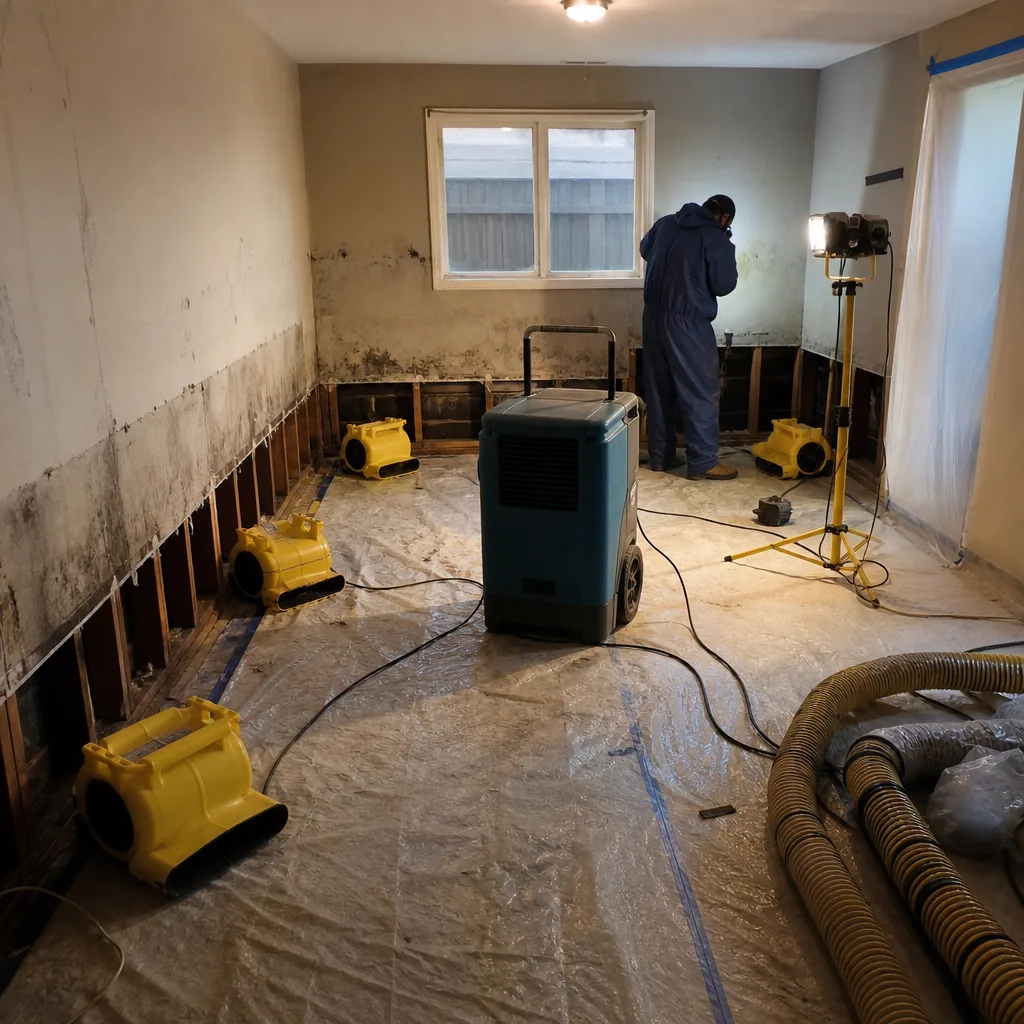
The job file is the product. The rebuilt wall is visible, but the file is what makes the rebuild defensible. Here is what a complete file contains, in order, every time.
1. Initial written scope, signed before work begins. Haven Standard, Clause 1. This is the contract. It lists every line item with a price. No scope-creep additions once the crew is inside.
2. Photo record, keyed to a floor plan. Every photo is labeled by room, by date, by time, and by technician. Before, during, after. The floor plan shows camera positions. An adjuster can reconstruct the entire job from these photos without visiting the site.
3. Moisture map. The initial readings, with baseline readings from unaffected areas for comparison. Updated readings at each visit until dry standard is achieved.
4. Daily drying logs. Psychrometric data: temperature, relative humidity, specific humidity, dew point. Equipment inventory: make, model, serial number, placement. Technician initials. Equipment adjustment rationale.
5. Material testing records. If asbestos or lead is suspected in pre-1990 construction, lab results before disturbance. Category 3 water? Bacterial sampling if required by insurer or local health jurisdiction.
6. Rebuild scope, signed before reconstruction begins. Line-item materials, specifications, timeline. Change orders in writing, signed by both parties.
7. Final moisture readings. Every material, every room, at or below dry standard. Date and technician initials.
8. Completion certificate and 365-Day Done Right Promise. Signed by the homeowner and a company representative. The Promise is not a marketing line. It is a written warranty under The Haven Standard, with a specific procedure for invoking it.
We deliver this file to every Puyallup homeowner at job completion, typically as a PDF with an index. The homeowner keeps it. The insurer receives a copy. If secondary damage appears, or if the home is sold and the buyer’s inspector asks questions, the file answers.
Why Documentation Gaps Cost Homeowners Their Claims
The most common reason supplemental claims are reduced or denied is not that the work was done poorly. It is that the documentation does not prove the work was done well. Here are the specific gaps we see in files that come to us for second opinions.
Missing moisture readings on day 2 or 3 of drying. This is the gap that kills more claims than any other. Day 1 shows the emergency. Day 4 or 5 shows equipment still running. But days 2 and 3 are when drying progress is measured, when equipment is adjusted, when the technician proves the plan is working. A log that jumps from day 1 to day 5 suggests no one checked, or that the readings were unfavorable and were omitted. Adjusters know this. They look for it.
No baseline readings from unaffected areas. “Drywall at 12% MC” means nothing without knowing what the drywall in the next room reads. Baseline establishes the target. Without it, any moisture reading is unmoored.
Photos without context. A photo of a dehumidifier in a hallway proves the equipment was present. It does not prove it was running, that it was the correct capacity for the space, or that it was positioned for optimal air flow. Photos need labels: date, time, room, equipment settings, technician.
Vague scope language. “Repair water damage to kitchen” is not a scope. “Remove and replace 32 linear feet of 1/2-inch drywall, 48 inches high, on north and east walls of kitchen; replace 12 linear feet of oak baseboard; apply two coats Benjamin Moore Regal Select, color matched to existing” is a scope. The insurer can price it. The homeowner can inspect against it. The contractor is bound to it.
No psychrometric data. A drying log that lists equipment but not air readings is a log that does not prove drying occurred. Psychrometric data - the temperature, relative humidity, and specific humidity of the drying chamber - is how we know the dehumidification is working. Without it, the log is just an equipment inventory.
We have reviewed competitor estimates for Puyallup homeowners who were told their $15,000 water loss was “documented” and found none of these elements present. The homeowner called us for a free second opinion. We found the gaps. The supplemental claim was filed with proper documentation. The homeowner was made whole.
Choosing a Restoration Contractor in Puyallup
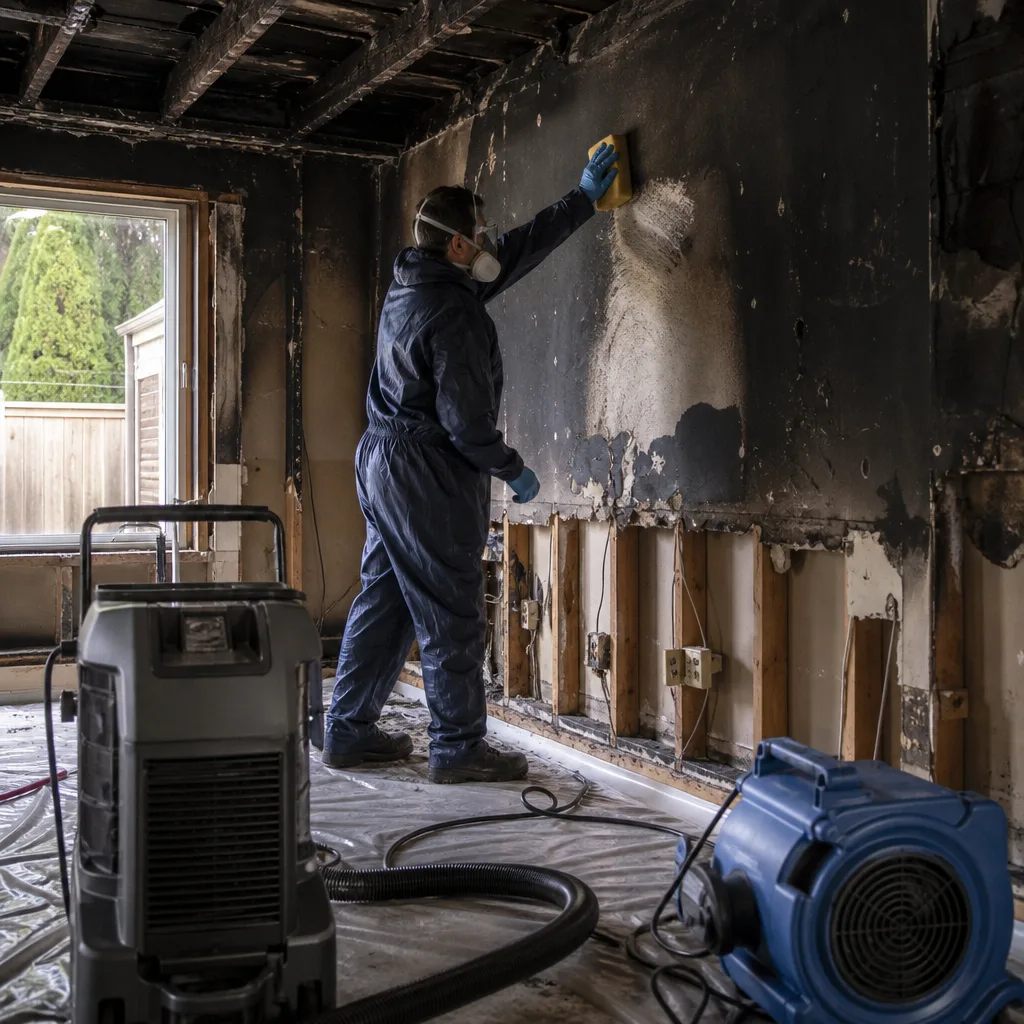
Puyallup’s restoration market includes independent operators, regional companies, and national brands with local franchises. The question is not size. It is documentation discipline.
Here is what to verify before signing:
- Written price before work begins, every time. Ask for it. If the answer is “we’ll figure that out once we start,” the answer is no. Haven Standard, Clause 1 exists precisely to end that habit.
- Daily drying logs as standard, not an upsell. Some contractors charge extra for documentation. Documentation is not an add-on. It is the work.
- Photo record on every visit, delivered with the job file. Not “we took photos.” “Here are your photos, labeled, dated, keyed to this floor plan.”
- Technicians who are named, licensed, insured, and background-checked. You should know who is in your home. The license number should be available on request.
- Live phone coverage, 24 hours a day, 7 days a week. Water does not wait for business hours. Neither should your contractor.
- Equipment from recognized manufacturers, documented to industry standards. Dri-Eaz, Phoenix, XPOWER, B-Air, Injectidry - these are the brands that produce equipment certified to IICRC, RIA, and IFA protocols. The contractor should be able to name what they use and why.
In Puyallup’s competitive market, we also see contractors who compete on speed of arrival alone. Speed matters in emergency mitigation - water moves fast, and every hour of delay increases the damage footprint. But speed without documentation is just fast negligence. The contractor who arrives in 30 minutes but leaves no drying log has not restored your home. They have created a future dispute.
We recommend interviewing two contractors for any non-emergency restoration need. For emergency losses, pre-select your contractor before the loss occurs. Know who you will call. Store the number in your phone. The middle of a water loss is not the time to evaluate documentation practices. Explore more guides & resources to prepare before disaster strikes.
Working With Insurance: The Documentation Chain
Insurance restoration is not a negotiation between homeowner and adjuster. It is a three-party transaction that depends on a chain of documentation from contractor to adjuster to policyholder. When that chain breaks, the homeowner pays.
The contractor’s role is to produce evidence: the scope, the logs, the photos, the readings. The adjuster’s role is to evaluate that evidence against the policy. The homeowner’s role is to verify that the evidence is complete and accurate before signing anything that releases the insurer from further obligation.
Here is how the chain should work:
- Contractor documents the loss. Moisture map, photo record, initial scope. This goes to the insurer within 24 hours of emergency mitigation.
- Adjuster reviews and approves, or requests supplementation. A complete initial file reduces back-and-forth. An incomplete file triggers delays, and delays mean extended equipment rental, temporary housing costs, and frustration.
- Contractor performs drying, documenting daily. Each day’s log is available to the adjuster on request. Adjusters who see consistent, detailed documentation rarely dispute reasonable charges.
- Contractor submits final invoice with complete file. Scope, logs, photos, readings, completion certificate. The invoice references each line item to a specific document.
- Homeowner reviews and signs proof of completion. Only after verifying the file is complete. The 365-Day Done Right Promise should be in hand before signing.
Direct insurance billing can streamline this process, but it does not replace documentation. Even with direct billing, the homeowner retains the right to review the complete file before signing any release. In Puyallup, we coordinate directly with adjusters from all major carriers, providing documentation in the format each carrier prefers. Some want daily uploads to their portal. Some want a single PDF at completion. The format is flexible. The content is not negotiable.
Photo documentation is particularly valuable for Puyallup homeowners who may not be present during drying. Many of our clients work in Tacoma or Seattle and cannot visit the job site daily. The photo record, delivered with each drying log, lets them verify progress remotely. This is standard at DryMark Restoration Puyallup, never an upsell.
Common Mistakes to Avoid
- Waiting to call until you “see how bad it gets.” Water migrates horizontally and vertically through wall cavities, subfloors, and HVAC systems. By the time you see staining on the ceiling below, the damage above has spread across multiple rooms. In Puyallup’s tight construction market, delaying the call often means delaying rebuild by weeks.
- Accepting a verbal estimate. A verbal estimate is not an estimate. It is a guess that becomes a dispute. Haven Standard, Clause 1 requires a written price before work begins. Any contractor who cannot produce one is not following a standard you can enforce.
- Throwing away damaged materials before documenting them. Your insurer may need to see the damaged carpet, the failed supply line, the compromised drywall. Photo-document everything before disposal, and keep samples of materials that may be subject to coverage disputes.
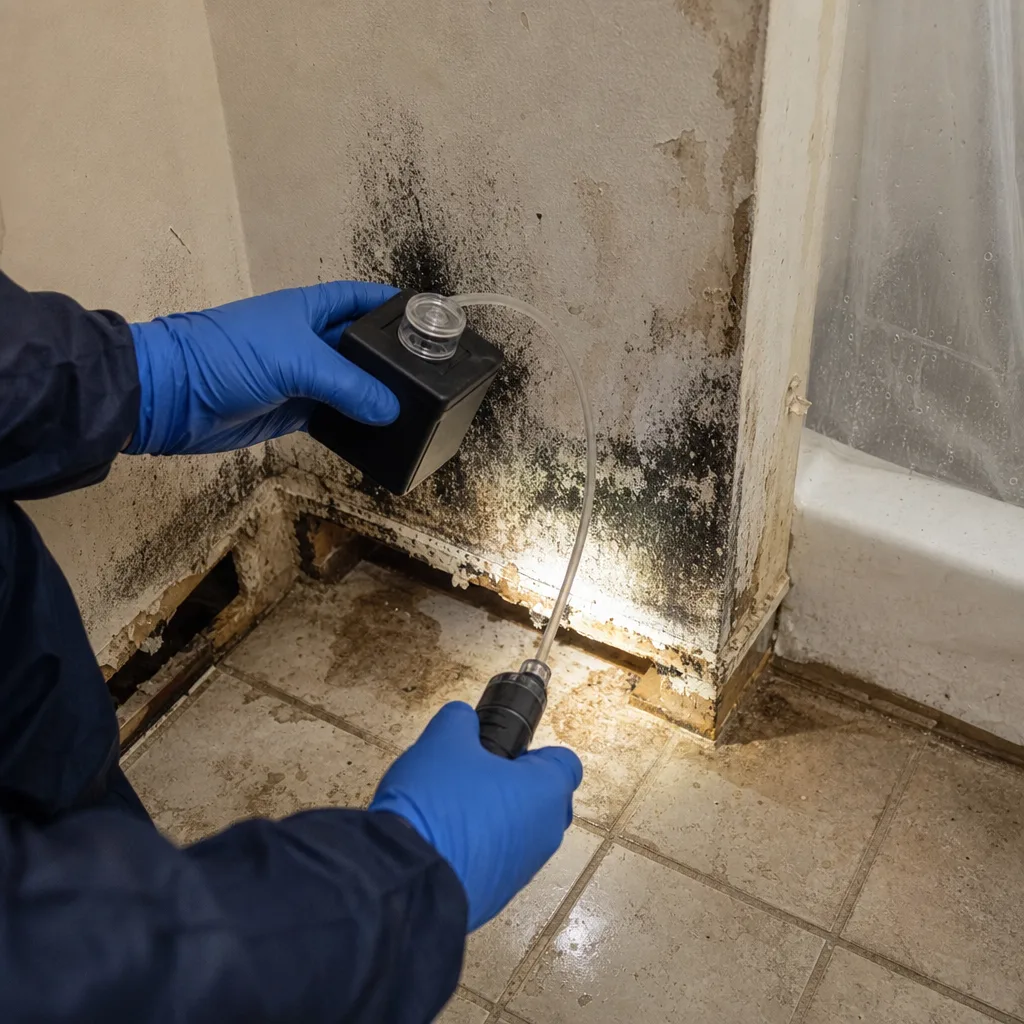
- Assuming “dry to the touch” means dry. We have tested drywall that felt dry to the touch at 18% MC - 6 points above the dry standard for Puyallup’s climate. That drywall will grow mold. The moisture meter, not your hand, determines when drying is complete.
- Signing a release before reviewing the complete job file. Once you sign a release of liability, you cannot file a supplemental claim for hidden damage. The complete file - all logs, all readings, all photos - is your protection against future disputes.
- Hiring the same contractor for mitigation and rebuild without verifying both scopes in writing. Some contractors low-ball the emergency scope to win the job, then recover margin on the rebuild. Each phase needs its own written scope, signed before work begins, with no implied obligation to use the same contractor for both phases.
- Ignoring Puyallup’s winter humidity in post-job monitoring. A home dried to standard in August may reabsorb moisture in January if the HVAC system is not maintaining 30-50% relative humidity. The 30-day follow-up reading catches this before mold does.
When to Call a Professional
Call immediately for any water loss involving Category 2 or 3 water (gray or black water), any fire or smoke damage, any mold growth covering more than 10 square feet, or any sewage backup. These are not DIY situations. They carry health risks, and improper handling voids insurance coverage.
For clean water losses, call if the affected area exceeds what you can dry with a single consumer-grade dehumidifier within 24 hours, or if water has entered wall cavities, subfloors, or HVAC systems. The tools to verify hidden moisture - thermal imaging, borescopes, penetrating moisture meters - are not homeowner equipment.
DryMark Restoration Puyallup offers free estimates in Puyallup - call (253) 447-5249. Every estimate includes a preliminary moisture assessment and a written scope if work is recommended. There is no charge for the assessment, and no obligation to proceed. We also provide free second opinions on any competitor’s written estimate.
Frequently Asked Questions
Most water damage restoration in Puyallup ranges from $1,200 for a contained single-room loss to $8,500+ for multi-room losses with affected subfloors or crawl spaces. Category 3 sewage losses typically run 40-60% higher due to contamination protocols and material disposal. Reconstruction is priced separately, with written scopes starting around $2,500 for drywall and flooring replacement in an average room. Call (253) 447-5249 for an exact quote - estimates are free.
Most homeowners policies cover sudden and accidental water damage from sources like burst pipes, appliance failures, or storm intrusion through damaged roofing. They typically do not cover gradual leaks, maintenance-related failures, or flooding from outside the home unless you carry separate flood insurance. The key to coverage is documentation: a written scope before work begins, daily drying logs, and photo evidence of the source and the damage. We coordinate directly with adjusters and provide the documentation format your carrier requires. Call (253) 447-5249 to discuss your specific policy and loss.
For emergency water and sewage losses, DryMark Restoration Puyallup maintains live phone coverage 24 hours a day, 7 days a week with no voicemail on emergency lines. Dispatch times vary by current call volume and your location within the Puyallup area, but emergency mitigation is prioritized for active water losses where water is still moving. For reconstruction and non-emergency work, we schedule in writing with a specific date and arrival window. Call (253) 447-5249 to check current availability.
Standard water losses in Puyallup typically require 5-10 days of active drying, with winter losses (November-March) often running longer due to high ambient humidity. The timeline depends on material types, the extent of water migration, and whether the loss involved Category 2 or 3 water requiring contamination protocols. We do not guess at completion. We measure daily and remove equipment only when materials hit their documented dry standard. The daily drying log shows exactly when that occurred.
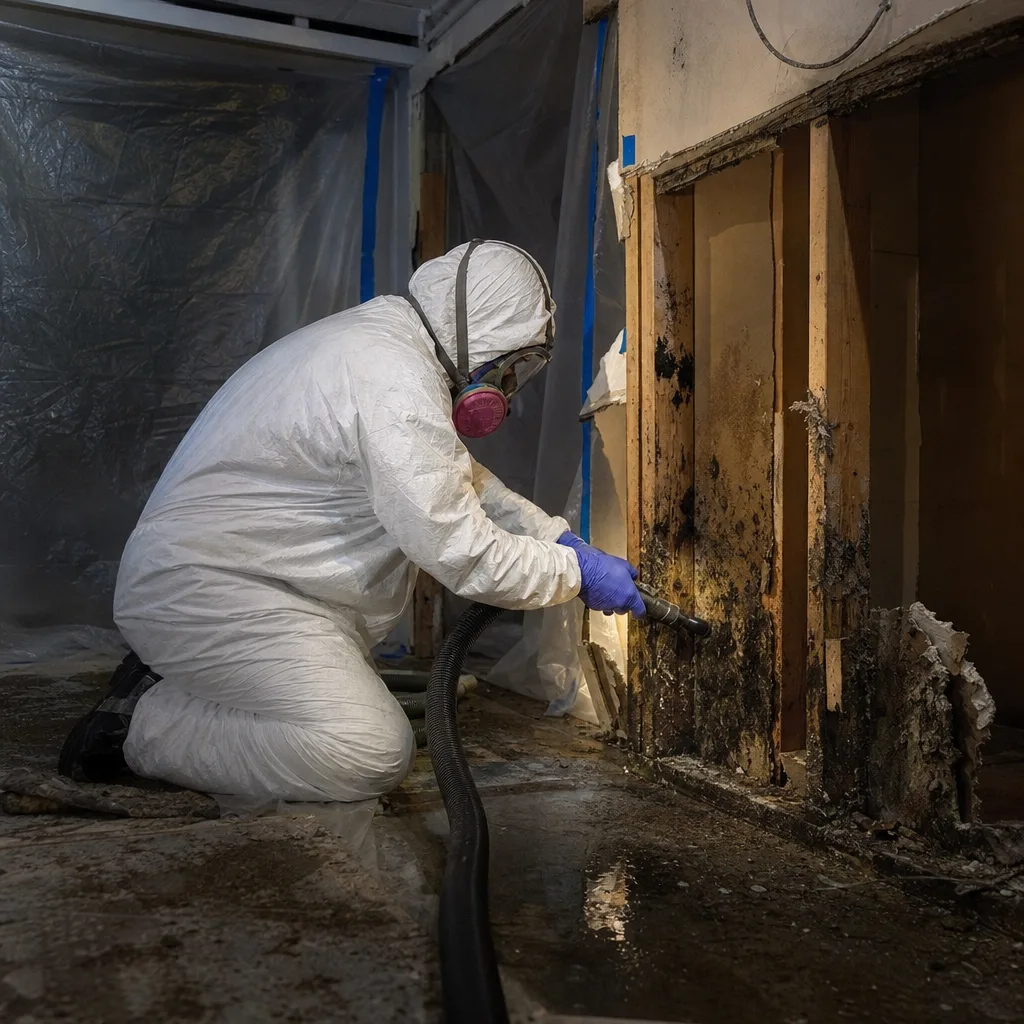
Surface mold growth under 10 square feet on non-porous materials can sometimes be addressed with proper PPE and EPA-registered cleaners, though we still recommend professional assessment to identify the moisture source. Growth exceeding 10 square feet, any growth on porous materials like drywall or insulation, or any mold resulting from Category 2 or 3 water requires professional remediation per IICRC S520 standards. Disturbing large mold colonies without containment spreads spores through the HVAC system. We provide mold remediation in Puyallup with documented containment, air filtration, and post-remediation verification.
Puyallup’s concentrated wet season (38+ inches October-April), high winter humidity, and river valley geography create conditions that extend drying timelines and increase reabsorption risk. Homes in the Puyallup Valley floodplain face recurring hydrostatic pressure, while older neighborhoods with balloon framing allow vertical moisture migration that complicates damage assessment. Post-job monitoring is more critical here than in drier climates, and documentation gaps are more likely to result in secondary damage claims. A contractor who treats Puyallup like Phoenix will under-document and under-dry.
Request the complete job file from your contractor and review it against the adjuster’s specific objections. The most common disputes involve missing daily drying logs, absent final moisture readings, or scope language that does not match the work performed. If the file is complete and the adjuster still disputes, a supplemental claim with additional documentation may resolve the issue. DryMark Restoration Puyallup provides free second opinions on any competitor’s written estimate or disputed invoice - we will review the documentation and identify gaps or errors at no charge. Call (253) 447-5249.
The Bottom Line
Damage restoration in Puyallup is not a single event. It is a documented chain of five phases, each producing specific deliverables that together form the job file an insurer will pay without a fight. The homeowners who win their claims are not the ones with the most sympathetic stories. They are the ones with room-by-room drying logs, dated moisture readings, and written scopes signed before work began. In a climate where 38 inches of annual rainfall creates recurring risk windows, post-job documentation is as important as the drying itself. The 365-Day Done Right Promise under The Haven Standard exists because we have seen what happens when documentation fails - and we built our company to prevent it.
Written by Alicia Brennan, Owner at DryMark Restoration Puyallup, serving Puyallup since 2011.