
Last updated September 23, 2026
Free visual inspection and a written scope of work before any mitigation begins - photos, moisture readings, and drying logs go in your claim file
The scope we write is the scope we bill. Anything new gets shown to you, in writing, before we touch it.


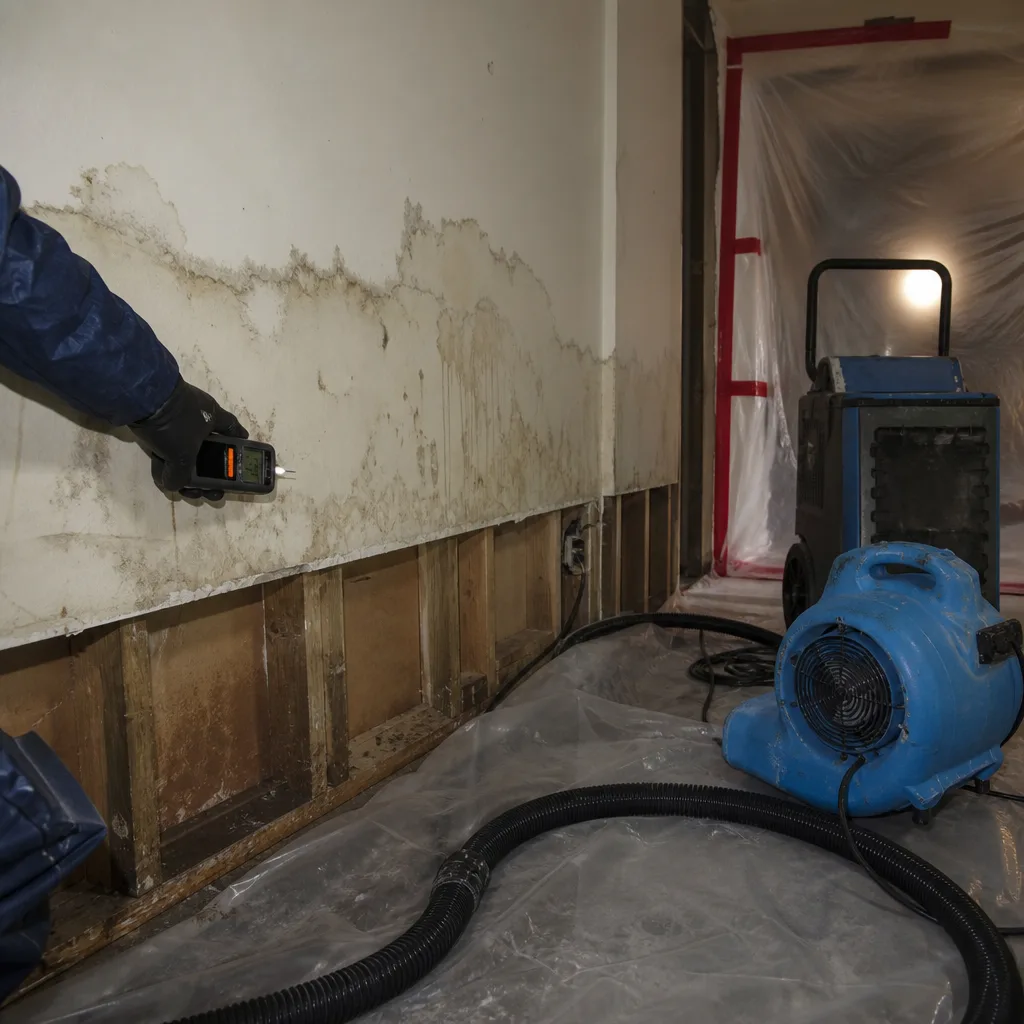 Before
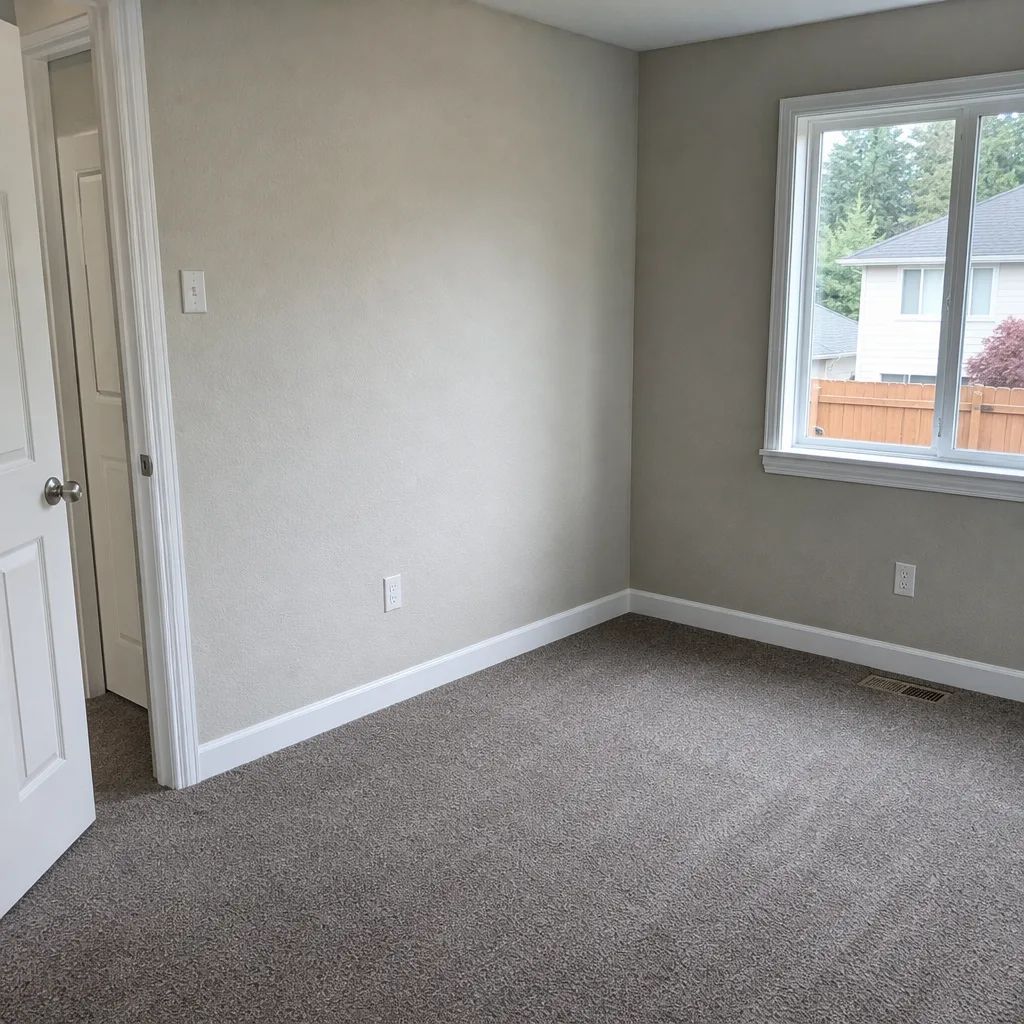 After
After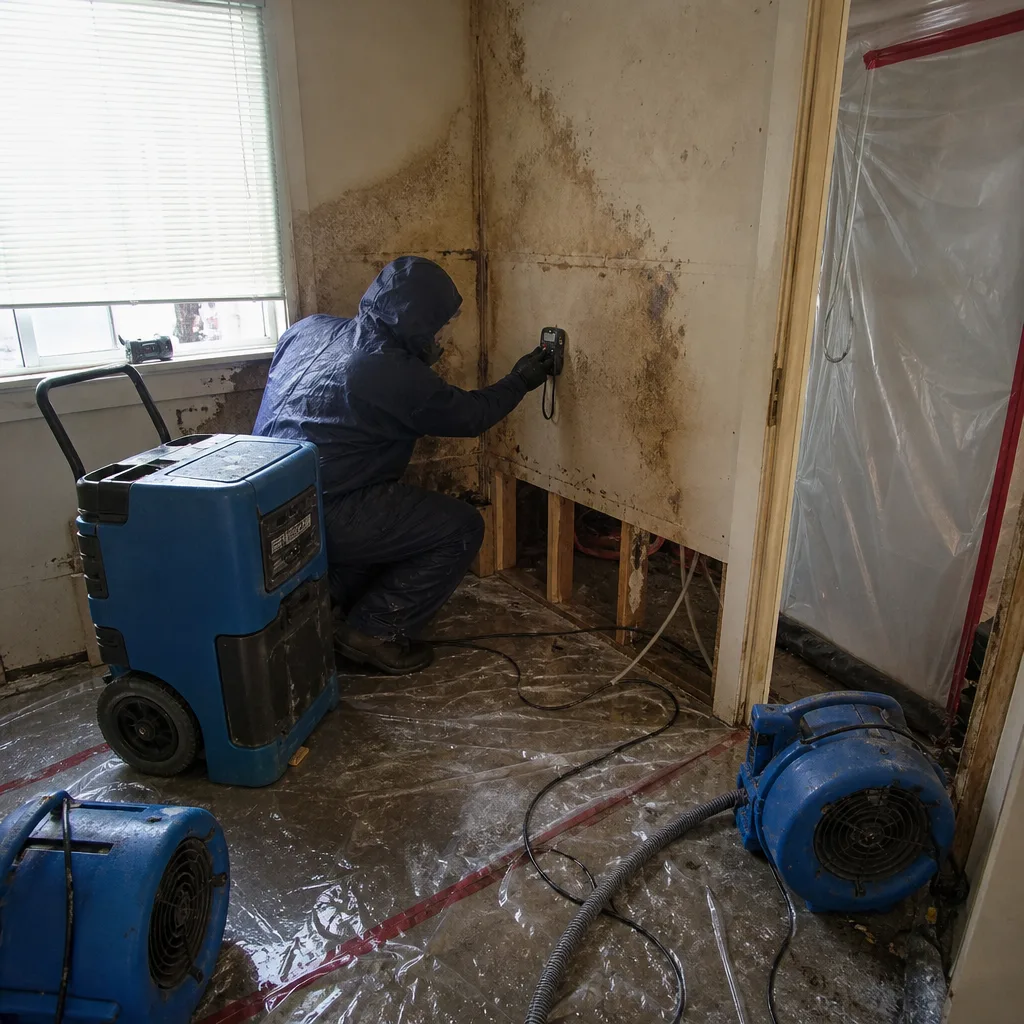 Before
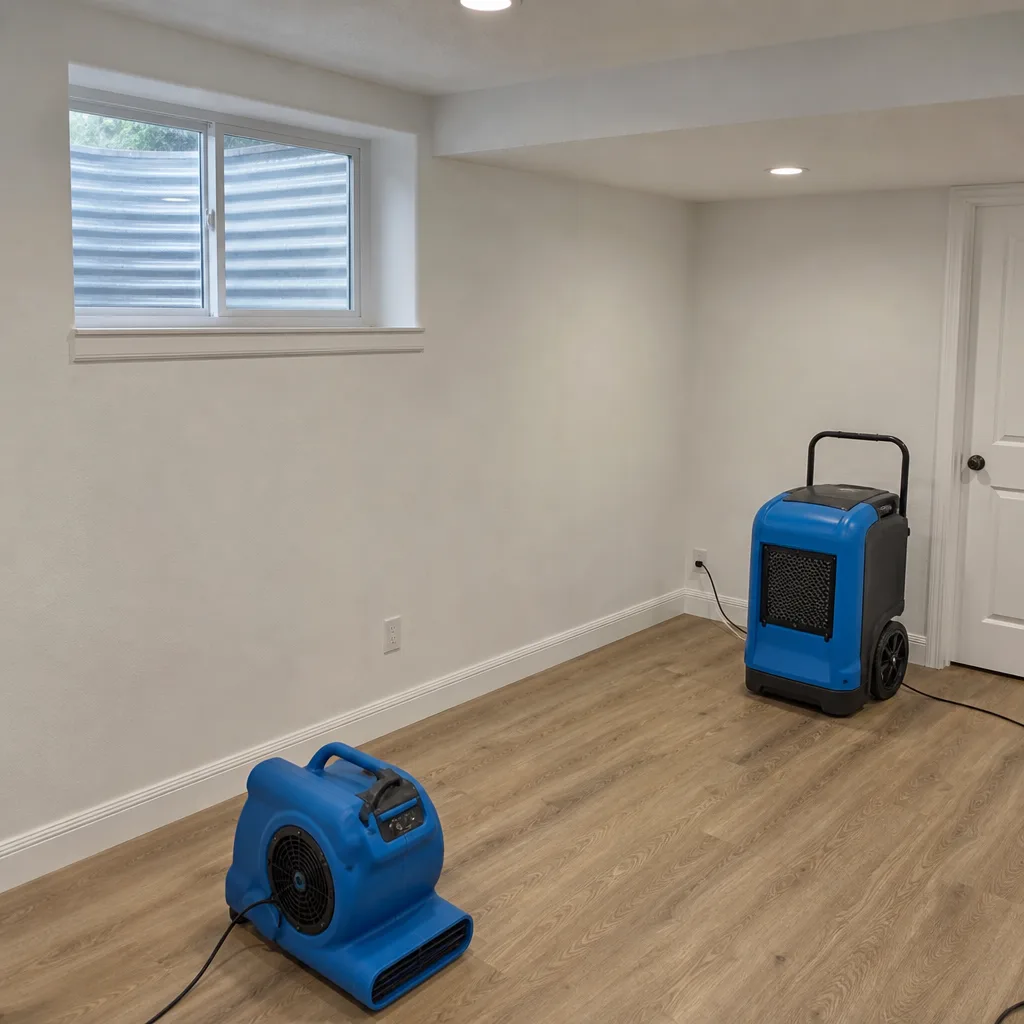 After
After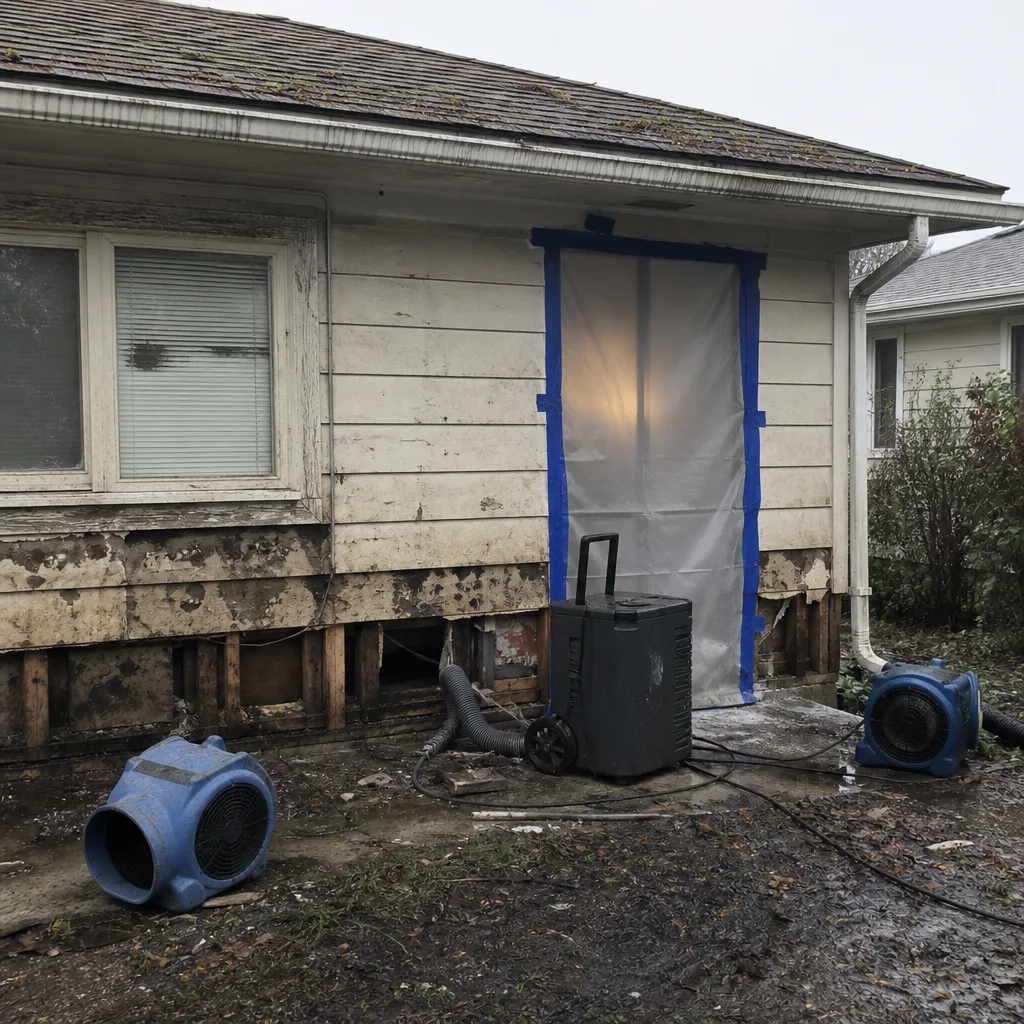 Before
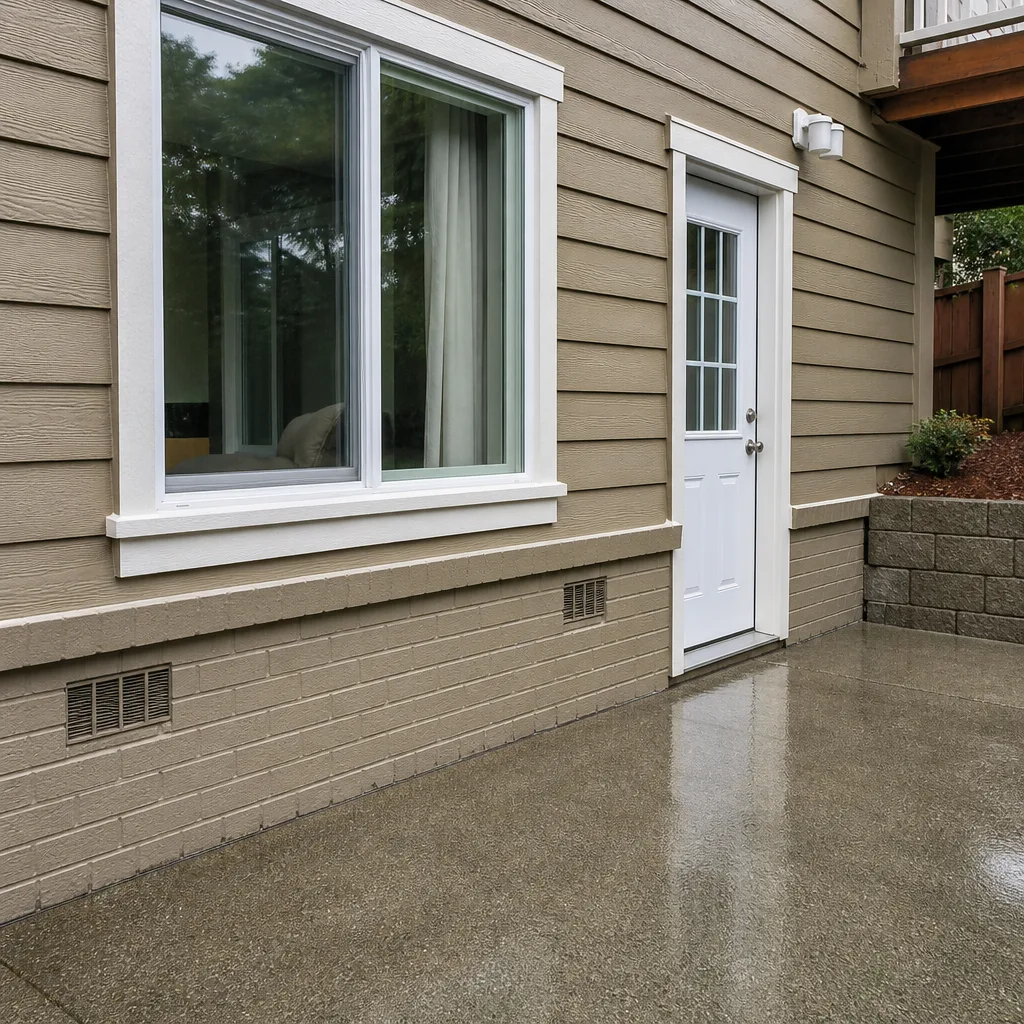 After
AfterSeasonal Damage Restoration Care for Puyallup: Year-Round Homeowner’s Guide
Here’s the pattern we’ve documented across 12,000 homes since 2011: roughly 70% of residential water intrusion calls in our service area arrive between October and March. The maintenance a Puyallup homeowner completes in September determines whether December brings a normal heating bill or a crew from DryMark Restoration Puyallup home tearing out drywall. The freeze-thaw cycles here are short but sharp. Temperatures below 28°F for four or more hours split uninsulated supply lines in exterior wall cavities, and Pierce County averages 11 such nights each winter. This guide maps a season-by-season maintenance calendar to that actual risk curve, with completion standards you can photograph and date.
Quick Answer
Seasonal damage restoration care in Puyallup means concentrating preventive maintenance in September and October before the October-March risk window, when 70% of water intrusion occurs. The highest-return tasks are downspout extensions that carry roof runoff 6+ feet from foundation walls, crawl space vapor barriers sealed at 6-mil thickness or greater, and annual pressure-reducing valve checks to keep municipal pressure below 80 PSI. A dated, photographed inspection log serves as documented evidence of reasonable maintenance if an adjuster later disputes a claim as “long-term neglect.”
Table of Contents
- Fall Preparation: The September-October Maintenance Window
- Winter Freeze Protection: December-February in Puyallup
- Spring Groundwater and Snowmelt: March-May
- Summer Condensation and the Task Most Homeowners Skip
- The Three Highest-ROI Maintenance Tasks
- The Documentation Strategy That Protects Your Claim
- Month-by-Month Task Calendar
- Common Mistakes to Avoid
- When to Call a Professional
- Frequently Asked Questions
- The Bottom Line
 Before
 After
AfterFall Preparation: The September-October Maintenance Window
Atmospheric river events in the Pacific Northwest don’t respect calendar boundaries, but Puyallup’s heaviest sustained rainfall historically clusters in October and November. The Nooksack and Puyallup River basins both influence groundwater pressure in low-lying neighborhoods like North Hill, South Hill, and the valley floor near the fairgrounds. French drains that handled September drizzle often fail under November’s sustained load.
Here’s what we inspect on our own properties and recommend to homeowners, drawing from our complete guide to damage restoration in Puyallup:
- Gutter and downspout audit: Remove debris from the entire run. Test flow with a hose at the highest point. Verify downspouts terminate with rigid extensions carrying water at least 6 feet from the foundation. Flexible accordion extensions crack at the folds within 18 months in our climate; replace with rigid PVC.
- Crawl space vapor barrier inspection: The 6-mil polyethylene sheet covering dirt crawl space floors in Puyallup homes should show no gaps, tears, or displacement at perimeter walls. Seal any breaches with 6-mil tape rated for damp conditions. In our experience, vapor barriers installed before 2015 often use 4-mil material that degrades faster than modern standards.
- Exterior grade check: Soil should slope away from the foundation at 6 inches of drop per 10 feet of run. Settling is common in the clay-heavy soils of the Puyallup Valley; regrade where the slope has flattened or reversed.
- Sump pump functional test: Pour 5 gallons of water into the crock. The pump should activate before water reaches the intake port. Check the discharge line for cracks; in Puyallup, discharge lines that terminate above grade freeze and split, causing the pump to cycle water back into the crock.
- Window well drainage: Clear leaves and sediment. Verify the gravel bed drains to a perimeter drain or daylight port. Window wells without proper drainage become cisterns during atmospheric river events.
We document each of these checks with a dated photograph. The photo becomes evidence if a claim is later disputed. Water Damage Restoration in Puyallup calls spike 40% in the two weeks following the first major atmospheric river each fall; most of those calls trace to one of these five items.
Winter Freeze Protection: December-February in Puyallup
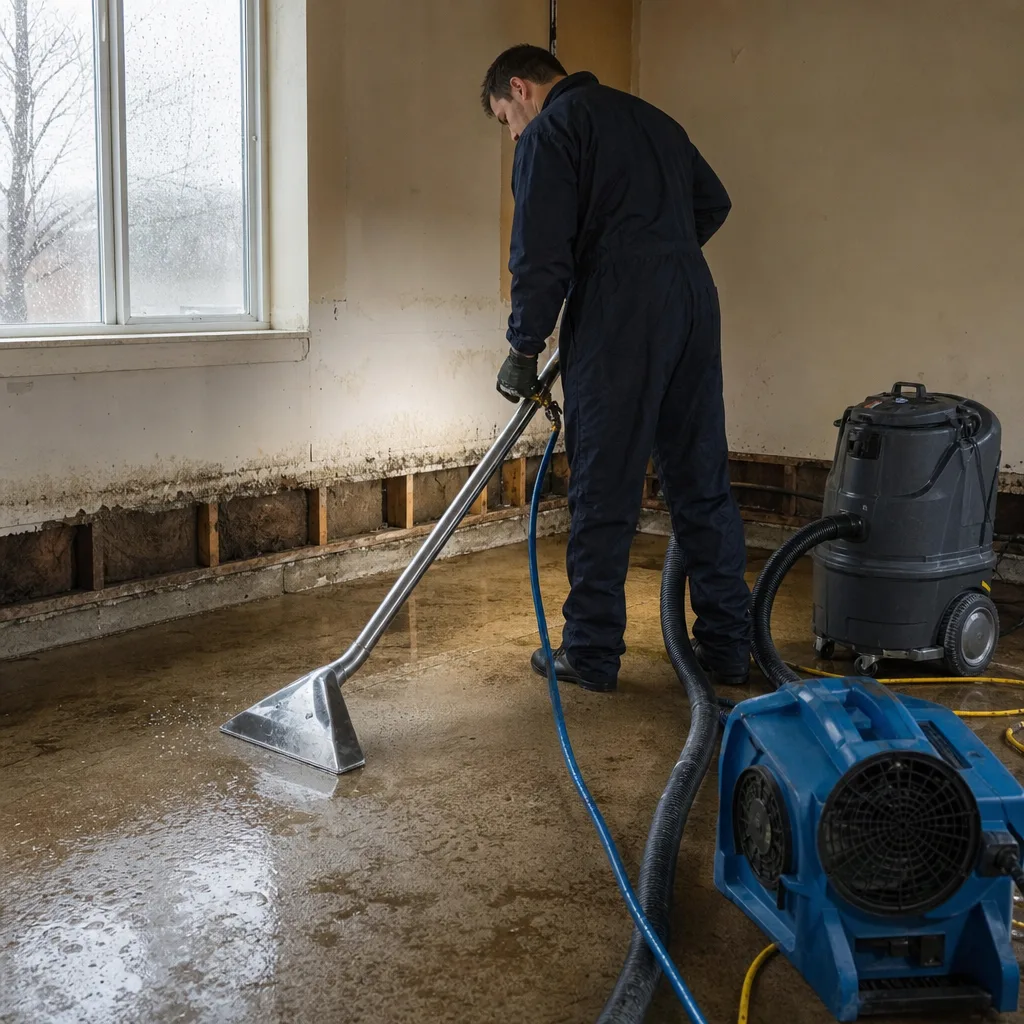
Pierce County’s 11 nights below 28°F don’t sound dramatic until you trace what happens inside a wall cavity. Copper supply lines in exterior walls lose heat to ambient air faster than PEX, but both materials fail when the water inside freezes and expands at 9% volume. The split often occurs at a fitting or elbow where stress concentrates.
The critical factor is duration, not absolute temperature. Four consecutive hours below 28°F is the threshold we’ve identified from our claims history. Homes built before 1990 in Puyallup’s older neighborhoods - the Stadium District, parts of North Hill, and the original valley plat - often lack insulation at exterior wall plumbing chases.
Our winter protocol:
- Pipe insulation audit: Inspect all supply lines in unconditioned spaces - crawl spaces, attics, garages, and exterior wall cavities accessible through plumbing access panels. Use ASTM C534-compliant fiberglass or rubber pipe insulation with a vapor barrier jacket. In Puyallup’s damp winters, unjacketed foam degrades.
- Exterior faucet winterization: Shut interior isolation valves, open exterior faucets to drain, and install insulated covers. Homes without isolation valves should have them installed; this is standard in post-2005 construction but rare in pre-1980 Puyallup stock.
- Cabinet door protocol during freeze warnings: Open cabinet doors below sinks on exterior walls to allow conditioned air circulation. This is a temporary measure, not a solution for chronically cold cavities.
- Thermostat setting during absence: Maintain minimum 55°F even during short trips. Programmable thermostats that setback to 50°F or lower on “vacation mode” cause failures we see every January.
- Identify and map your main shutoff: Every adult in the household should locate and operate the main water shutoff. When a pipe splits at 2 AM, minutes matter. Test the valve annually; mineral buildup in Puyallup’s moderately hard water seizes gate valves that aren’t exercised.
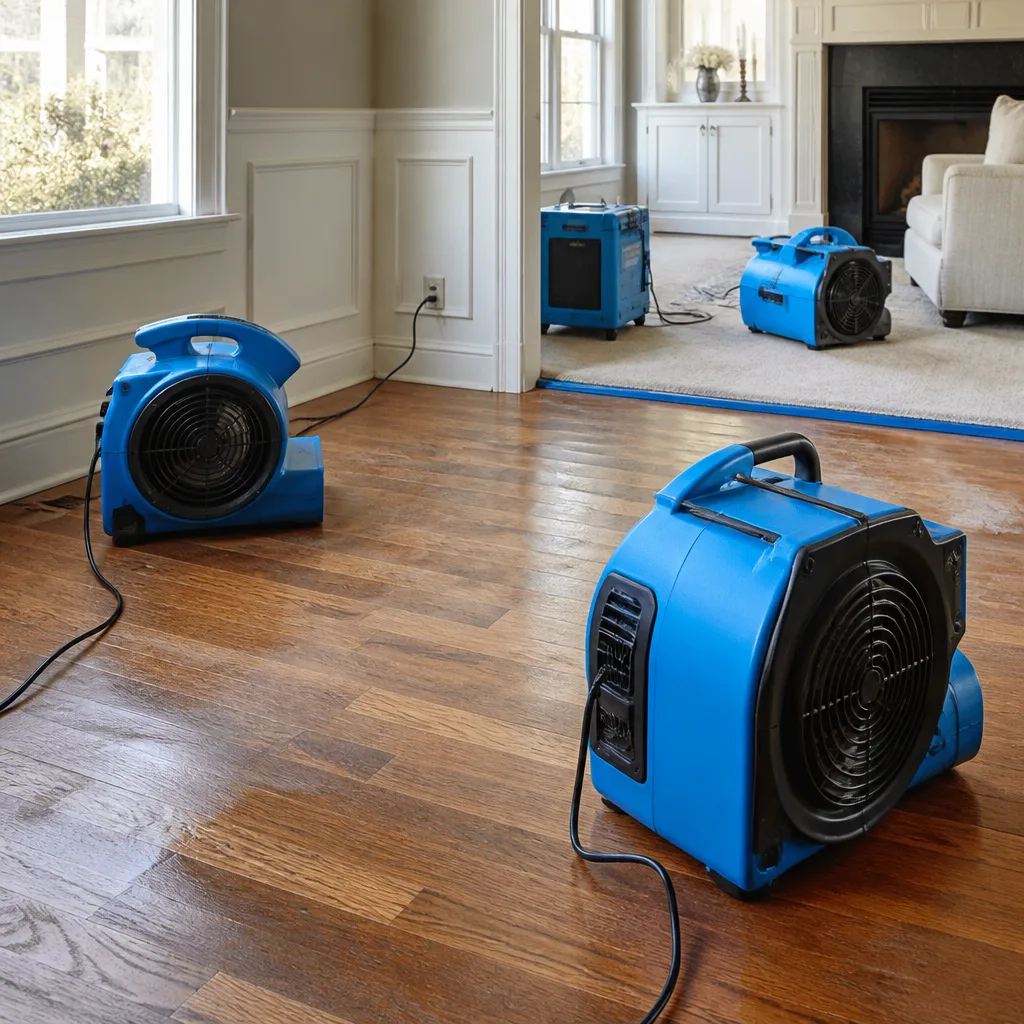
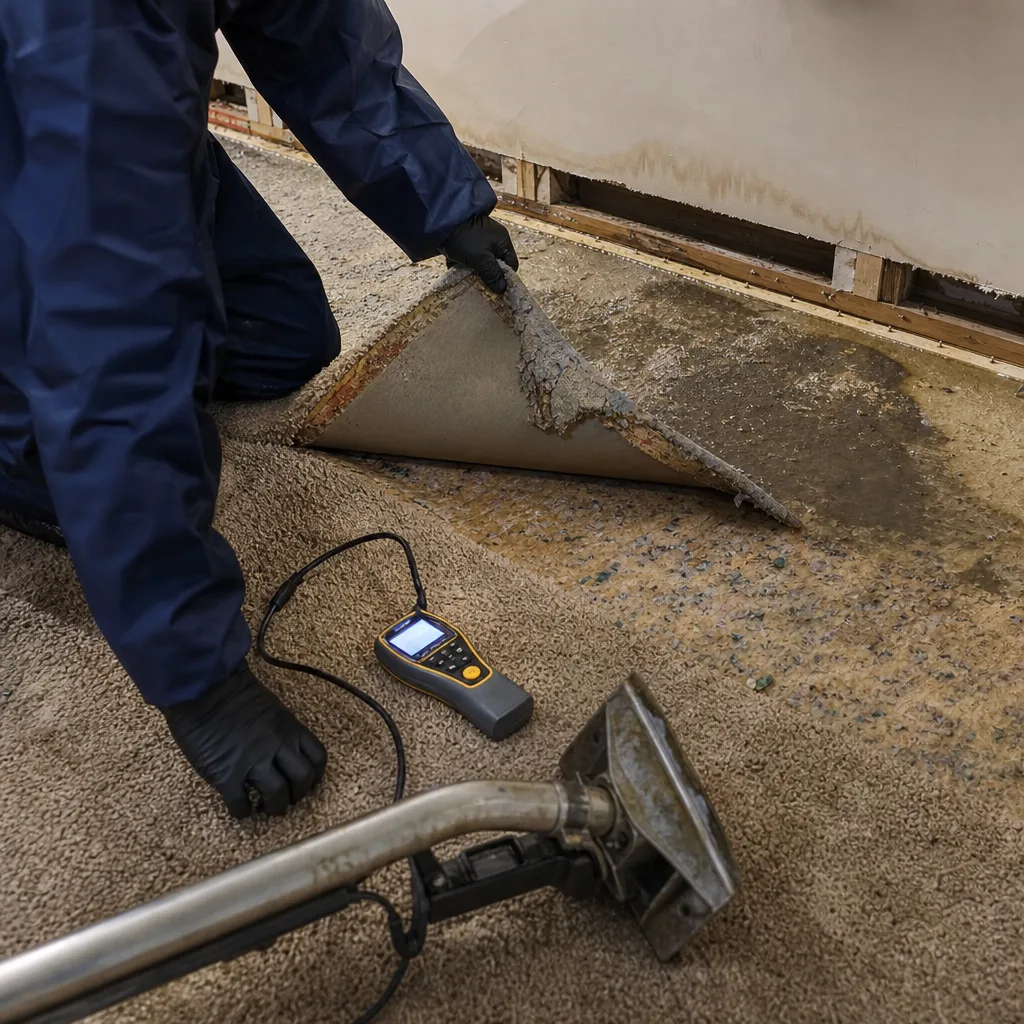
When we respond to winter pipe bursts in Puyallup, the first step is always documentation: moisture mapping with thermal imaging, psychrometric data logging (that’s temperature, relative humidity, and vapor pressure readings), and a photo record before any water extraction begins. Our crews run Phoenix and Dri-Eaz dehumidification systems, and every drying log is formatted to IICRC standards for adjuster review.
Spring Groundwater and Snowmelt: March-May
Mount Rainier’s snowpack doesn’t melt uniformly. Cool springs delay peak runoff; warm, wet springs accelerate it. The Puyallup River’s spring hydrograph directly affects basement and crawl space moisture in homes near the valley floor, including neighborhoods around the fairgrounds, Meeker, and the lower South Hill bench.
Spring also brings the secondary damage window: mold colonization in structures that took winter water intrusion but weren’t properly dried. Mold requires three conditions: moisture, organic food source, and temperatures between 60°F and 80°F. By April in Puyallup, all three are present in water-affected wall cavities.
Our spring inspection focuses on:
- Foundation perimeter after snowmelt: Walk the full perimeter looking for efflorescence (white mineral deposits) on concrete or block walls. This indicates water movement through the material. Note locations with dated photos.
- Crawl space relative humidity: Readings above 60% RH indicate active moisture loading. We use digital hygrometers and log readings by location. Sustained 70%+ RH predicts mold growth within 30 days in organic materials.
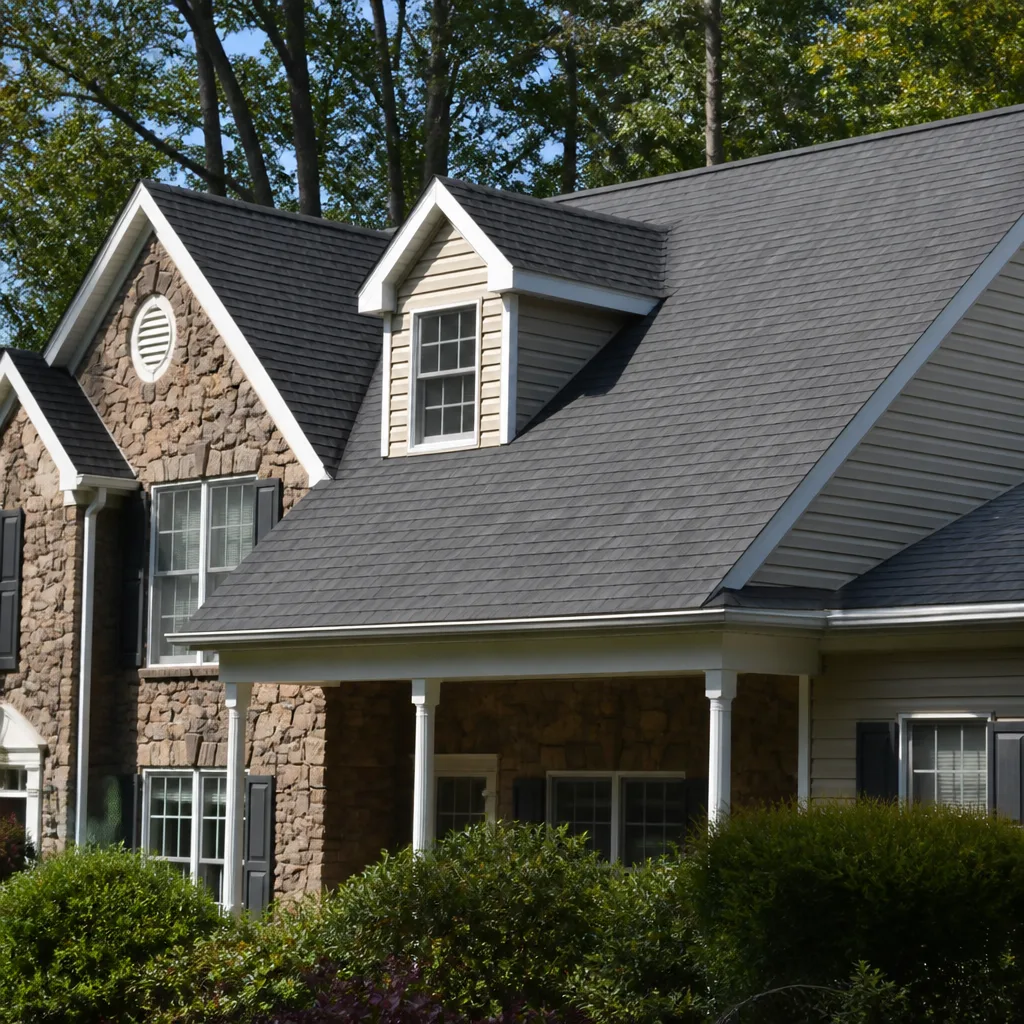
- Roof inspection after storm season: Check for lifted shingles, damaged flashing at valleys and penetrations, and gutter separation from fascia. Puyallup’s winter wind events, particularly from southeasterly storm tracks, stress roof edges.
- Attic ventilation check: Blocked soffit vents cause moisture accumulation in attic spaces during spring temperature swings. Verify insulation hasn’t migrated to cover vent openings.
Spring is also when we field the most Mold Remediation in Puyallup calls from homeowners who discovered winter damage in March. By then, colonization is often established. Our Fire & Smoke Damage Restoration in Puyallup crews also see an uptick in electrical fire calls from homeowners using space heaters in chronically damp, poorly insulated spaces.
Summer Condensation and the Task Most Homeowners Skip
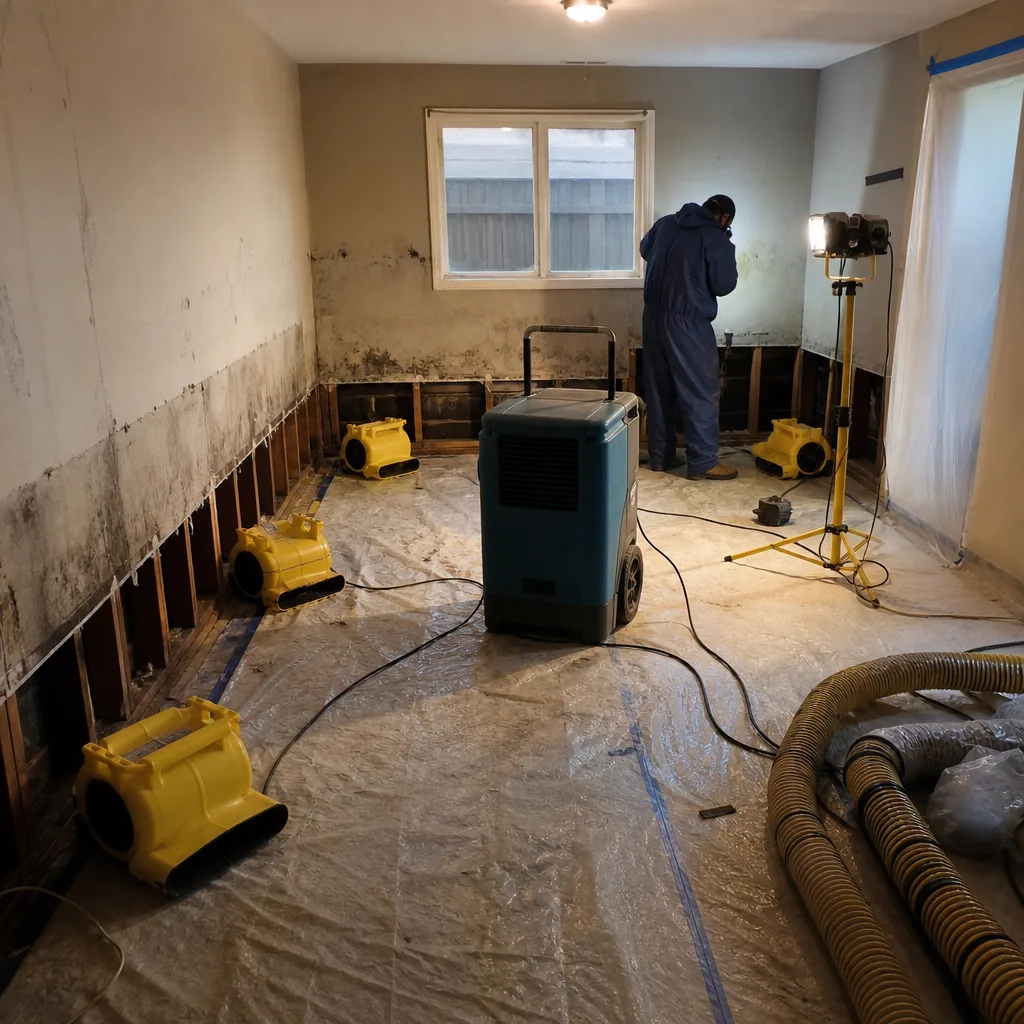
Puyallup’s summer climate is mild, with average highs in July and August near 76°F. The damage risk shifts from bulk water intrusion to condensation on cold surfaces in unconditioned spaces, and to the single most skipped maintenance task we identify: HVAC condensate drain line testing before the heating season transition.
Here’s the mechanism. During cooling season, the air handler’s evaporator coil drops air temperature below the dew point, extracting moisture that drains through a PVC line to a floor drain, sump crock, or exterior daylight. The line accumulates biofilm - a mix of algae, mold, and dust - that partially or fully blocks flow by late summer. When the system switches to heating in September or October, the coil no longer condenses moisture, so the blockage goes unnoticed. But the line also serves as the drainage path for the secondary drain pan under the air handler, which catches overflow if the primary drain fails. In heating season, that secondary pan may receive water from a humidifier malfunction or, in heat pump systems, from defrost cycle melt.
The blocked line floods the air handler closet, often installed in an attic or upper-floor utility space. The damage pattern: water stains on ceiling drywall below the unit, discovered when the homeowner adjusts the thermostat for the first cold morning.
Our summer protocol:
- Condensate line flush: Disconnect the line at the air handler pan. Flush with water and a mild surfactant. Verify free flow to the termination point. Reconnect with proper trap configuration to prevent sewer gas backdraft.
- Secondary pan inspection: Verify the pan is intact, clean, and equipped with a float switch that shuts the system on overflow. Many Puyallup homes lack this switch; installation is inexpensive prevention.
- Cold water pipe condensation: In unconditioned basements and crawl spaces, cold water lines sweat during humid summer periods. Insulate with closed-cell pipe insulation to prevent drip accumulation on subflooring.
- Exterior hose bib leak check: The freeze damage from winter often manifests as slow leaks at hose bibs when they’re first used in summer. Check for water staining on siding or foundation below each bib.
Summer is also the optimal season for major exterior maintenance: roof replacement, siding repair, and large-scale regrading. Weather windows are reliable, and materials cure properly. Schedule these projects for July or August to be complete before the September preparation window.
The Three Highest-ROI Maintenance Tasks
Not all prevention tasks deliver equal return. From our damage restoration cost breakdown for Puyallup homeowners and adjuster experience, three tasks stand apart for cost-to-benefit ratio in Puyallup’s specific risk environment.
1. Downspout extension to 6+ feet from foundation
Cost: $15-$40 in materials per downspout. Time: 30 minutes. Prevention value: Foundation perimeter saturation is the leading cause of crawl space and basement water intrusion in our service area. A downspout dumping at the foundation edge delivers roof runoff volume directly against the wall during atmospheric river events. The 6-foot standard comes from IRC foundation drainage guidelines; in Puyallup’s clay soils, even this distance may be marginal during sustained rain, but it’s the minimum defensible standard. Completion standard: Rigid PVC extension, mechanically secured, terminating on a splash block or into a drainage swale with positive slope away from the structure. Photograph the installation with a tape measure visible.
2. Crawl space vapor barrier at 6-mil minimum, fully sealed
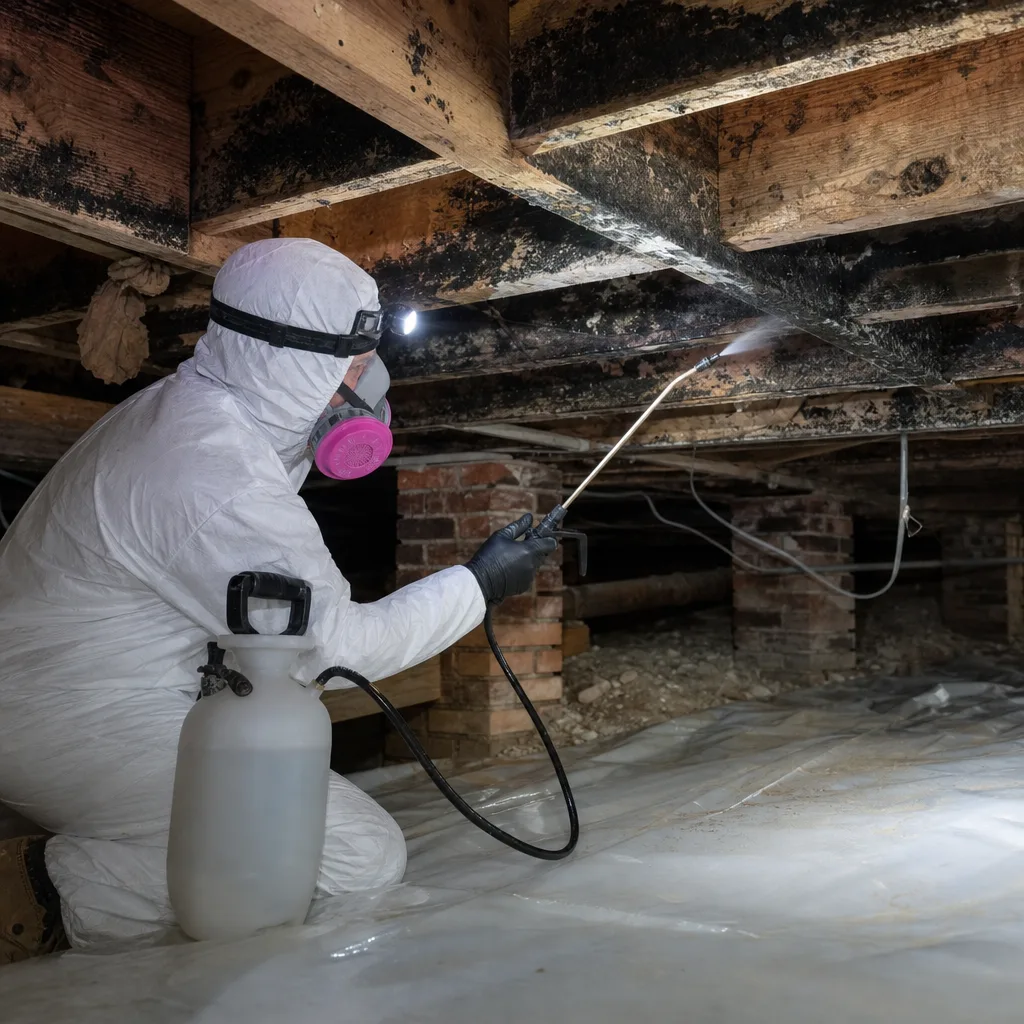
Cost: $0.50-$1.50 per square foot for DIY; $2.50-$4.00 installed. Time: 4-8 hours for typical 1,200 sq ft crawl space. Prevention value: Ground moisture evaporation into crawl space air loads the subfloor assembly with moisture year-round. In Puyallup’s heating climate, this moisture migrates upward into floor insulation, reducing R-value and creating conditions for mold on the subfloor sheathing. A properly sealed 6-mil barrier reduces crawl space relative humidity by 20-40 percentage points. Completion standard: 6-mil polyethylene (not PVC, not 4-mil) covering 100% of exposed earth, lapped 12 inches at seams, sealed with pressure-sensitive tape, and extended 6 inches up foundation walls with mechanical termination. Photograph seams, wall terminations, and full coverage from multiple angles.
3. Pressure-reducing valve (PRV) check and adjustment
Cost: $0 (if accessible and functional) to $150-$300 for replacement. Time: 15 minutes to test; 1-2 hours to replace. Prevention value: Puyallup’s municipal water system operates at varying pressures depending on elevation and proximity to pumping stations. Pressures above 80 PSI stress supply lines, fittings, and appliance connections. We’ve documented pipe failures and water heater tank ruptures traceable to sustained high pressure. The PRV, typically located near the main shutoff where the service line enters the structure, should maintain 50-60 PSI. Completion standard: Test with a threaded pressure gauge at a hose bib or laundry faucet with all other fixtures off. If reading exceeds 75 PSI, adjust or replace the PRV. Photograph the gauge reading with date visible. Retest annually; PRV diaphragms degrade in 5-10 years in Puyallup’s water chemistry.
The Documentation Strategy That Protects Your Claim
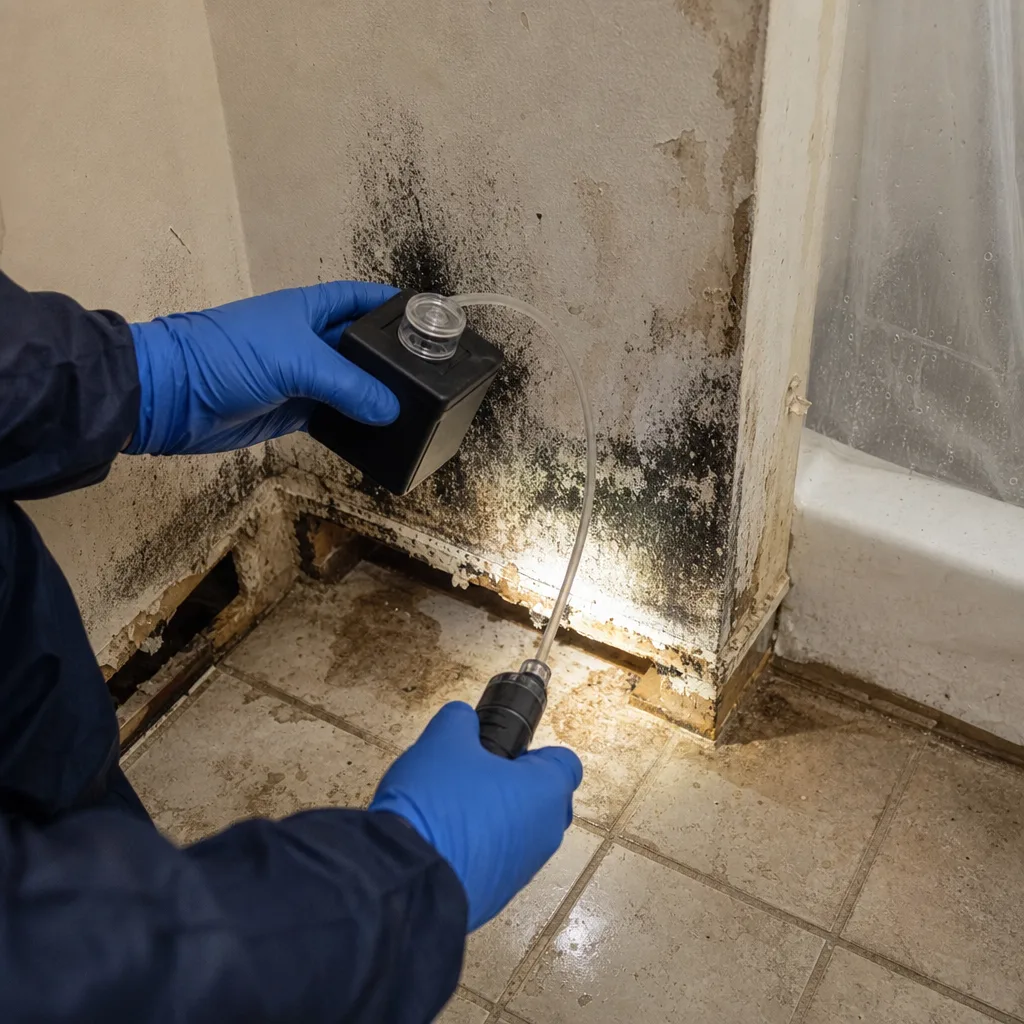
Here’s a scenario we’ve encountered repeatedly: A homeowner discovers water damage in March, files an insurance claim, and receives a reservation of rights letter citing “long-term neglect” or “gradual deterioration” exclusions. The adjuster notes efflorescence on the foundation, degraded vapor barrier, or a history of moisture readings that suggests the condition predated the reported date of loss.
The homeowner’s defense is documentation of reasonable maintenance. Without it, the claim negotiation extends weeks or months. With it, the coverage position often resolves in the homeowner’s favor.
Our recommended documentation system:
- Create a single digital folder per calendar year, labeled by address and year: “12345 Main St Puyallup 2024.”
- Photograph each maintenance task with date stamp enabled. Include a written note or index card in the frame stating the task, the standard applied, and the result. Example: “10/15/2024 - Gutter clean and flow test - all downspouts clear, extensions at 6 ft.”
- Log moisture readings where applicable: Crawl space RH, attic RH, pressure gauge readings. Note the instrument used and its calibration status if known.
- Retain product labels and receipts for materials: vapor barrier roll specifications, pipe insulation type, PRV model number. These establish that appropriate materials were used, not just that work was performed.
- Store copies off-site: Cloud storage or a physical copy at another location. The damage event that triggers a claim may destroy the device where records are stored.
This documentation serves two functions. It supports insurance coverage if a claim arises. It also supports property value at sale; Puyallup’s disclosure requirements include known water damage history, and documented maintenance history differentiates a property from comparable listings.
At DryMark Restoration Puyallup, every job we perform generates its own documentation: a written scope with line-item pricing before work begins (Haven Standard, Clause 1), a photo record on every visit, and daily moisture logs from our Phoenix and XPOWER drying systems. When we hand that file to an adjuster, the claim moves. The same principle applies to homeowner maintenance records.
Month-by-Month Task Calendar
This calendar anchors tasks to Puyallup’s actual climate pattern and risk curve, and we expand on seasonal priorities in our Water Damage Restoration Maintenance Checklist for Puyallup Homeowners. Tasks cluster in September and October because that’s when preparation prevents the October-March damage window.
September
- Full gutter removal of debris and flow test
- Downspout extension verification (6-foot minimum, rigid material)
- Crawl space vapor barrier inspection and repair
- Exterior grade check and correction
- HVAC condensate drain line flush and secondary pan inspection
- Pressure-reducing valve test with gauge
October
- Final gutter check after early leaf drop
- Sump pump functional test with 5-gallon pour
- Window well cleaning and drainage verification
- Roof edge and flashing visual inspection from ground or ladder
- Attic ventilation check: soffit vents clear, insulation position correct
November
- Exterior faucet winterization: drain, isolate, cover
- Pipe insulation audit in crawl space, attic, garage
- Verify all household members can locate and operate main shutoff
December
- Pipe insulation completion in any gaps identified in November
- Cabinet door protocol review for exterior wall sinks
- Thermostat program verification: no setback below 55°F
January
- Post-holiday inspection: check for ice dam formation at roof eaves
- Monitor crawl space RH if accessible; log readings
February
- Second sump pump test after ground freeze-thaw cycles
- Inspect for foundation settlement cracks after freeze-thaw stress
March
- Foundation perimeter walk: efflorescence mapping, photo documentation
- Crawl space RH logging; compare to September baseline
- Early roof inspection if winter wind events were severe
April
- Complete roof inspection: shingles, flashing, valleys, penetrations
- Attic moisture check: staining, insulation condition, vent function
May
- Exterior grade re-establishment after spring soil settlement
- Gutter pre-cleaning before summer growth season
June-August
- Condensate line maintenance if not completed in September
- Cold water pipe insulation in unconditioned spaces
- Major exterior projects: roofing, siding, regrading
- Hose bib leak check at first use
Common Mistakes to Avoid
- Installing flexible accordion downspout extensions. They crack at folds within 18 months in Puyallup’s freeze-thaw cycle, then leak at the foundation edge you were trying to protect. Use rigid PVC.
- Using 4-mil vapor barrier or leaving seams untaped. The 6-mil specification exists because thinner material tears during installation and degrades faster. Untaped seams let ground moisture bypass the barrier entirely.
- Skipping the September HVAC condensate check because “it’s not heating season yet.” The blockage forms during cooling season. The flood happens at the first heating season switchover, when you’re not thinking about drainage.
- Setting the thermostat to 50°F or lower for vacation. We’ve documented pipe failures in Puyallup homes where owners saved $20 in heating during a December trip and incurred $15,000 in water damage.
- Assuming a sump pump that “sounds like it’s running” is functional. The float can stick, the impeller can clog, the discharge line can freeze and split. Test with actual water volume, not a listen check.
- Neglecting to photograph maintenance tasks. Without dated evidence, your maintenance history is your word against an adjuster’s inference of neglect. The photo takes 10 seconds; the claim dispute takes 10 weeks.
When to Call a Professional
Some conditions exceed homeowner maintenance scope and require documented professional assessment. Call for evaluation if you discover: active water flow or pooling that doesn’t resolve with obvious source correction; moisture readings above 70% RH in crawl spaces or wall cavities; visible mold growth exceeding 10 square feet; musty odors without identifiable source; or structural movement, cracking, or sagging after water exposure.
DryMark Restoration Puyallup offers free estimates in Puyallup - call (253) 447-5249. Every assessment includes moisture mapping with thermal imaging, a written scope with line-item pricing before any work begins (Haven Standard, Clause 1), and a photo record of findings. Our crews are background-checked, uniformed, and equipped with B-Air and Injectidry systems for targeted drying. We document to IICRC, RIA, and IFA standards, and we provide a Free Second Opinion on any competitor’s written estimate.
Frequently Asked Questions
Category 1 water damage restoration in Puyallup typically ranges from $3,500 to $8,500 for a standard residential drying project, with reconstruction costs additional. Category 2 or 3 contamination, crawl space access limitations, or hardwood floor drying with Injectidry mat systems increase the scope. DryMark Restoration Puyallup provides a written price before any work begins on every job - Haven Standard, Clause 1 - and offers a Free Second Opinion on any competitor’s written estimate. Call (253) 447-5249 for an exact quote; estimates are free.
Coverage depends on whether the damage is sudden and accidental versus attributable to maintenance neglect. Sudden pipe bursts are generally covered; damage from pipes that froze due to known, unaddressed exposure in a previously unheated space may be disputed. A dated, photographed maintenance log showing insulation audits and thermostat settings strengthens your coverage position. Document everything.
DryMark Restoration Puyallup maintains live phone coverage 24 hours a day, 7 days a week with no voicemail on emergency lines. For active water flow mitigation, we dispatch immediately upon scope confirmation. Reconstruction and non-emergency work is scheduled after written pricing and scope agreement. Speed language applies to mitigation; rebuild work is scoped and scheduled like any construction project.
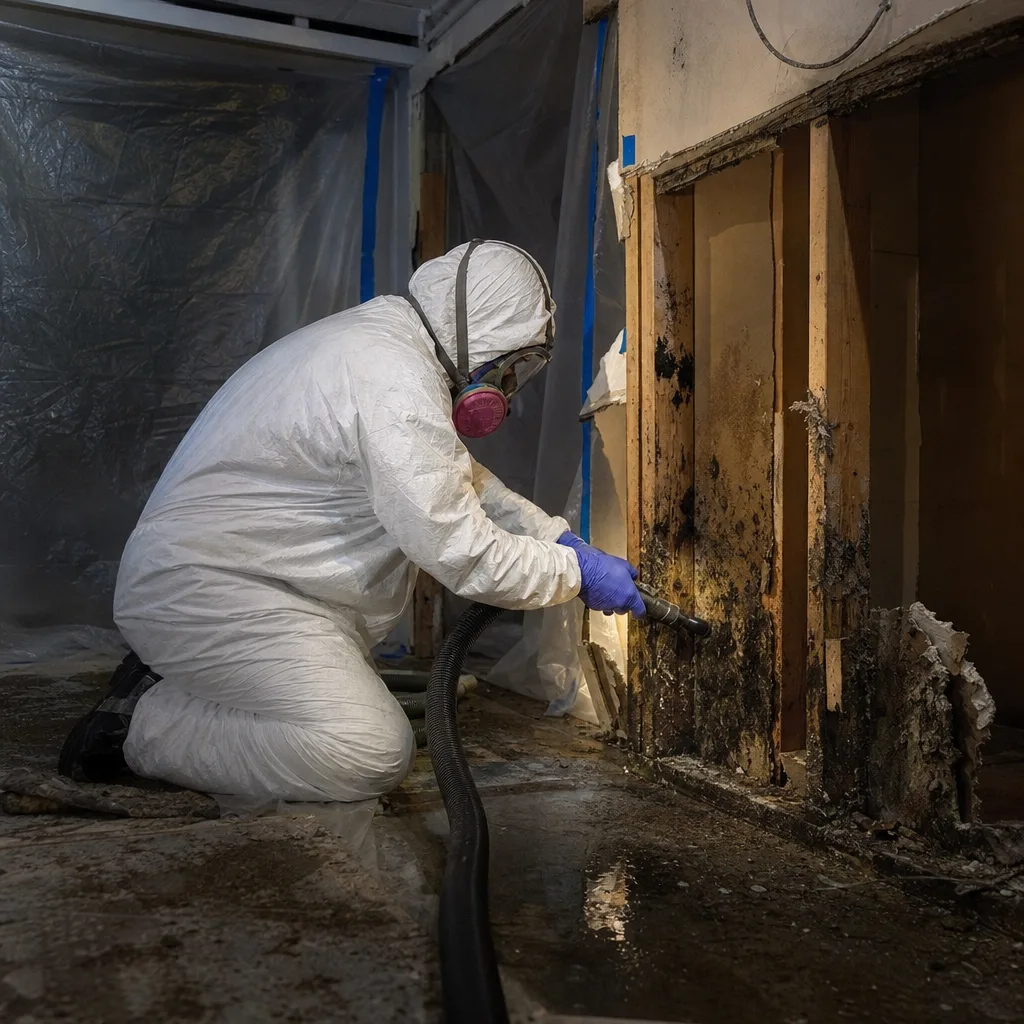
Surface mold growth under 10 square feet on hard, non-porous materials may be addressed with appropriate PPE and cleaning agents. Growth exceeding that threshold, growth on porous materials like drywall or insulation, or growth in HVAC systems requires professional remediation with containment, negative air pressure, and documented clearance testing. In Puyallup’s climate, undetected crawl space mold is common; professional assessment with moisture mapping identifies hidden colonization.
At DryMark Restoration Puyallup, we coordinate directly with your adjuster, providing the documented photo record, daily drying logs, and written scope that support claim approval. Our documentation is formatted to the standards adjusters expect: IICRC drying criteria, psychrometric data, and material-specific moisture content readings. This documentation-first approach is the company’s founding purpose.
The skipped September HVAC condensate drain check. Homeowners complete fall gutter work and winter pipe prep, then discover in October that a blocked condensate line has flooded the air handler closet into ceiling drywall. The damage is entirely preventable with a 15-minute flush in September. It’s the highest-frequency, lowest-effort prevention task in our entire calendar.
The Bottom Line
Puyallup’s damage risk is not evenly distributed across the year. Concentrate your maintenance effort in September and October, complete the three highest-ROI tasks to measurable standards, and document everything with dated photographs. The 70% of water intrusion calls that arrive October through March are largely preventable with the protocol above. When prevention isn’t enough, professional documentation of the response matters as much as the response itself. DryMark Restoration Puyallup was built on that principle. For more guides & resources, visit our blog.
Call (253) 447-5249 for a free estimate or Free Second Opinion on any written estimate. Live phone coverage, 24 hours a day, 7 days a week. Written price before work begins, every time. Photo record on every visit. The 365-Day Done Right Promise under The Haven Standard.
Written by Alicia Brennan, Owner at DryMark Restoration Puyallup, serving Puyallup since 2011.