
Last updated September 23, 2026
Free visual inspection and a written scope of work before any mitigation begins - photos, moisture readings, and drying logs go in your claim file
The scope we write is the scope we bill. Anything new gets shown to you, in writing, before we touch it.


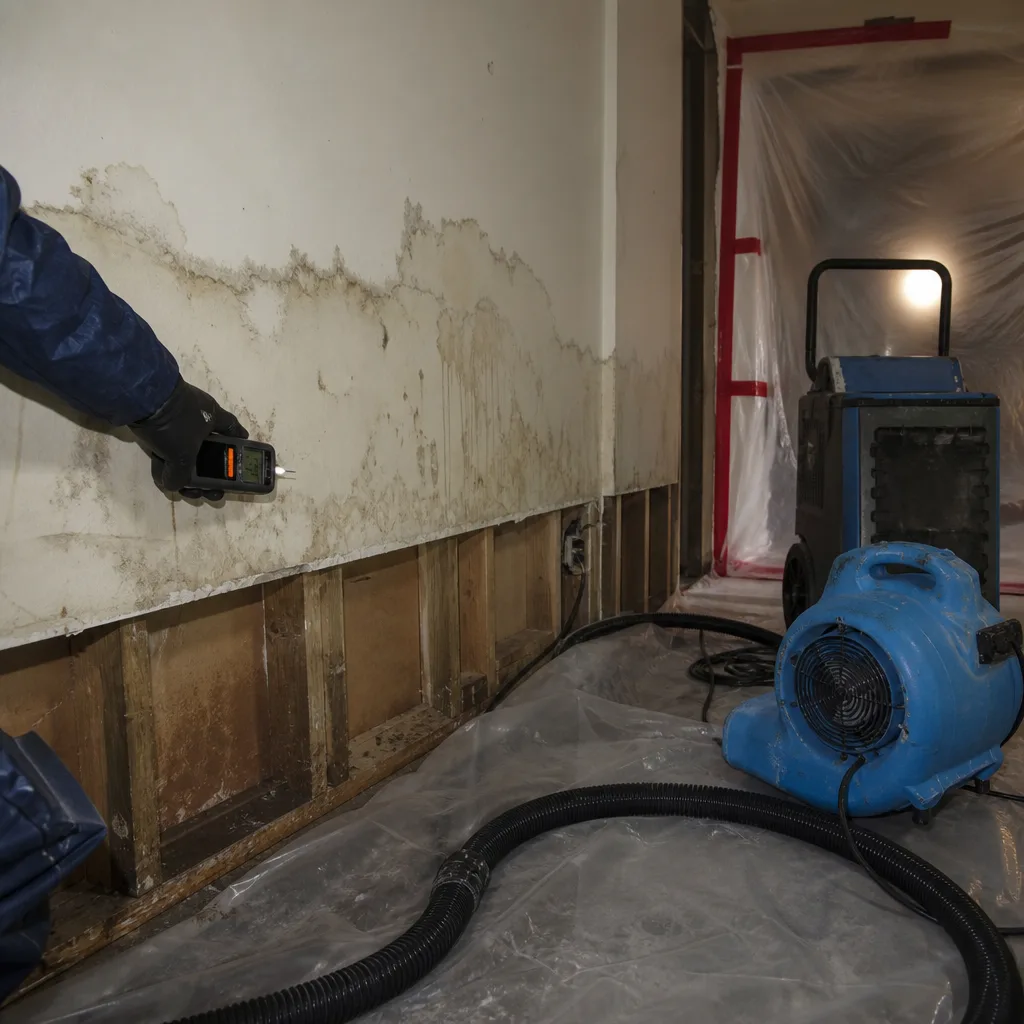 Before
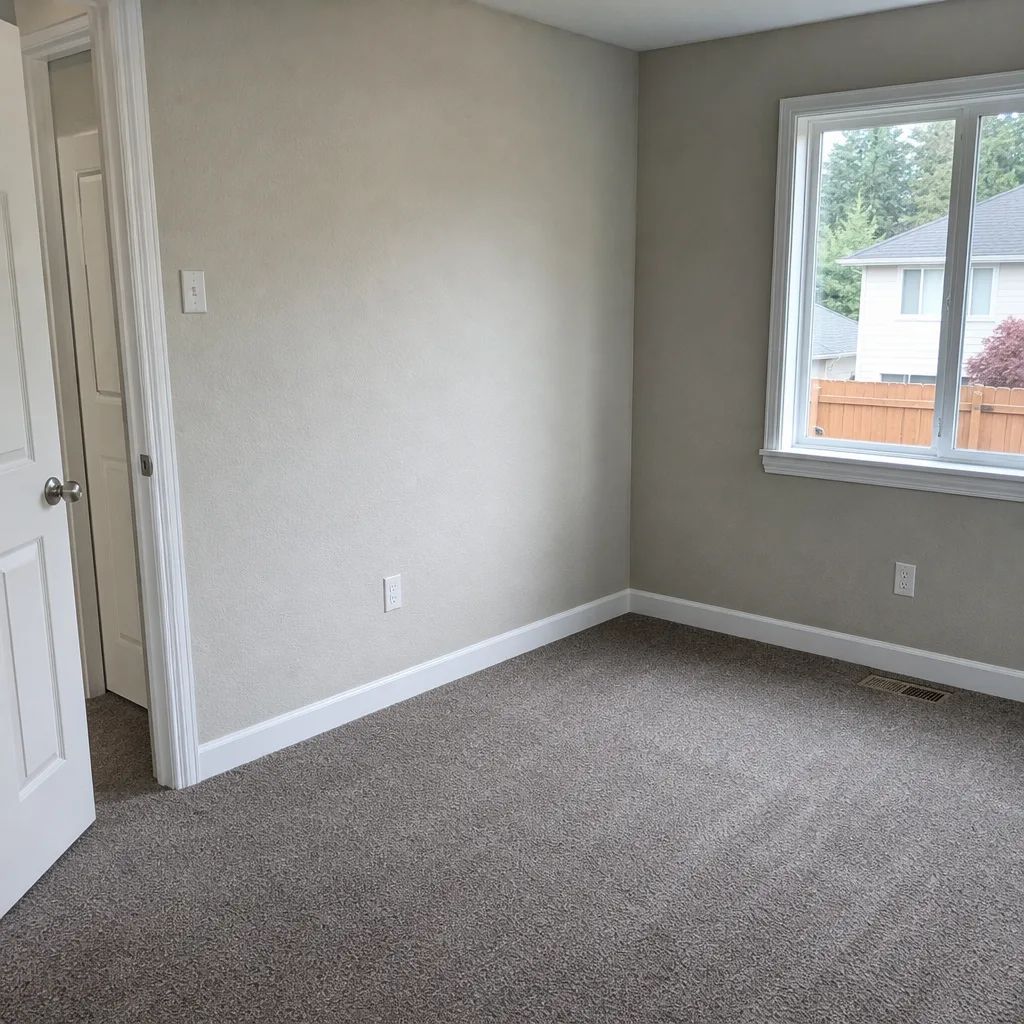 After
After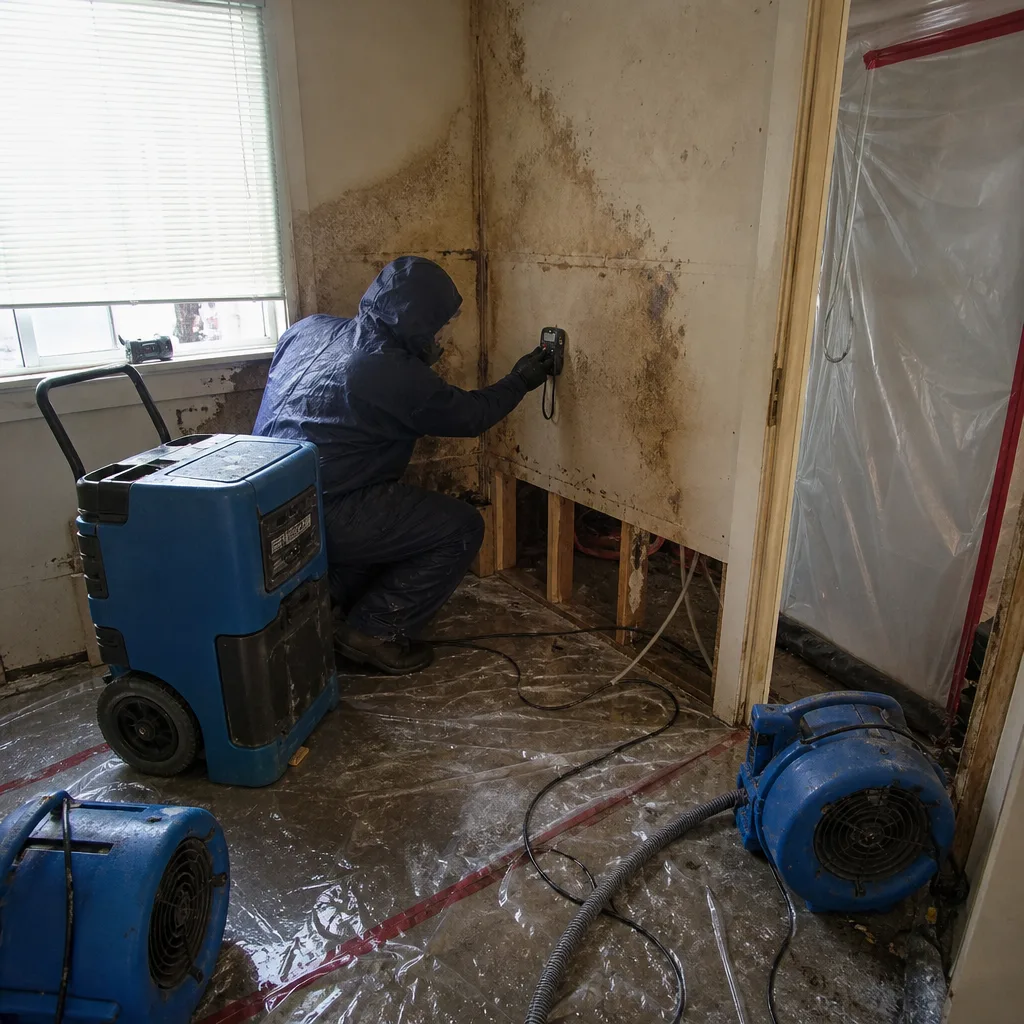 Before
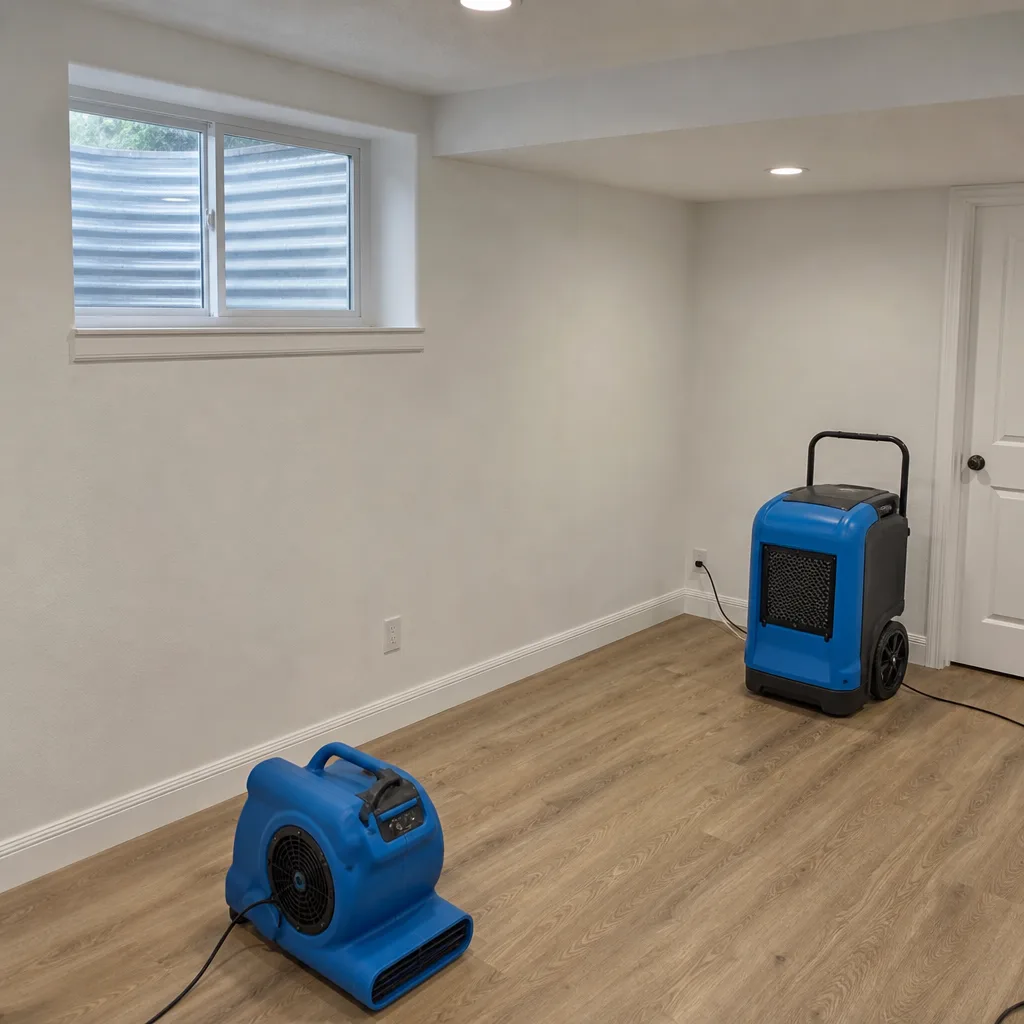 After
After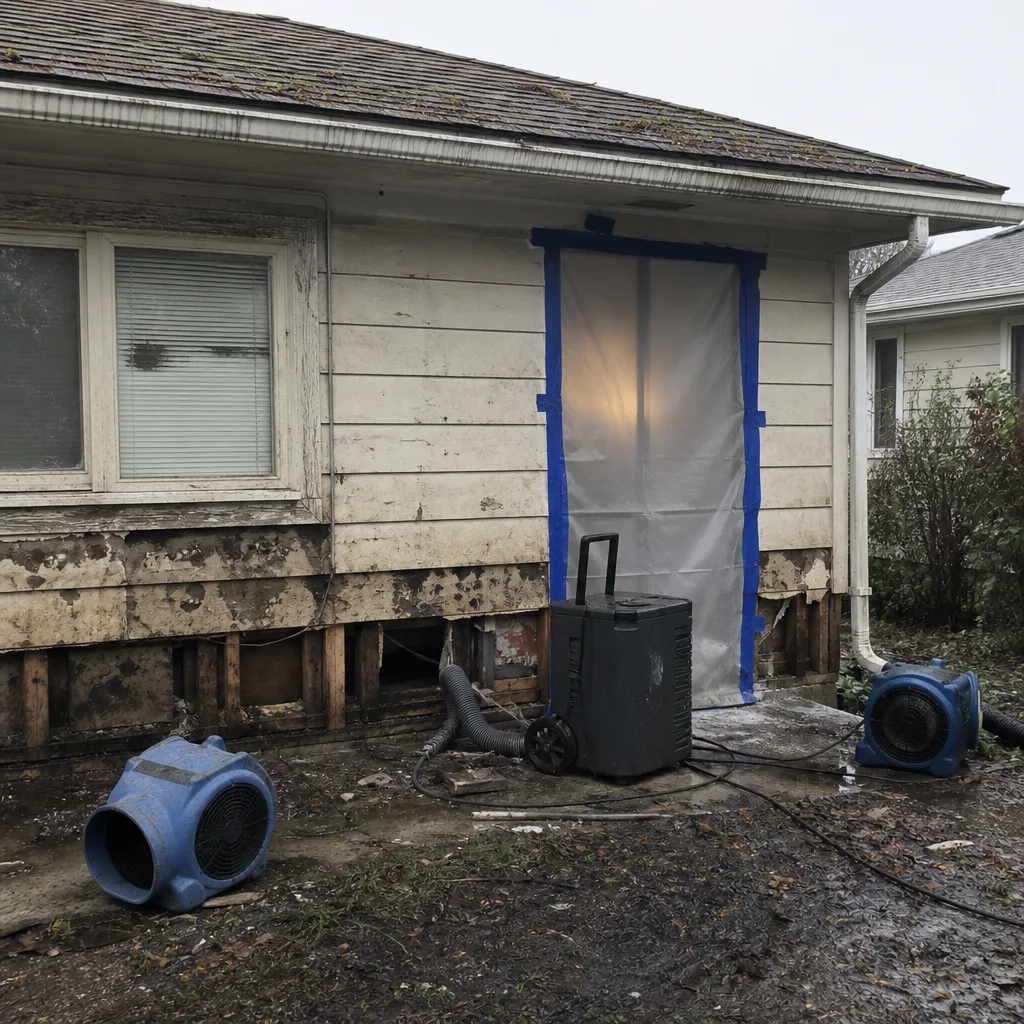 Before
 After
AfterDamage Restoration Warning Signs: A Puyallup Homeowner’s Reference Guide
A musty odor in a Puyallup crawl space is not a warning sign. It is confirmation that moisture has already been present long enough for microbial activity to begin. The actual warning sign was a 21% moisture content reading on the rim joist three weeks earlier, before any smell developed.
Most DIY vs Professional Damage Restoration: The Puyallup Homeowner’s Decision Guide resources organize themselves around what you can see: stains, buckling, discoloration. By the time those appear, the structural damage is underway and the remediation cost has doubled. This guide reverses that sequence. We’ll show you the measurable indicators that precede visible damage, the specific thresholds that separate normal seasonal variation from actionable findings, and the three Puyallup-specific moisture patterns we’ve documented across more than 12,000 homes since 2011. You’ll learn what to measure, where to measure it, and when a number on a $30 moisture meter becomes a reason to call for a professional assessment within 48 hours.
Quick Answer
The earliest warning signs of water damage, mold, and fire risk in a Puyallup home are measurable, not visible. Sustained moisture content above 19% in wood framing, relative humidity above 60% in crawl spaces, or sump pump cycles increasing from weekly to daily indicate active damage before stains or odors appear. If two or more measurable indicators are present simultaneously, document the readings with date and location and initiate a professional assessment within 48 hours rather than monitoring further; see our How to Hire a Damage Restoration Contractor in Puyallup: A Step-by-Step Guide for what to expect.
Table of Contents
- Leading Indicators vs. Lagging Indicators: The Critical Difference
- Measurable Thresholds by Material: When a Number Becomes Actionable
- Three Puyallup-Specific Moisture Patterns We’ve Documented
- One-Time Spike vs. Sustained Elevation: The Decision Rule
- Fire and Smoke Damage: Early Indicators Before the Alarm
- Sewage and Biohazard Warning Signs: When Speed Matters
- Homeowner Monitoring: Tools, Locations, and Frequency
- Common Mistakes to Avoid
- When to Call a Professional
- Frequently Asked Questions
- The Bottom Line
 Before
 After
AfterLeading Indicators vs. Lagging Indicators: The Critical Difference
Every restoration company in Puyallup has seen the same progression. A homeowner notices a water stain on the ceiling, calls for help, and the inspection reveals saturated insulation, compromised drywall, and framing that has been above 20% moisture content for six weeks. The stain was not the beginning. It was the end of the hidden phase.
We categorize warning signs into two groups with very different implications for cost and outcome.
Leading indicators are measurable conditions that precede visible damage. They require tools to detect and discipline to track. Examples include:
- Moisture content in wood framing climbing from 12% toward 19%
- Relative humidity in a crawl space holding above 60% for more than 72 hours
- Sump pump cycle frequency increasing from monthly to weekly, or weekly to daily
- Vapor pressure differential between the crawl space and living area narrowing toward equilibrium, indicating moisture migration
- Foundation wall surface temperature dropping below the dew point of the interior air
Lagging indicators confirm damage already underway. They are what most homeowners notice first, and what most guides lead with:
- Visible staining or discoloration on drywall, ceilings, or flooring
- Musty or earthy odors, particularly in crawl spaces or basements
- Buckling, cupping, or crowning of wood or engineered flooring
- Peeling paint or efflorescence on concrete or block surfaces
- Visible mold growth on any surface
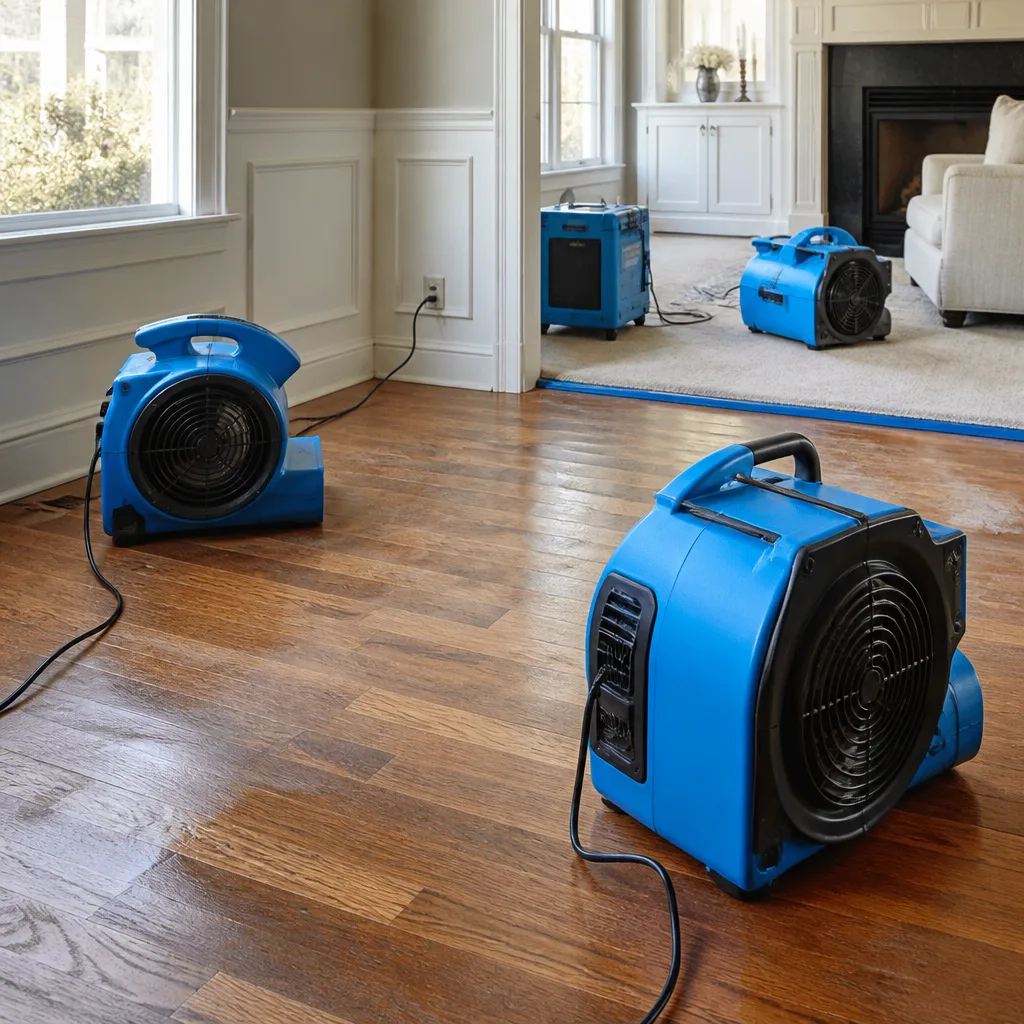
The cost difference between catching a leading indicator and responding to a lagging indicator is substantial. In our experience across Puyallup homes, early intervention at the leading indicator stage typically involves targeted drying with professional-grade equipment, such as a Dri-Eaz LGR dehumidifier and Phoenix axial air movers, over 3-5 days. Waiting for the lagging indicator often requires material removal, antimicrobial treatment, and reconstruction, with timelines extending to 2-4 weeks and costs multiplying accordingly.
The documentation gap costs homeowners their claims. Insurance adjusters pay for what is documented, not what is assumed. A moisture reading logged with date, location, and material type becomes evidence. A musty smell does not.
Measurable Thresholds by Material: When a Number Becomes Actionable
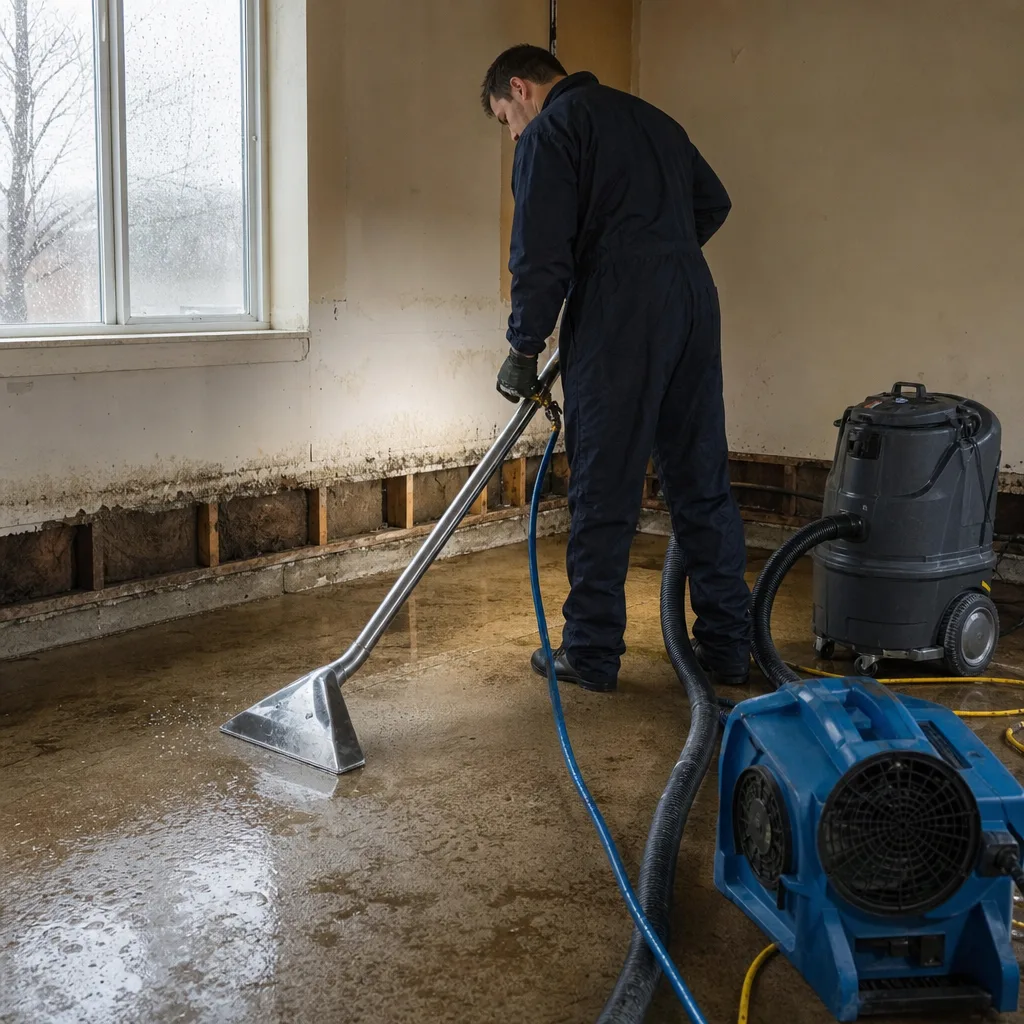
Moisture content is expressed as a percentage of the material’s dry weight. Different materials have different equilibrium moisture content ranges in the Pacific Northwest climate, and different thresholds at which damage mechanisms activate. These are the numbers we use in every assessment in Puyallup.
Wood Framing and Structural Lumber
Normal equilibrium moisture content for wood framing in the Puyallup area ranges from 10% to 16%, varying with outdoor relative humidity and indoor ventilation. The critical threshold is 19% moisture content. Above this level, wood-decay fungi can establish and propagate. The decay process is not immediate, but it is irreversible. Wood that has reached 22% MC and held there for several weeks has begun structural compromise even if it looks sound.
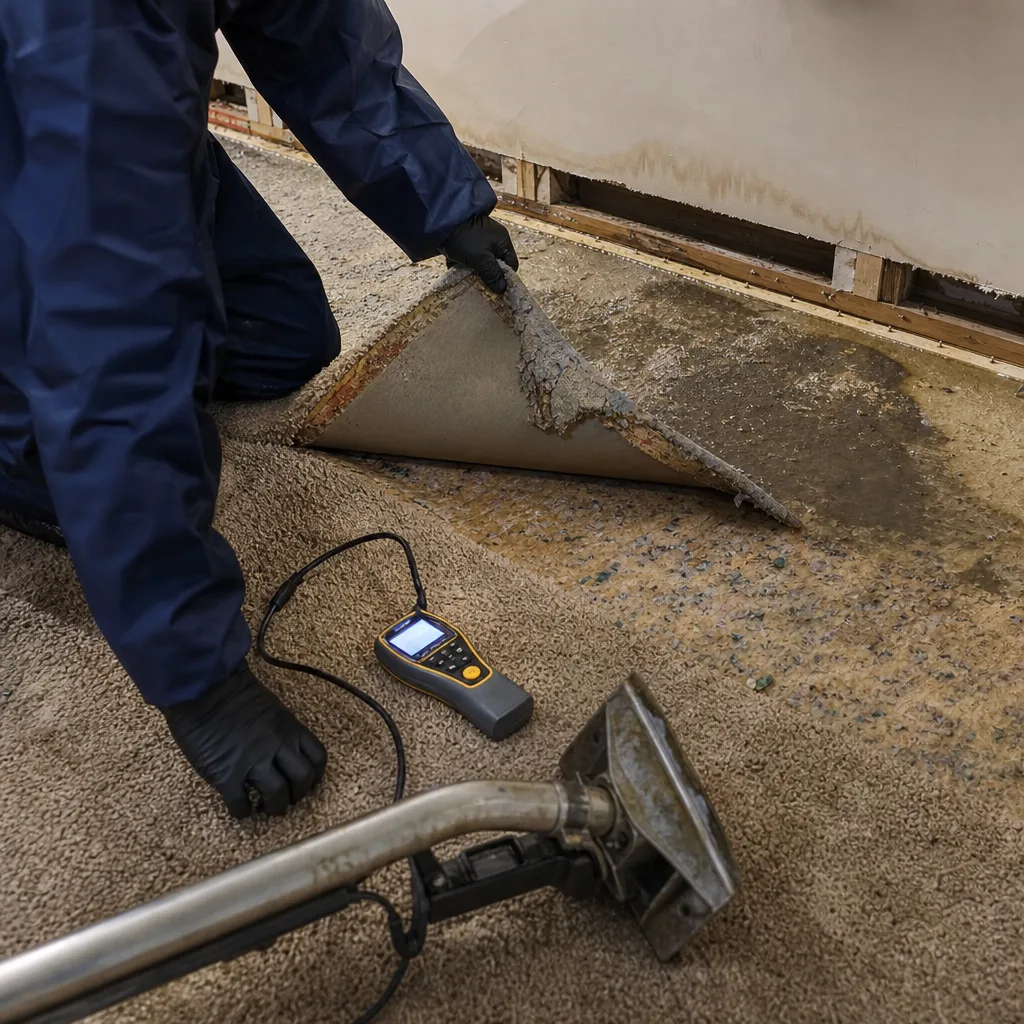
We use a pin-type moisture meter on exposed framing in crawl spaces, basements, and attic spaces. The reading should be taken at multiple points along the same member, not just one location. A single high reading may indicate a localized leak. A pattern of elevated readings across multiple members indicates systemic moisture loading.
Drywall and Gypsum Board
Drywall is hygroscopic and responds quickly to ambient humidity changes. The relevant measurement is Wood Moisture Equivalent (WME), which standardizes the reading across materials. Drywall above 1% WME in a conditioned space is unusual and warrants investigation. Above 17% WME, drywall is actively wet and at risk of microbial growth within 48-72 hours if temperature conditions are favorable.
In Puyallup’s climate, we pay particular attention to drywall on north-facing exterior walls and behind fixtures in bathrooms with inadequate exhaust ventilation. These locations run cooler and can fall below dew point even when the rest of the home is in range.
Subfloor and Underlayment
Subfloor moisture content above 16% MC indicates conditions favorable for cupping in hardwood flooring above and mold growth below. Engineered hardwood is particularly susceptible in Puyallup homes with crawl space moisture issues. The adhesive layers in engineered products can fail before solid wood shows comparable distress.
Crawl Space and Basement Ambient Conditions
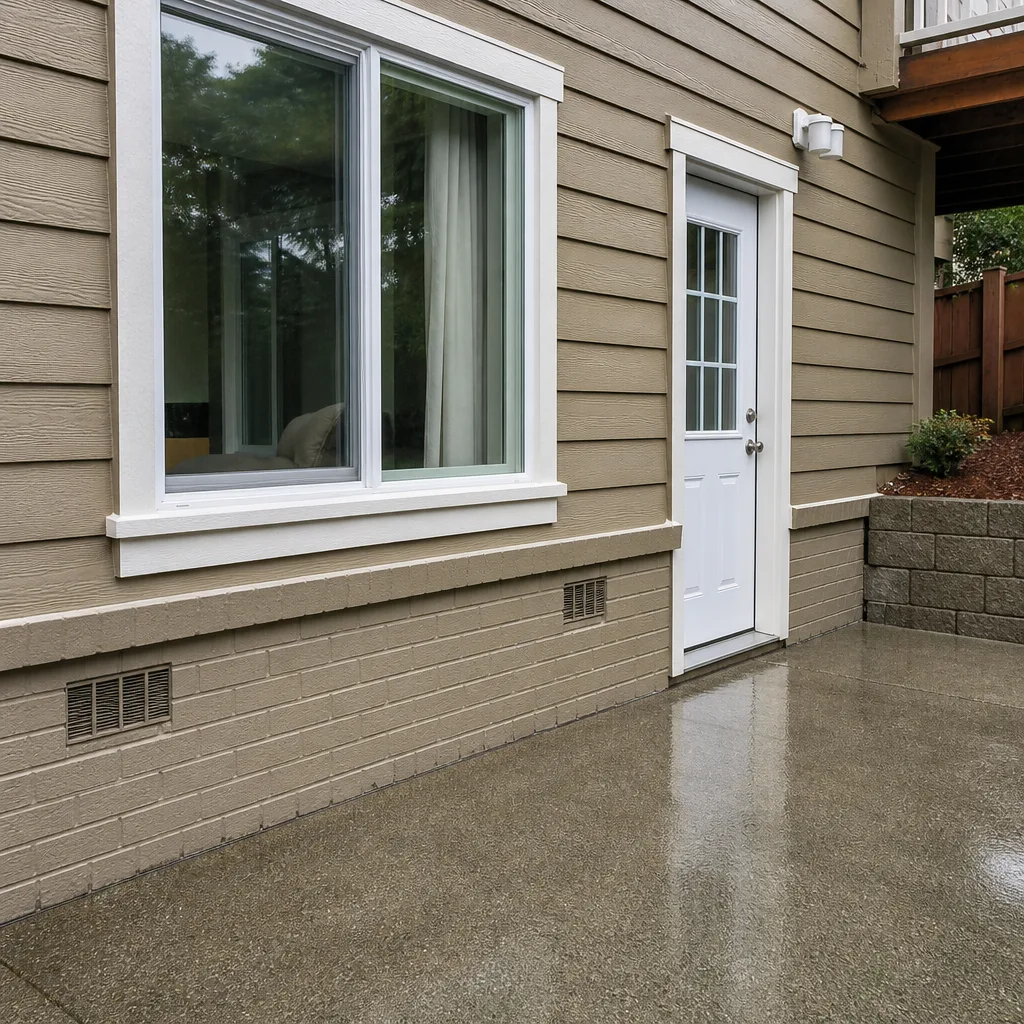
Relative humidity in a crawl space should remain below 60% sustained. At 60% RH and typical Puyallup temperatures, mold spores can germinate on organic surfaces. At 70% RH, germination is likely. We install continuous hygrometers in crawl spaces during restoration work and recommend homeowners do the same for ongoing monitoring.
Key threshold summary:
- Wood framing: 19% MC (decay fungi activation)
- Drywall: 1% WME (investigate), 17% WME (active wet condition)
- Subfloor: 16% MC (cupping and mold risk)
- Crawl space ambient: 60% RH sustained (mold germination threshold)
These numbers appear in our daily drying logs, which we provide to homeowners and insurers as standard documentation under The Haven Standard. The log is not an upsell. It is the evidence that turns a restoration invoice into a payable claim.
Three Puyallup-Specific Moisture Patterns We’ve Documented
Puyallup’s location in the Puyallup River valley, combined with its mix of pre-war housing stock, mid-century development, and recent construction, creates repeatable moisture patterns that knowledgeable homeowners can recognize early.
Pattern 1: Efflorescence on Basement Block Walls After October Rain Events
The Puyallup area’s first sustained autumn rains typically arrive in October, following a dry summer during which foundation perimeters have desiccated. The soil rehydrates rapidly, hydrostatic pressure against basement walls increases, and water migrates through capillary action in concrete block. The result is a white, powdery deposit of mineral salts on the interior surface, efflorescence, often first visible at the base of walls or at mortar joints.
Efflorescence itself is not structural damage. It is evidence of water movement. The actionable indicator is the moisture content of the block and the relative humidity of the basement air in the weeks following the first October storms. We have documented cases in the South Hill and Summit areas where block walls reached 85% RH surface conditions and adjacent framing climbed to 22% MC before any visible staining appeared on interior finishes.
Homeowners with unfinished basements should take pin-meter readings on the bottom plate of framed walls during the first two weeks of October. A reading above 16% MC warrants monitoring every 72 hours. Sustained elevation above 19% MC requires professional assessment.
Pattern 2: Condensation Tracking on North-Facing Exterior Walls in Older Homes
Puyallup’s older housing stock, particularly homes built before 1970 with minimal or degraded wall insulation, develops a predictable cold surface pattern on north-facing walls during winter months. The exterior sheathing and interior drywall surface run below the dew point of the conditioned interior air. Moisture condenses, runs down the wall, and pools at the baseplate or behind baseboards.
We see this pattern frequently in the downtown Puyallup historic district and in neighborhoods with significant pre-war construction. The warning sign is not the water stain that eventually appears. It is the surface temperature of the wall, measurable with an infrared thermometer, consistently below 55°F during heating season while interior air is at 68-70°F and 35-45% RH. That temperature differential indicates a thermal bridge and potential condensation surface.
The moisture meter reading at the base of north-facing walls in these homes, taken during January and February, often reveals 18-24% MC in the bottom plate while the rest of the framing is at normal equilibrium. This localized elevation is actionable. It predicts the damage that will appear in spring when temperatures rise and microbial activity accelerates.
Pattern 3: Cupping in Engineered Hardwood Over Crawl Spaces with Failed Vapor Barriers
Puyallup’s prevalence of crawl space construction, combined with the regional practice of installing engineered hardwood flooring directly over plywood subfloors without adequate vapor retarders, creates a specific failure mode. The crawl space vapor barrier, typically 6-mil polyethylene, degrades over 10-15 years through puncture, displacement, or UV damage if exposed. Once compromised, soil moisture evaporates into the crawl space, raises subfloor MC, and migrates upward through the flooring assembly.
Engineered hardwood responds with edge cupping, the board edges rising higher than the center. This is a lagging indicator. The leading indicator is subfloor moisture content above 14% MC, measurable through a floor vent or at the crawl space access. We have restored homes in the Meridian corridor and along River Road where subfloor MC reached 19% before cupping was visible to the homeowner, and 22% before the cupping was pronounced enough to prompt a call.
The decision rule applies here. If subfloor MC is above 16% and crawl space RH is above 60%, both conditions sustained for more than one week, professional assessment is warranted. The vapor barrier replacement and targeted drying are far less disruptive than full flooring removal after cupping has occurred.
One-Time Spike vs. Sustained Elevation: The Decision Rule
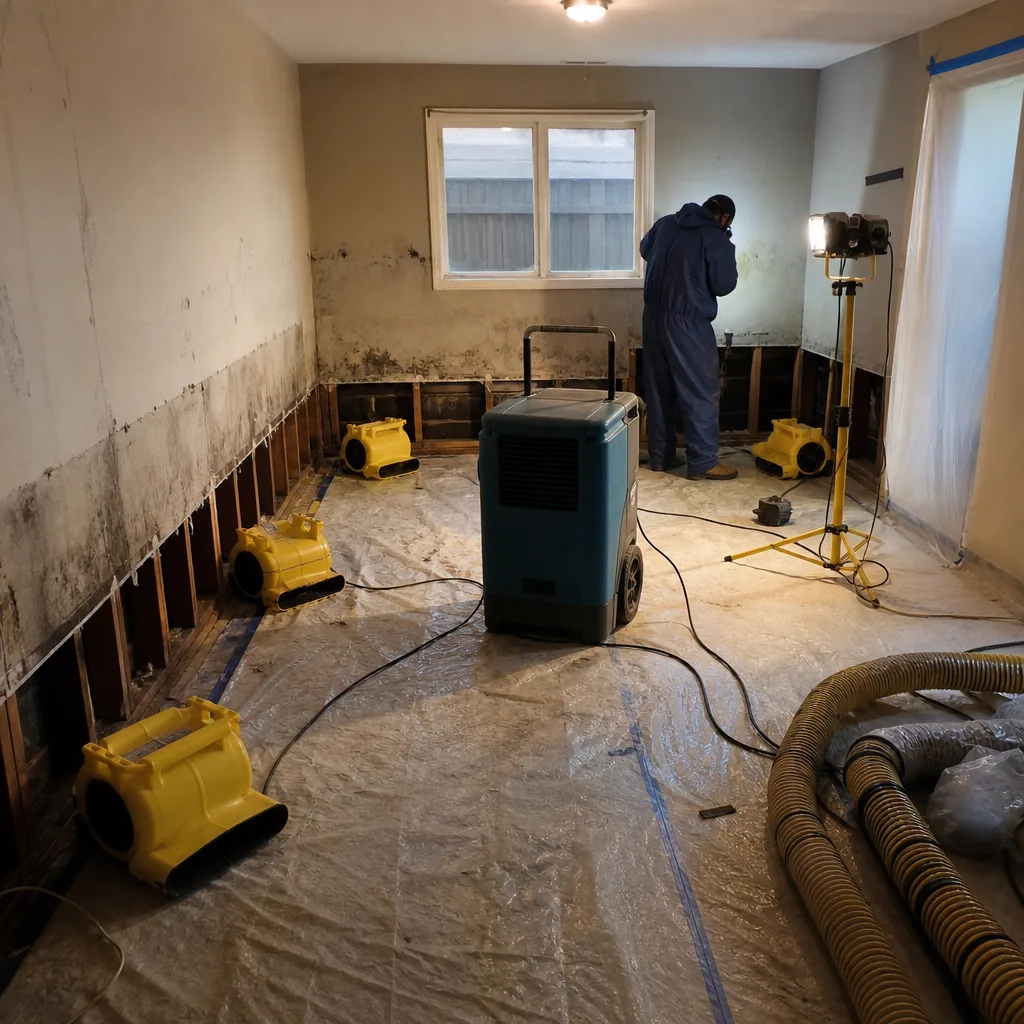
Not every elevated moisture reading demands immediate action. Seasonal Damage Restoration Care for Puyallup: Year-Round Homeowner’s Guide explains how variation, construction activity, and transient events can produce short-term spikes that self-correct. The skill is distinguishing these from sustained elevations that indicate ongoing damage.
A one-time spike typically shows these characteristics:
- The elevated reading follows a known event: a heavy rainstorm, a plumbing repair, window washing, or similar.
- The reading returns to baseline within 48-72 hours without intervention.
- Adjacent materials show normal readings. The elevation is isolated to one location or one material layer.
- The ambient conditions (temperature, relative humidity) in the affected space are trending toward normal.
A sustained elevation shows different patterns:
- The elevated reading persists or worsens across multiple measurements taken 48-72 hours apart.
- The elevation spreads to adjacent materials or locations. A wet subfloor begins to affect the bottom plate; a damp rim joist begins to affect the sill plate.
- Ambient humidity in the affected space remains elevated even as outdoor conditions normalize.
- The source of moisture is not identified and addressed. The condition is not self-correcting.
The decision rule for Puyallup homeowners: If two or more measurable indicators are present simultaneously, document the readings with date, time, location, material type, and ambient conditions, then initiate a professional assessment within 48 hours rather than continuing to monitor.
Two indicators might be: subfloor at 17% MC plus crawl space RH at 65%. Or rim joist at 20% MC plus north-facing wall surface temperature at 52°F with interior air at 70°F/40% RH. The combination indicates a system under moisture stress, not a transient event.
Documentation matters for insurance purposes. A log with dated readings, photographs of the meter display, and notes on weather conditions provides the evidence chain that adjusters require. We provide this documentation as standard on every assessment under The Haven Standard. Water Damage Restoration in Puyallup begins with measurement, not demolition.
Fire and Smoke Damage: Early Indicators Before the Alarm
Water and mold dominate the damage restoration conversation, but fire and smoke damage has its own leading indicators, and they are often missed until the event itself. The measurable approach applies here too, though the tools differ.
Electrical System Warning Signs
Arc fault circuit interrupters (AFCIs) that trip repeatedly on the same circuit indicate persistent arcing conditions that can ignite surrounding material. This is not a nuisance trip. It is a fire warning sign that precedes visible damage. We recommend that homeowners who experience repeated AFCI trips on the same circuit have an electrician inspect the circuit before resetting becomes routine.
Outlets or switches that are warm to the touch, or that emit a faint ozone or hot plastic odor, indicate resistance heating at a connection point. The temperature rise is measurable with an infrared thermometer. A surface temperature more than 10°F above ambient on an outlet faceplate warrants immediate investigation.
HVAC and Combustion Appliance Indicators
Furnaces and water heaters in Puyallup homes, particularly those in basements or utility closets with limited ventilation, can develop cracked heat exchangers or blocked flues. The leading indicators are measurable:
- Carbon monoxide detector readings above 0 ppm in the living space, even if below alarm threshold
- Soot accumulation around appliance cabinets or on nearby walls
- Yellow or flickering burner flames in natural gas appliances (proper flame is blue and steady)
- Condensation on interior windows that correlates with heating system operation, indicating combustion byproduct infiltration
We do not perform HVAC repairs. We restore the damage after fire and smoke events. But we have documented enough fire damage scenes in Puyallup to recognize that the events were preceded by weeks or months of these measurable warnings.
Smoke Damage Before the Fire
Not all smoke damage requires flames. Fire & Smoke Damage Restoration in Puyallup frequently addresses damage from fireplace backdrafts, cooking incidents, and malfunctioning appliances that never produced a structural fire. The warning sign is persistent particulate residue on surfaces near the source, visible as a thin film that reappears after cleaning. This indicates ongoing incomplete combustion and inadequate ventilation. An air quality meter showing elevated PM2.5 near the source confirms the finding.
Sewage and Biohazard Warning Signs: When Speed Matters
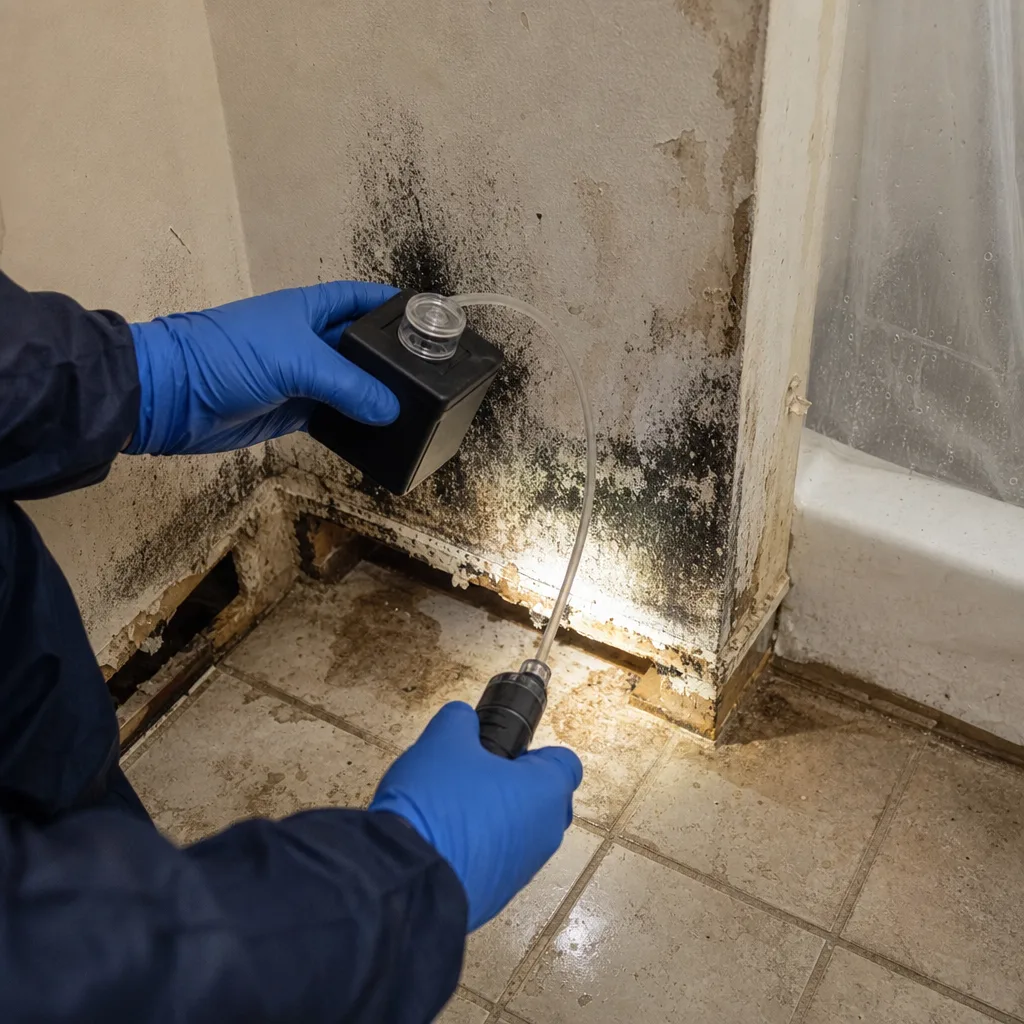
Sewage backup and biohazard events differ from water damage in one critical respect: the health hazard is immediate, not progressive. There are no leading indicators in the sense of gradual moisture accumulation. The warning signs are the event precursors and the early evidence of contamination spread.
Sewage Event Precursors
Multiple drains backing up simultaneously, particularly on lower floors, indicate a main line blockage rather than a localized clog. Gurgling in toilets or drains when upper-floor fixtures run suggests venting problems or partial blockage. The smell of sewage in the yard, particularly near the cleanout, indicates a lateral line failure. Each of these warrants immediate professional plumbing assessment, not DIY clearing attempts.
When sewage enters a structure, the contamination category escalates from Category 1 (clean water) to Category 3 (grossly contaminated) immediately. There is no monitoring period. The decision rule is: if sewage has touched a porous material, that material requires professional assessment for removal and replacement under IICRC S500 standards.
Biohazard Indicators
Biohazard situations, including unattended death, trauma scenes, and hoarding conditions with biological contamination, are rarely preceded by measurable indicators that a homeowner would track. The warning signs are behavioral and environmental: persistent unexplained odors that do not respond to cleaning, pest activity concentrated in specific areas, or visible contamination that the occupant is unable to address due to physical or cognitive limitations.
These situations require specialized remediation beyond standard cleaning. We provide this service with background-checked, uniformed technicians who document every stage of the process with photograph records, as required for insurance and regulatory purposes. The Haven Standard applies: written scope before work begins, no additions once the crew is on site.
Homeowner Monitoring: Tools, Locations, and Frequency
Effective monitoring does not require professional equipment. It requires consistent application of basic tools and a logging habit.
Recommended Tools
- Pin-type moisture meter: $25-$40. More accurate than pinless meters for the materials and depths relevant to structural assessment.
- Infrared thermometer: $20-$30. For surface temperature readings that identify thermal bridges and potential condensation surfaces.
- Digital hygrometer: $15-$25 per unit. For crawl space, basement, and attic ambient monitoring. Choose models that log minimum and maximum readings over time.
Monitoring Locations and Schedule
- Crawl space: Monthly during wet season (October-April), quarterly during dry season. Readings: wood framing at three points, subfloor at two points, ambient RH and temperature. Log all readings with date.
- Basement: Monthly year-round if unfinished; quarterly if finished and conditioned. Readings: bottom plate of framed walls, base of block walls, ambient RH and temperature.
- Attic: Quarterly. Readings: roof sheathing at north and south slopes, ambient RH and temperature. Look for condensation on nail points in morning hours.
- North-facing exterior walls (older homes): Monthly December-February. Surface temperature at baseboard level, moisture content of baseplate through electrical box openings if accessible.
- Under-sink cabinets: Quarterly. Visual inspection for supply line corrosion, moisture meter reading of cabinet base if any discoloration is present.
The log format is simple: date, location, material, reading, ambient conditions, notes. A smartphone photograph of the meter display, geotagged and dated, provides the documentation backbone that insurers and restoration professionals need.
When readings approach the thresholds in this guide, increase frequency to every 48-72 hours. If two indicators are simultaneously elevated, apply the decision rule and initiate professional assessment.
Common Mistakes to Avoid
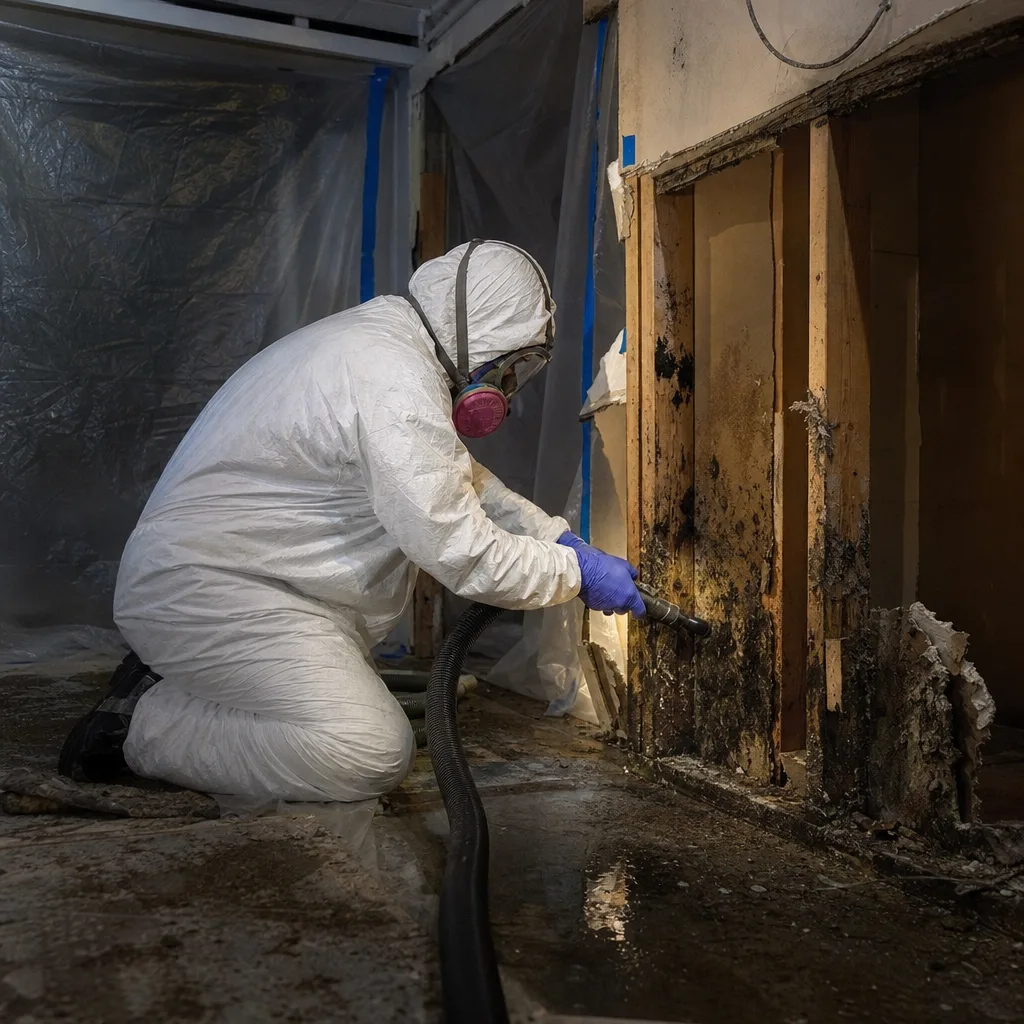
- Waiting for visible damage before acting. In Puyallup’s climate, a water stain on drywall typically appears after the cavity behind it has been wet for 2-4 weeks. The repair cost at that stage is 3-5 times the cost of early intervention.
- Using a pinless moisture meter on uneven surfaces. Pinless meters measure surface conditions and are fooled by paint, texture, and material density. Pin-type meters penetrate to the depth of interest and are essential for structural assessment.
- Monitoring only one location. A single dry reading in a crawl space corner does not indicate a dry crawl space. Moisture follows pathways: along the rim joist, through penetrations, beneath vapor barrier gaps. Multiple readings reveal the pattern.
- Ignoring seasonal baselines. A 16% MC reading in August may be normal. The same reading in February, when equilibrium should be 11-13%, indicates active moisture loading. Compare to seasonal baselines, not absolute numbers alone.
- Assuming new construction is immune. We have documented moisture damage in Puyallup homes less than two years old, typically from improper flashing, missing vapor barriers, or construction moisture that was not adequately dried before enclosure. The building code minimum is not the performance optimum.
- Delaying assessment for “monitoring.” The decision rule exists because monitoring without action is a common form of denial. Two simultaneous elevated indicators mean the system is already under stress. Forty-eight hours to professional assessment is the appropriate response.
- Discarding documentation. Insurance adjusters pay for documented damage, not homeowner recollection. The moisture log, photographs, and weather correlation are the claim. Store them with other home records and provide copies to any restoration professional you engage.
When to Call a Professional
Call for professional assessment when: two or more measurable indicators are simultaneously elevated; any moisture content reading exceeds the action threshold for its material and remains elevated across two measurements 48 hours apart; you observe efflorescence, staining, or odor and do not have a documented baseline to determine whether the condition is new or progressive; or a sewage, fire, or biohazard event has occurred, regardless of apparent severity.
DryMark Restoration Puyallup offers free estimates in Puyallup and the surrounding communities. Every assessment includes a written scope and price before any work begins, Haven Standard, Clause 1. We document every visit with a photograph record and provide daily drying logs during active restoration, producing the evidence that insurers require for claim payment. Our live dispatch answers every call, 24 hours a day, 7 days a week, with no voicemail on emergency lines. Call (253) 447-5249 to schedule an assessment or request a free second opinion on any competitor’s written estimate.
Frequently Asked Questions
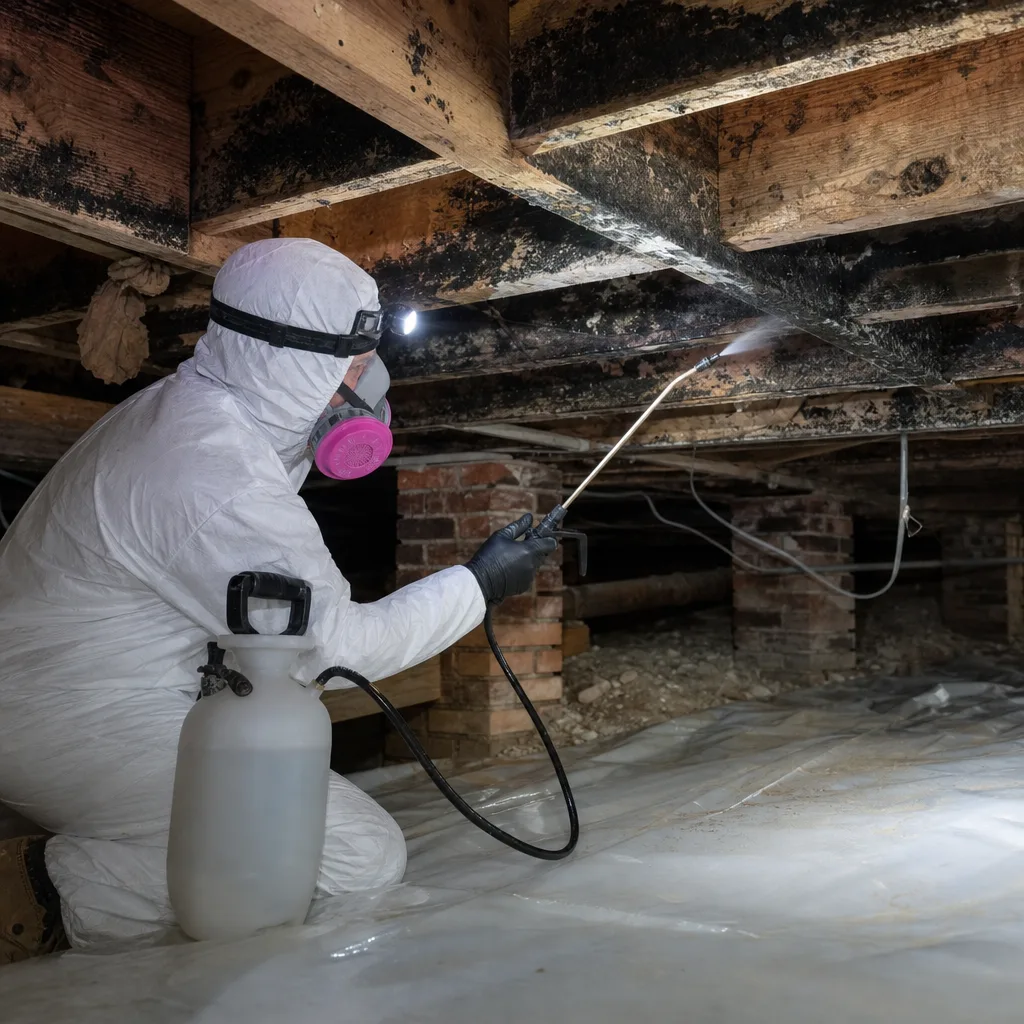
Moisture assessments from DryMark Restoration Puyallup are provided at no charge. We deliver a written scope and price before any work begins, Haven Standard, Clause 1, and we offer a free second opinion on any competitor’s written estimate. Call (253) 447-5249 to schedule.
Coverage depends on the policy and the documentation. Insurance typically covers sudden and accidental water damage, not gradual deterioration. The key is proving that the condition was discovered promptly and addressed without delay. Our documented moisture logs, dated photographs, and written scopes provide the evidence chain that supports claim approval. We coordinate directly with adjusters and provide the documentation in the format they require.
Our live dispatch answers every call, 24 hours a day, 7 days a week, with no voicemail on emergency lines. For active water damage, sewage backup, and fire damage, we aim to have a technician on site within hours, not days. For assessment and monitoring concerns that are not active emergencies, we typically schedule within 24-48 hours. The response speed matches the situation severity.
Surface cleaning addresses what you can see. It does not address moisture trapped in cavities, microbial growth in inaccessible areas, or the source condition that caused the damage. We have restored many Puyallup homes where DIY cleaning masked the problem for months while structural damage progressed behind finishes. A professional assessment with moisture mapping reveals the full extent. The written scope we provide before work begins shows exactly what is necessary and why.
We do. Direct adjuster coordination is standard on every job. We provide the documentation package: photograph records, daily drying logs with psychrometric data, material classifications, and the written scope. Our documentation is formatted to the standards that adjusters recognize, because our founder built this company after seeing how documentation gaps cost homeowners their claims. You are not left to translate technical reports into claim language.
The 365-Day Done Right Promise is a written guarantee under The Haven Standard: if any work we perform is not done right, we make it right, at no additional cost, for one full year. It is not a marketing line. It is a signed warranty on every job, backed by 12,000+ homes restored since 2011 with the same documentation discipline that supports it.
Puyallup’s location in the Puyallup River valley creates specific conditions: higher water tables in some neighborhoods, soil types that retain moisture, and a microclimate with more fog and lower winter temperatures than Seattle proper. Combined with a housing stock that includes significant pre-1970 construction with minimal insulation and vapor management, these factors produce the three patterns we document repeatedly: autumn efflorescence, north-wall condensation, and crawl space vapor barrier failure. Awareness of these patterns allows earlier detection than generic guidance provides.
The Bottom Line
The most valuable warning signs in a Puyallup home are not visible. They are numbers: 19% moisture content in wood framing, 60% relative humidity in a crawl space sustained for 72 hours, a sump pump cycling daily instead of monthly. These measurable indicators precede stains, odors, and buckling by weeks or months, when intervention is simpler, faster, and less expensive.
The tools to detect them cost less than $100 combined. The discipline to log readings seasonally takes minutes per month. The decision rule, two simultaneous elevated indicators trigger professional assessment within 48 hours, removes the guesswork that leads to delayed action.
Documentation transforms these readings from homeowner curiosity into insurance evidence. Daily drying logs, photograph records, and written scopes are not upsells at DryMark Restoration Puyallup. They are standard deliverables under The Haven Standard, produced with professional-grade equipment from Dri-Eaz, Phoenix, and XPOWER, and formatted to the IICRC, RIA, and IFA standards that adjusters recognize.
Measure before you see. Document before you claim. Act before the damage spreads.
Written by Alicia Brennan, Owner at DryMark Restoration Puyallup, serving Puyallup since 2011.