
Last updated September 23, 2026
Free visual inspection and a written scope of work before any mitigation begins - photos, moisture readings, and drying logs go in your claim file
The scope we write is the scope we bill. Anything new gets shown to you, in writing, before we touch it.
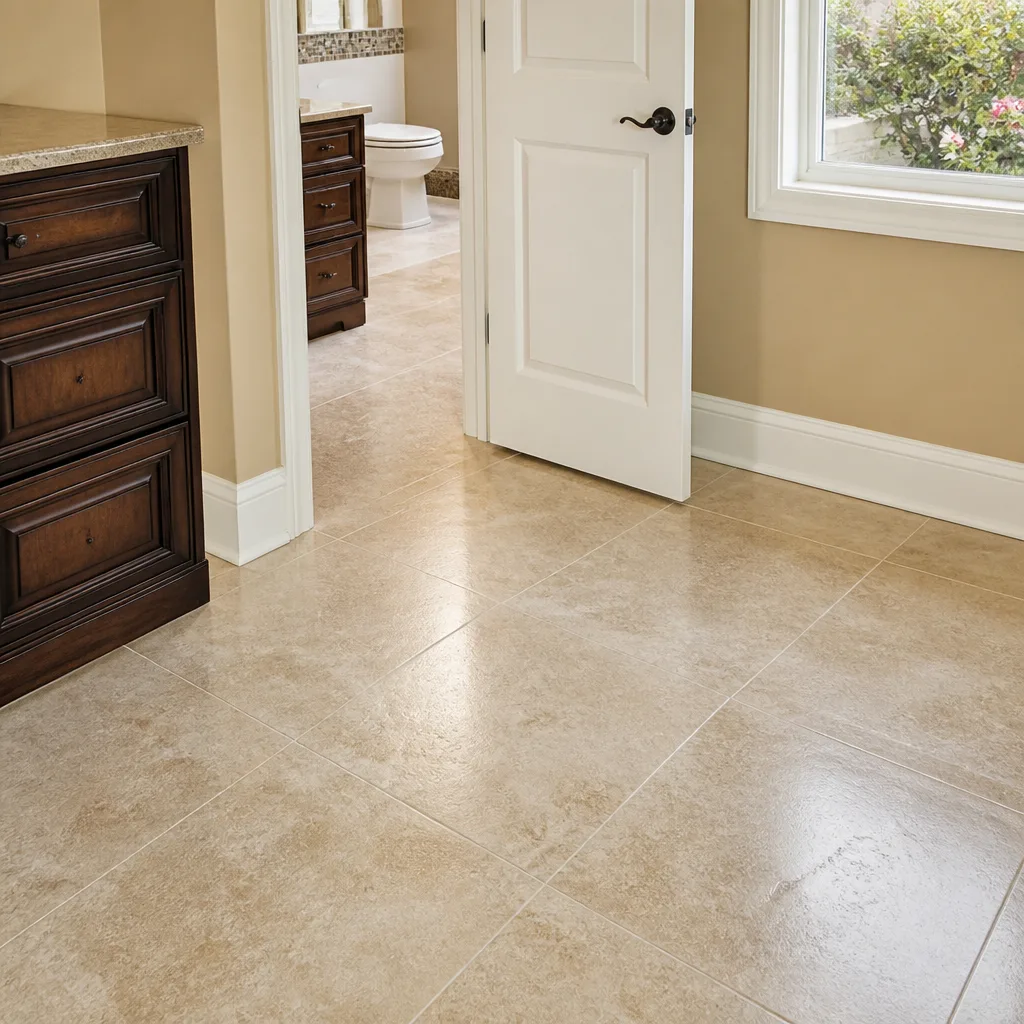
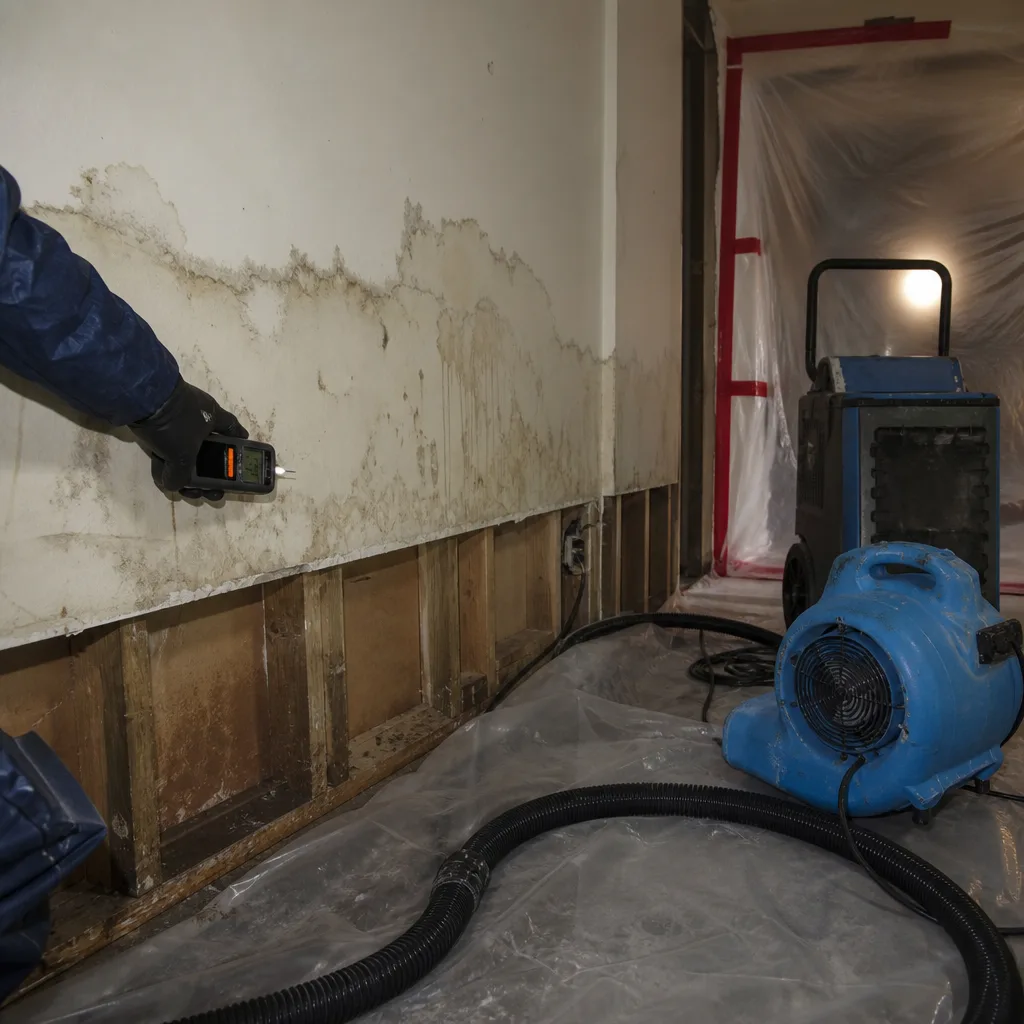 Before
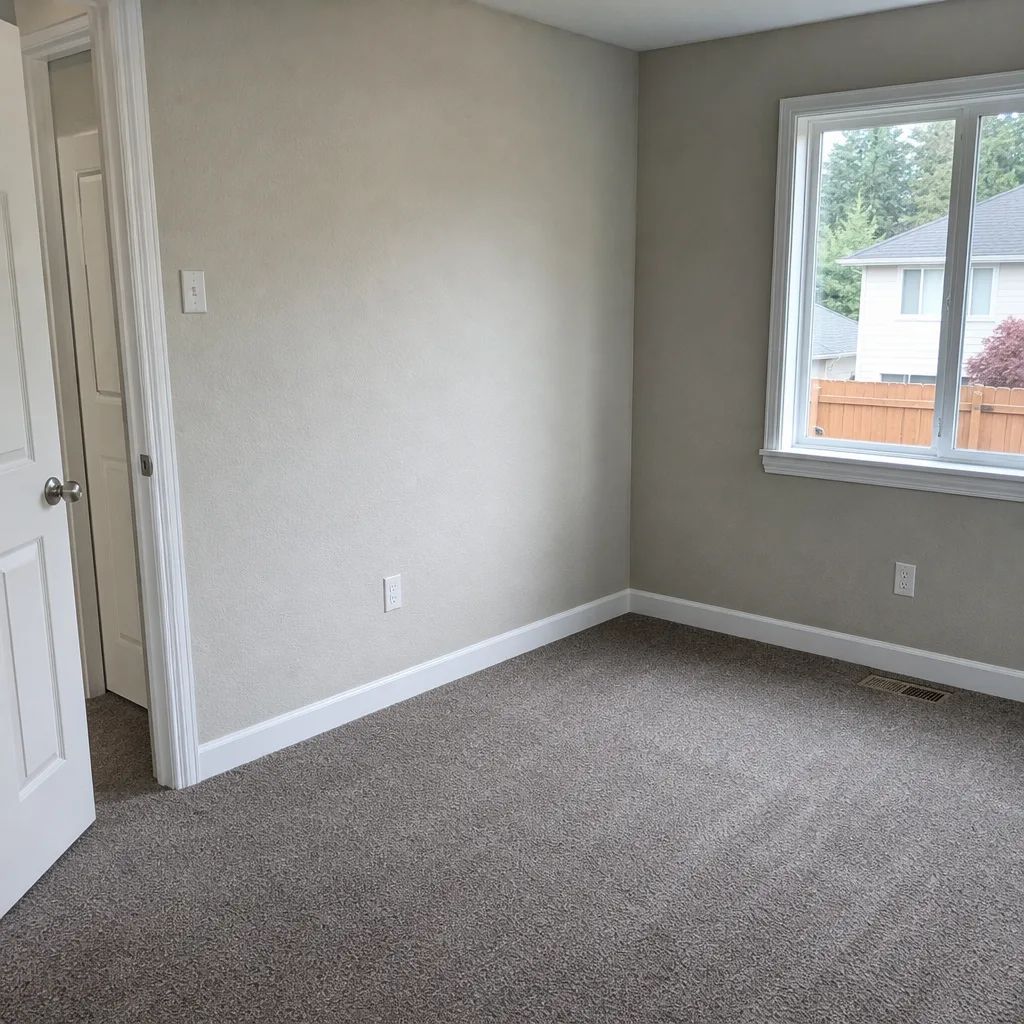 After
After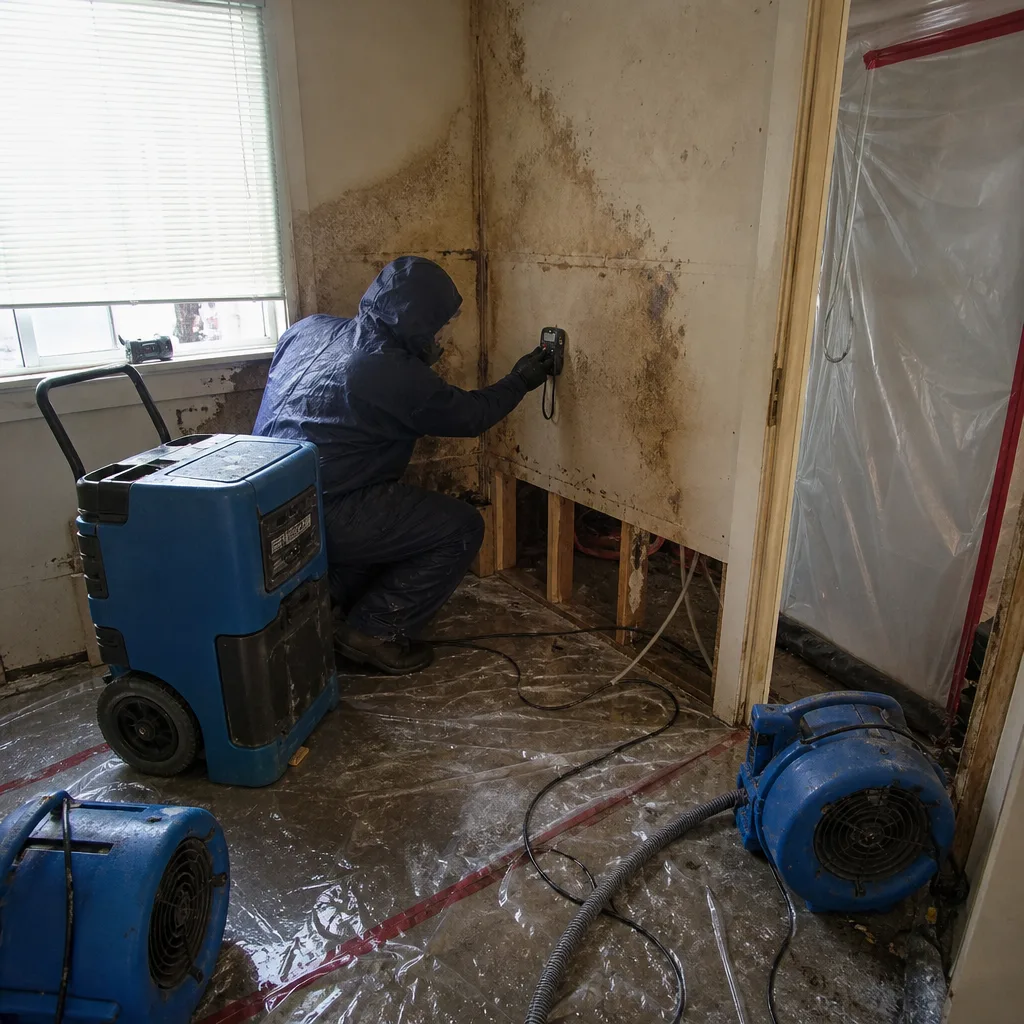 Before
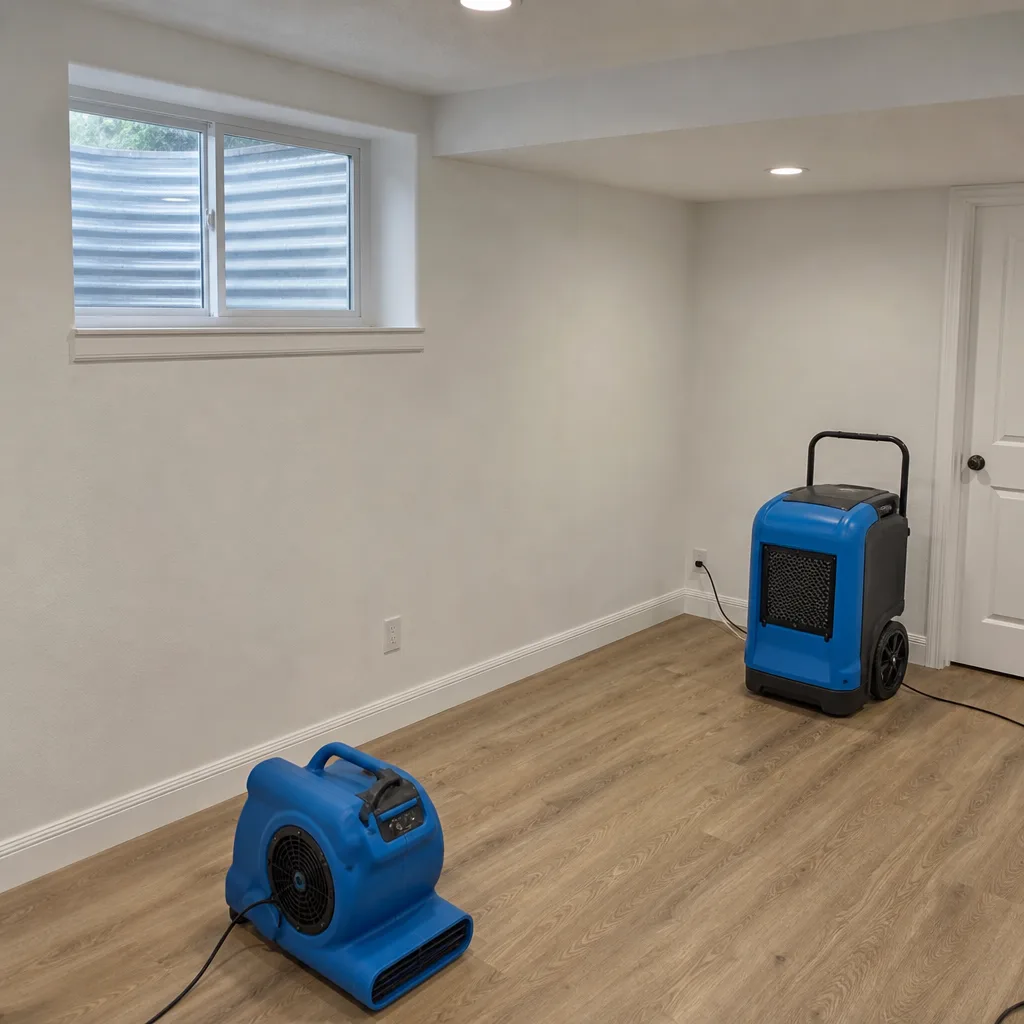 After
After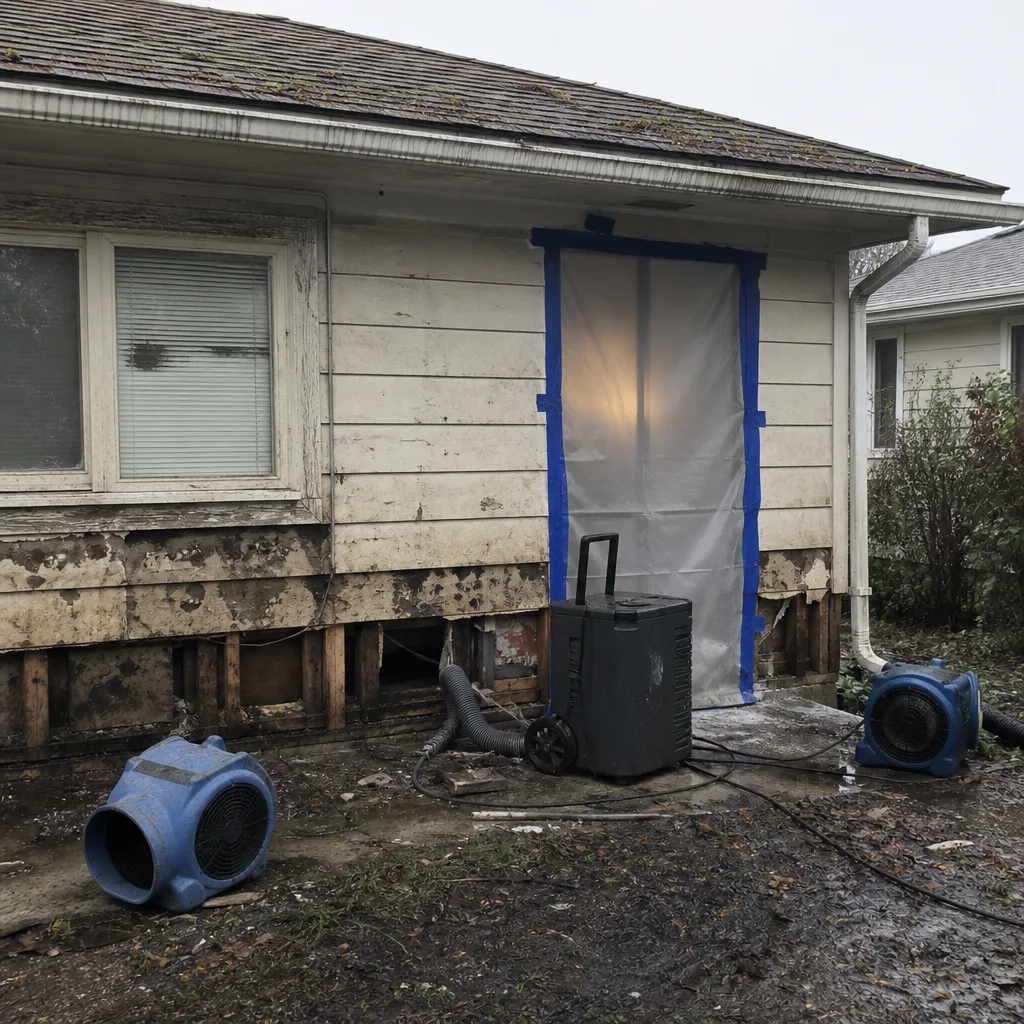 Before
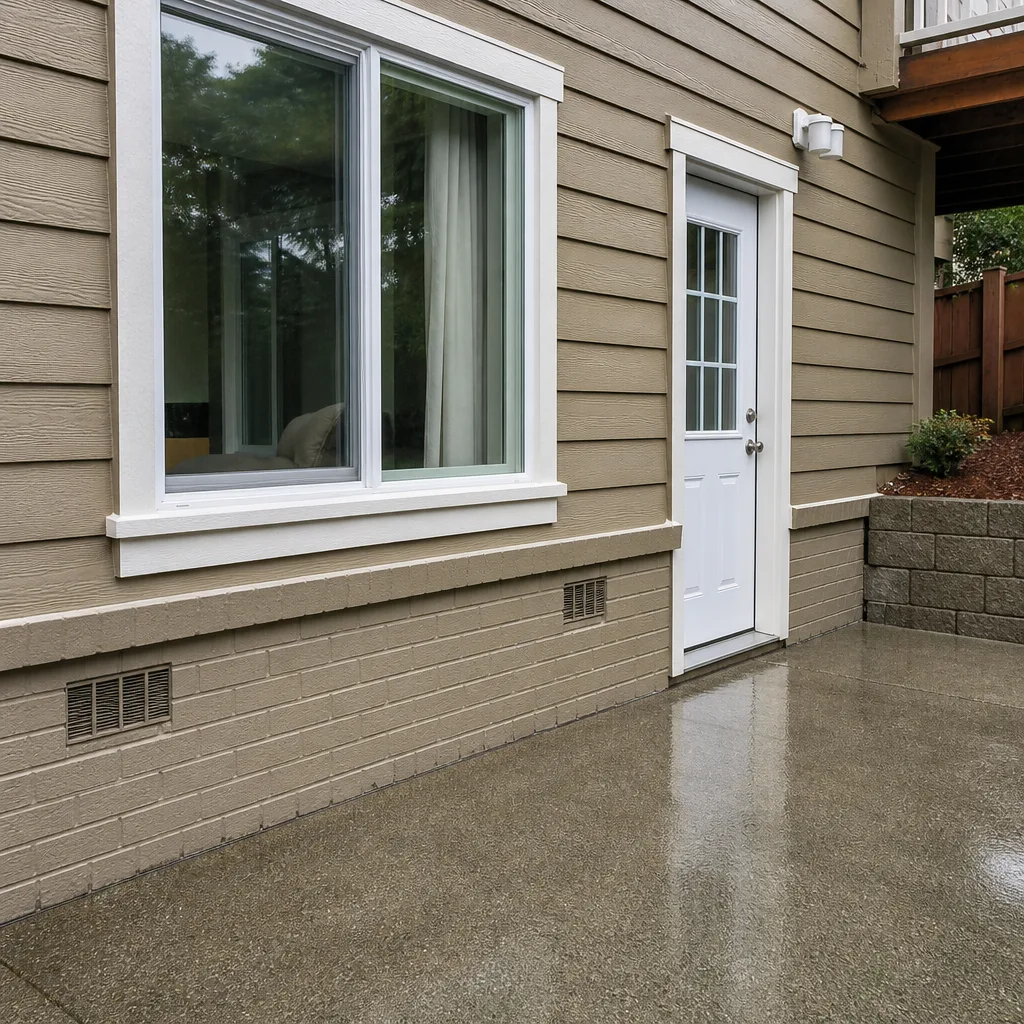 After
AfterDIY vs Professional Damage Restoration: The Puyallup Homeowner’s Decision Guide
Washington’s standard homeowner’s policy does not exclude DIY remediation, but it does require the policyholder to mitigate damage promptly and document what was done. A homeowner who runs a rental dehumidifier for three days without recording a single moisture reading has technically mitigated and technically documented nothing. In Puyallup, where winter humidity averages 85% and spring runoff pushes groundwater into basements across the South Hill and downtown core, we’ve seen this documentation gap cost homeowners thousands in denied secondary-damage claims. This guide will show you exactly where DIY ends and professional work begins, what documentation standards your insurer actually requires, and how to make the decision based on evidence rather than effort. For how to hire a damage restoration contractor in Puyallup, see our step-by-step guide.
Quick Answer
DIY damage restoration in Puyallup is viable only for Class 1 water damage: clean water, less than 5% of wall or floor material affected, no porous material saturation, and only if you document moisture readings at four points per room with before-and-after photos keyed to a floor plan. For everything else, including Category 2 or 3 water, structural material involvement, or any affected area exceeding 10 square feet of porous material, professional restoration costs less on the first day when you account for equipment capability, documentation requirements, and warranty preservation.
Table of Contents
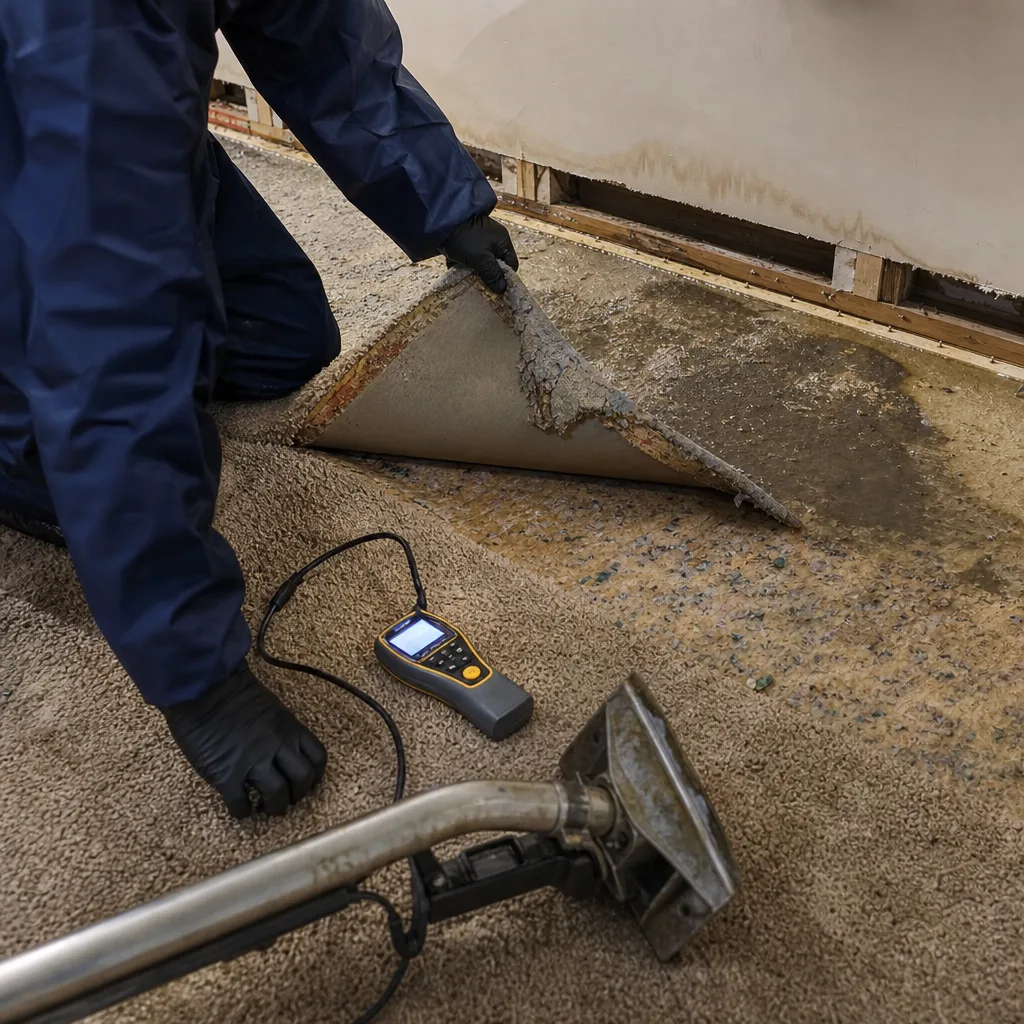
- What Washington Insurers Actually Require from DIY Mitigation
- Class 1 vs. Class 2-4: The Scope Boundary for Homeowners
- The Equipment Gap: Why Consumer Tools Fail in Puyallup’s Climate
- The Documentation Minimum for Insurable DIY Work
- When DIY Always Costs More Than Professional Restoration
- Mold Remediation: Why Washington Law Changes the Math
- Fire and Smoke Damage: No Viable DIY Path
- A Clear Decision Framework for Puyallup Homeowners
 Before
 After
AfterWhat Washington Insurers Actually Require from DIY Mitigation
Most Puyallup homeowners assume their insurer cares who does the work. What insurers actually care about is whether the work can be proven. Washington’s standard homeowner’s policy, based on the ISO HO-3 form used by most carriers in the state, includes a duty-to-mitigate clause that requires “reasonable and necessary” steps to prevent further damage. The policy does not define “reasonable” by who holds the tool. It defines it by what can be demonstrated.
We’ve reviewed hundreds of claim files since 2011, and the pattern is consistent. Adjusters deny secondary-damage claims, not initial-damage claims. The homeowner who extracts standing water themselves and calls us three weeks later for mold has a coverage problem, not a mold problem. The issue is the gap between the initial event and the documented response.
Here’s what Washington insurers expect to see in a DIY mitigation file:
- Date- and time-stamped photos of the affected area before any work begins, showing the water line, affected materials, and adjacent unaffected areas for comparison
- Moisture readings taken with a calibrated pin or pinless meter, recorded at minimum four points per room, with the meter model number noted
- Equipment log showing run hours for every dehumidifier, fan, or air mover, including manufacturer and capacity specifications
- Written scope describing what was removed, what was dried in place, and what materials were discarded, with quantities
- Daily progress documentation showing moisture readings trending downward, with target dry standards identified (typically 12-16% moisture content for wood framing, 4% or less for drywall)
Most homeowners do not own a moisture meter. Rental dehumidifiers from hardware stores in Puyallup do not come with hour meters. Without these elements, an insurer can characterize the DIY work as “unverified” and decline coverage for mold, rot, or structural damage that develops later. We’ve seen this happen in the Brookdale neighborhood, in the Fruitland area, and on properties along the Puyallup River corridor where groundwater intrusion is common.
The documentation burden is not theoretical. It is the difference between a paid claim and a denied one. Professional water damage restoration in Puyallup includes this documentation as a standard deliverable, not an upsell. At DryMark Restoration Puyallup, every job receives a photo record on every visit, a written drying log with psychrometric data, and a final report that satisfies every major carrier’s documentation requirements.
Class 1 vs. Class 2-4: The Scope Boundary for Homeowners
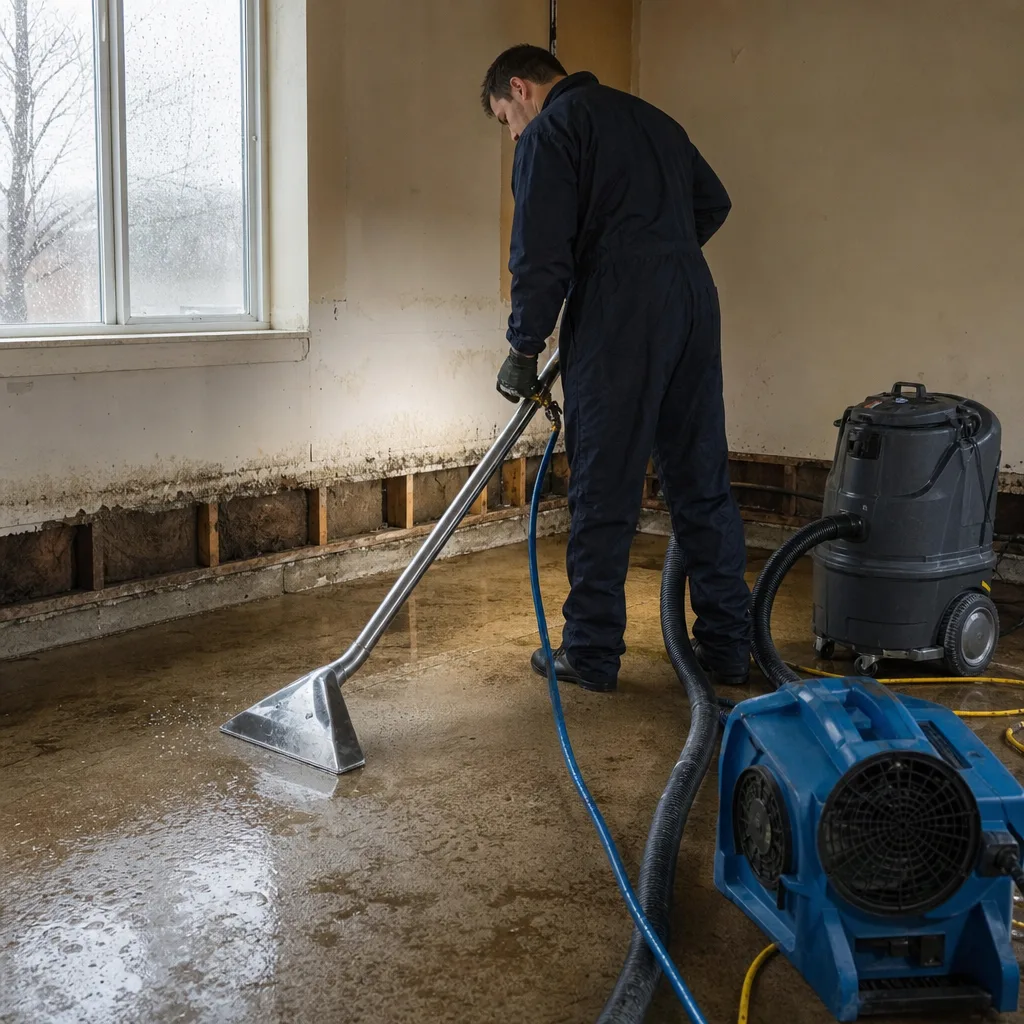
IICRC S500, the standard reference for water damage restoration, classifies water damage by the amount of evaporation required. This classification determines equipment needs, drying time, and whether a homeowner can realistically achieve the result. Understanding these classes is essential because each class represents a different order of complexity.
Class 1: Limited evaporation
Less than 5% of the combined floor, wall, and ceiling surface area in the space is wet. Water originates from a clean source, typically a broken supply line or overflowing sink with no contaminants. Only low-evaporation materials are affected: concrete, tile, sealed wood. No wet carpet, no wet insulation, no water wicking up drywall more than 24 inches.
A competent homeowner can manage Class 1 damage with extraction, air movement, and dehumidification. The key constraint is documentation. If you cannot produce moisture readings showing progression to dry standard, you have not completed Class 1 restoration. You’ve only dried the surface.
Class 2: Significant evaporation
5-40% of surface area is wet. Carpet and cushion are affected. Water has wicked up walls less than 24 inches. Moisture has penetrated structural materials. This is where the equipment gap becomes decisive. A homeowner with a wet-dry vacuum and box fans cannot generate the air velocity or vapor pressure differential required to pull moisture from wall cavities and subfloors. Drying time extends from 24-48 hours to 72-96 hours or more, and every additional day increases mold risk exponentially.
Class 3: Greatest evaporation
More than 40% of surface area is wet. Water may have come from overhead, saturating walls, insulation, and ceiling materials. This class requires professional drying systems, including cavity drying with Injectidry or similar technologies, and often requires controlled demolition to access wet structural components.
Class 4: Specialty drying
Low-permeance materials are saturated: hardwood, plaster, brick, concrete with deep penetration. These materials require specialized drying techniques, including heat application, desiccant dehumidification, and extended drying cycles with precise monitoring.
In Puyallup, we see Class 1 damage most often from dishwasher supply line failures in newer construction on the South Hill, where homes built after 2015 have accessible shut-offs and tile or LVP flooring. We see Class 2 and 3 damage in older homes near downtown, with original plaster, hardwood floors, and balloon framing that wicks water vertically through wall cavities. The construction era of your Puyallup home is a predictor of damage class before the water even stops flowing.
The Equipment Gap: Why Consumer Tools Fail in Puyallup’s Climate
Puyallup’s climate is the variable most DIY guides ignore. Winter relative humidity averages 85%. Spring and fall routinely see 70% ambient humidity. These are not optimal conditions for drying. They are conditions that require professional-grade equipment to overcome.
A consumer dehumidifier, the type available for purchase at hardware stores or rental centers near Meridian and 176th, removes 30-50 pints of moisture per day under ideal conditions. Ideal conditions mean 80°F and 60% relative humidity. Puyallup’s typical winter conditions, 45-55°F and 80-85% relative humidity, reduce that capacity by 40-60%. The effective output drops to 12-20 pints per day.
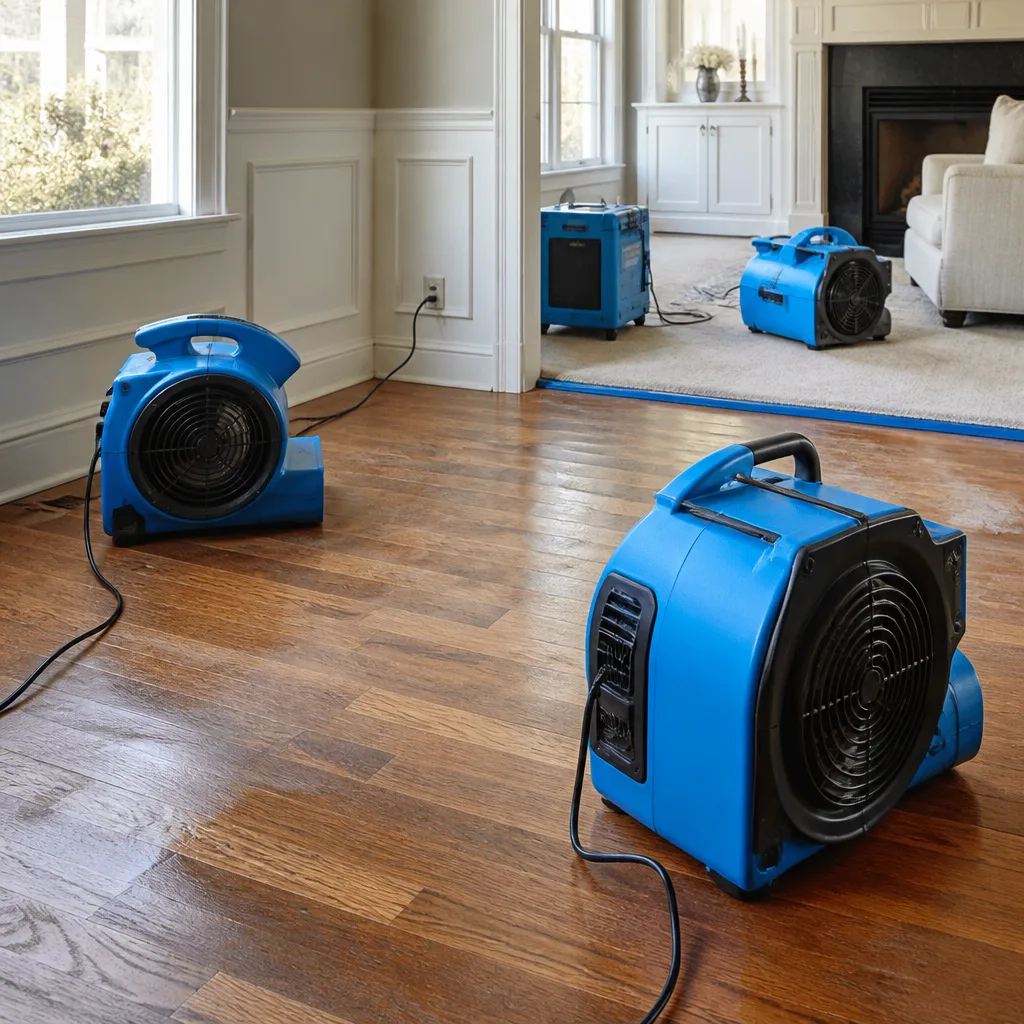
A professional low-grain refrigerant (LGR) dehumidifier, such as the Dri-Eaz Evolution or Phoenix 200 MAX, removes 100-130 pints per day at low grain conditions, the precise conditions Puyallup presents. The difference is not incremental. It is the difference between drying a room in 24 hours and drying it in six days. On day three of a six-day dry, mold has established itself.
The equipment gap extends beyond dehumidification:
| Capability | Consumer/Rental Equipment | Professional Equipment |
|---|---|---|
| Dehumidification (low grain) | 12-20 pints/day | 100-130 pints/day |
| Air velocity (carpet/flooring) | 800-1,200 CFM (box fan) | 2,500-3,200 CFM (air mover) |
| Cavity drying | Not available | Injectidry interstitial drying, positive/negative pressure systems |
| Moisture detection | Pinless meter (rental, often uncalibrated) | Calibrated pin and pinless meters, thermal imaging, thermo-hygrometers |
| Psychrometric monitoring | None | Daily readings of temperature, relative humidity, specific humidity, vapor pressure, dew point |
Psychrometric data, for homeowners unfamiliar with the term, is the measurement of air properties that determine how quickly materials release moisture. Without it, you are guessing at drying progress. Professional restoration creates a drying chart, updated daily, that shows exactly when materials reach their dry standard. This chart is what your adjuster reviews when approving secondary-damage coverage.
In Puyallup’s Silver Creek and Sunrise areas, where many homes sit on daylight basements with below-grade walls, we’ve measured ambient basement humidity at 90% during winter rain events. A consumer dehumidifier in that environment runs continuously without achieving a vapor pressure differential sufficient to pull moisture from concrete or framing. The machine runs. The walls stay wet. The homeowner believes they are drying. They are not.
The Documentation Minimum for Insurable DIY Work
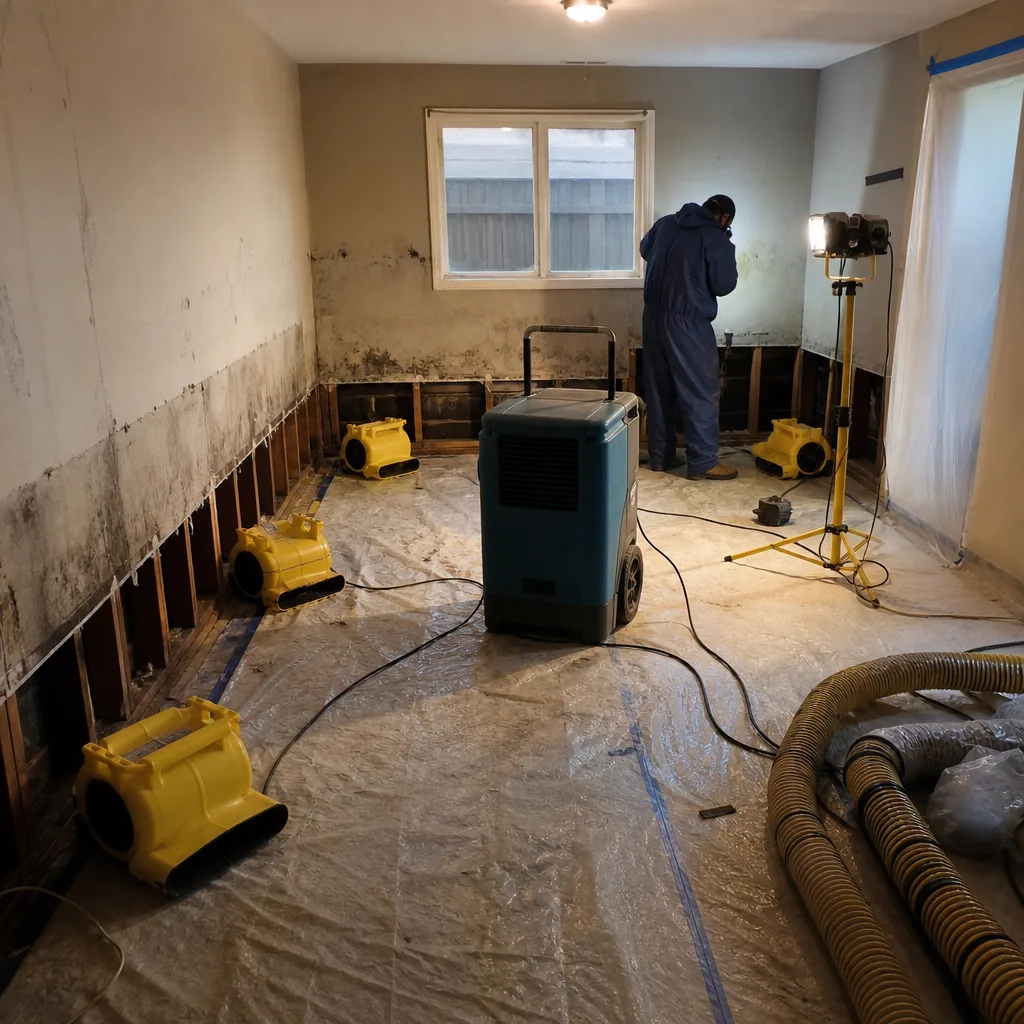
If you choose DIY mitigation, you must produce documentation that meets the same standard a professional would provide. This is not our standard. It is the standard that survives claim review. We’ve developed the following water damage restoration maintenance checklist for Puyallup homeowners based on twelve years of claim file analysis and our work with adjusters across Washington State.
- Initial assessment record
Before touching anything, photograph every affected surface from multiple angles. Include wide shots showing room context and close shots showing water lines, material saturation, and damage extent. Note the date, time, water source, and when the water was discovered. If the source was a supply line, record the line type (copper, PEX, galvanized) and approximate age if known.
- Moisture mapping
Using a pin or pinless moisture meter, take readings at minimum four points per room: one at the apparent center of damage, one at the perimeter, one at a point of suspected migration (base of wall, adjacent room), and one at an unaffected area for baseline comparison. Record each reading with location description. For wood framing, target dry standard is 12-16% moisture content. For drywall, 4% or less above baseline. Take readings daily at the same points until dry standard is achieved and maintained for 24 hours.
- Equipment deployment log
For every piece of equipment, record: manufacturer and model, rated capacity (pints per day for dehumidifiers, CFM for air movers), serial number if available, start date and time, daily run hours, and stop date and time. Photograph equipment placement in the room. Note any repositioning and the reason.
- Daily progress log
Each day, record: ambient temperature and relative humidity, moisture readings at all mapped points, equipment status, and visual observations. If readings are not declining, note the troubleshooting steps taken. A flat or rising moisture reading after 48 hours indicates a problem requiring professional intervention.
- Material disposal record
For any material removed, photograph before removal, record quantity and type, and document disposal method. If disposal requires special handling, such as carpet pad saturated with Category 2 water, retain disposal receipts.
- Final verification
Once dry standard is achieved, take final moisture readings and photographs showing affected materials at dry standard. Maintain all records for minimum three years, or the duration of your policy’s statute of limitations for claim filing, whichever is longer.
Most homeowners do not complete this documentation. Most do not own the required equipment. The moisture meter alone, a quality pin-type model calibrated to wood scale, costs $250-400, more than the daily rental of professional drying equipment in many cases. The time investment, 30-60 minutes daily for monitoring and recording, exceeds what most employed homeowners can sustain during a water damage event.
At DryMark Restoration Puyallup home, this documentation is produced automatically on every job. The photo record, drying log, and written scope are delivered to the homeowner and available to the adjuster within 24 hours of request. This is the documentation that turns restoration invoices into payable claims.
When DIY Always Costs More Than Professional Restoration
There are two scenarios where DIY restoration costs more than professional work on the first day, before any secondary damage occurs. These are not edge cases. They are common situations in Puyallup homes.
Scenario one: Category 2 or 3 water
Water damage is categorized by contamination level, not just source. Category 1 is clean water from a supply line. Category 2 is gray water with significant contamination, such as dishwasher discharge, washing machine overflow, or sump pump failure. Category 3 is black water: sewage, seawater, rising flood water, or water that has passed through structural materials picking up contaminants.
Category 2 and 3 water require personal protective equipment, antimicrobial treatment, and specialized disposal. A homeowner handling Category 2 water needs: nitrile gloves, N95 or P100 respirator, eye protection, disposable coveralls, antimicrobial solution rated for restoration use, and access to a disposal facility accepting contaminated materials. The equipment cost approaches $300-500. The disposal cost for saturated carpet and pad from a single room runs $150-250. The liability exposure, if contamination spreads or a family member becomes ill, is uninsured because standard homeowner’s policies exclude liability for self-performed work that causes bodily injury.
Professional mold remediation in Puyallup includes liability coverage, workers’ compensation, and documented chain-of-custody for contaminated materials. The homeowner pays the deductible either way. The professional route includes protection the DIY route cannot replicate.
Scenario two: Structural material involvement
When water affects subfloors, wall cavities, ceiling assemblies, or structural framing, DIY drying risks material warranty voidance and code compliance failure. Engineered wood products, common in Puyallup construction since 2010, have specific drying requirements documented by the manufacturer. Exceeding the recommended moisture exposure duration, or drying too rapidly and causing delamination, voids the structural warranty. Gypsum wallboard saturated beyond 48 hours requires removal per IICRC S500, not drying in place. Attempting to dry saturated insulation almost always fails and creates a mold reservoir.
The cost of replacing a compromised subfloor, or remediating mold in a wall cavity after failed DIY drying, exceeds the cost of professional mitigation on day one. We’ve documented this pattern in Puyallup’s McMillin area, where newer construction with engineered joists and open-plan designs allows rapid water migration across large areas. The homeowner who extracts visible water and assumes the subfloor will air dry often discovers, weeks later, that the OSB subfloor has swollen beyond tolerance, requiring full replacement of the floor system.
Mold Remediation: Why Washington Law Changes the Math
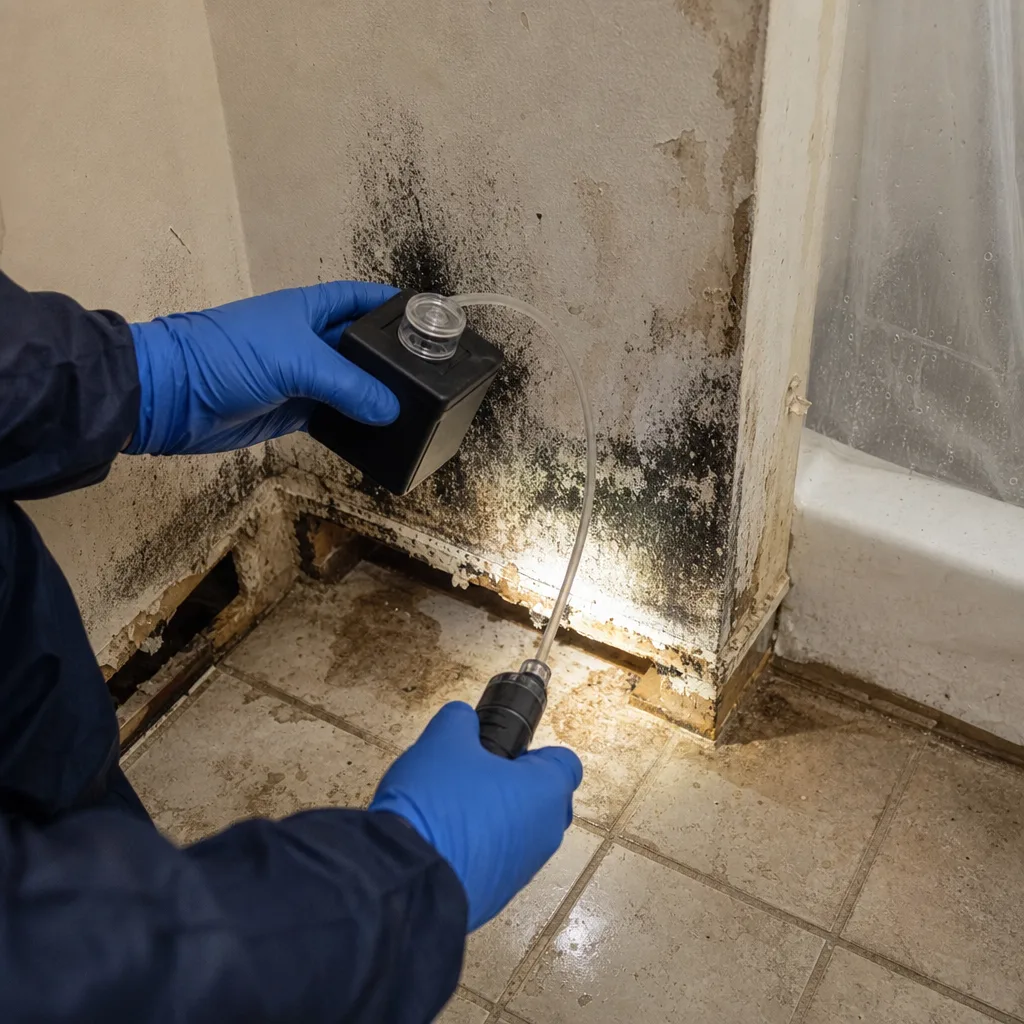
Washington State does not license mold remediators at the state level, but it does regulate mold assessment and remediation through the Washington State Department of Labor and Industries under worker protection standards. More significantly, many Puyallup-area insurers now require documentation of mold remediation methodology before approving mold-related claims, and some carriers maintain preferred vendor lists with specific documentation requirements.
The critical threshold for homeowners is 10 square feet of visible mold growth, the point at which EPA guidelines recommend professional remediation. This is not a legal requirement in Washington, but it is the standard that insurers reference when evaluating claims. A homeowner who remediates 15 square feet of mold without containment, negative air pressure, or post-remediation verification has created a documentation gap that supports claim denial.
Puyallup’s climate amplifies mold risk in specific ways. The Puyallup Valley’s cool, moist air settles into basements and crawl spaces, creating conditions where mold colonizes in 48-72 hours after water intrusion. South Hill homes with western exposures experience afternoon sun warming followed by rapid evening cooling, creating condensation cycles in wall cavities that sustain mold growth even after visible water is gone. Downtown Puyallup’s older homes, with balloon framing and minimal insulation, allow spore migration between floors through continuous wall cavities.
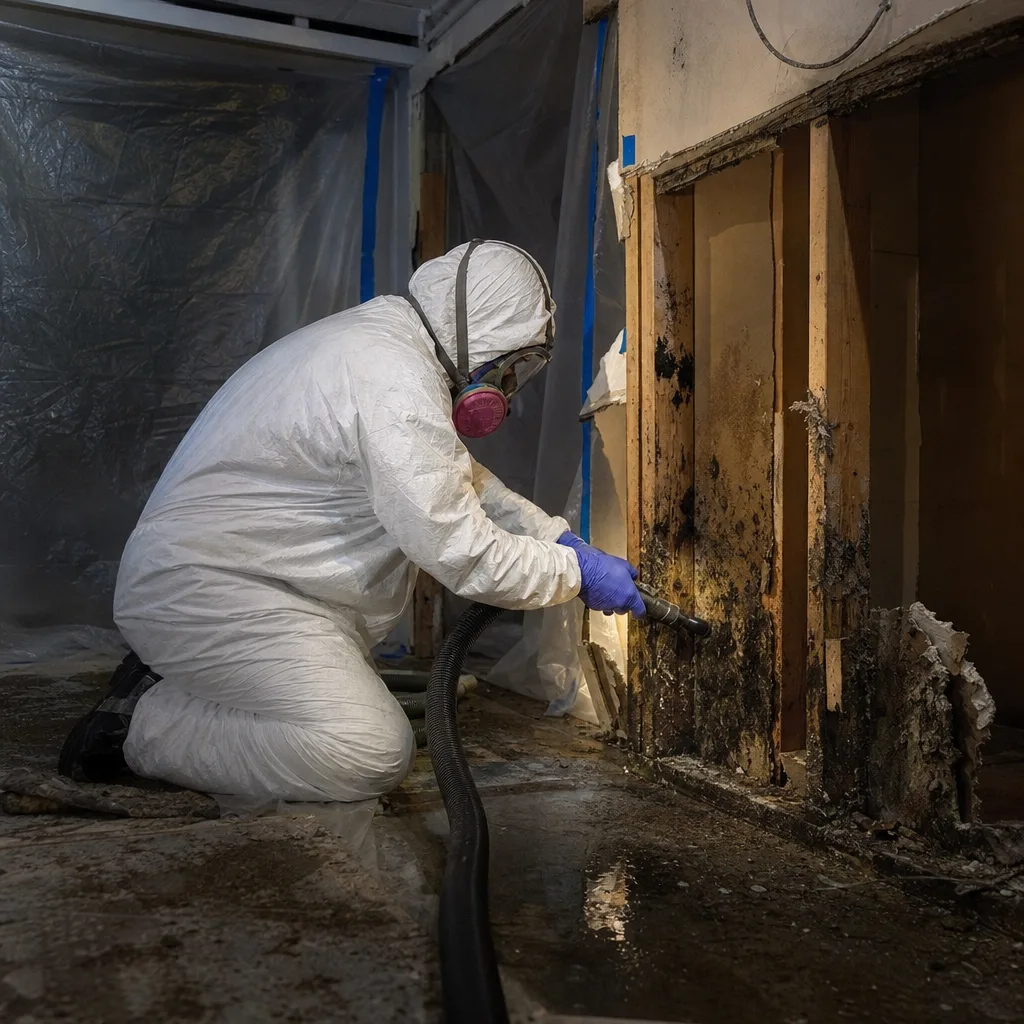
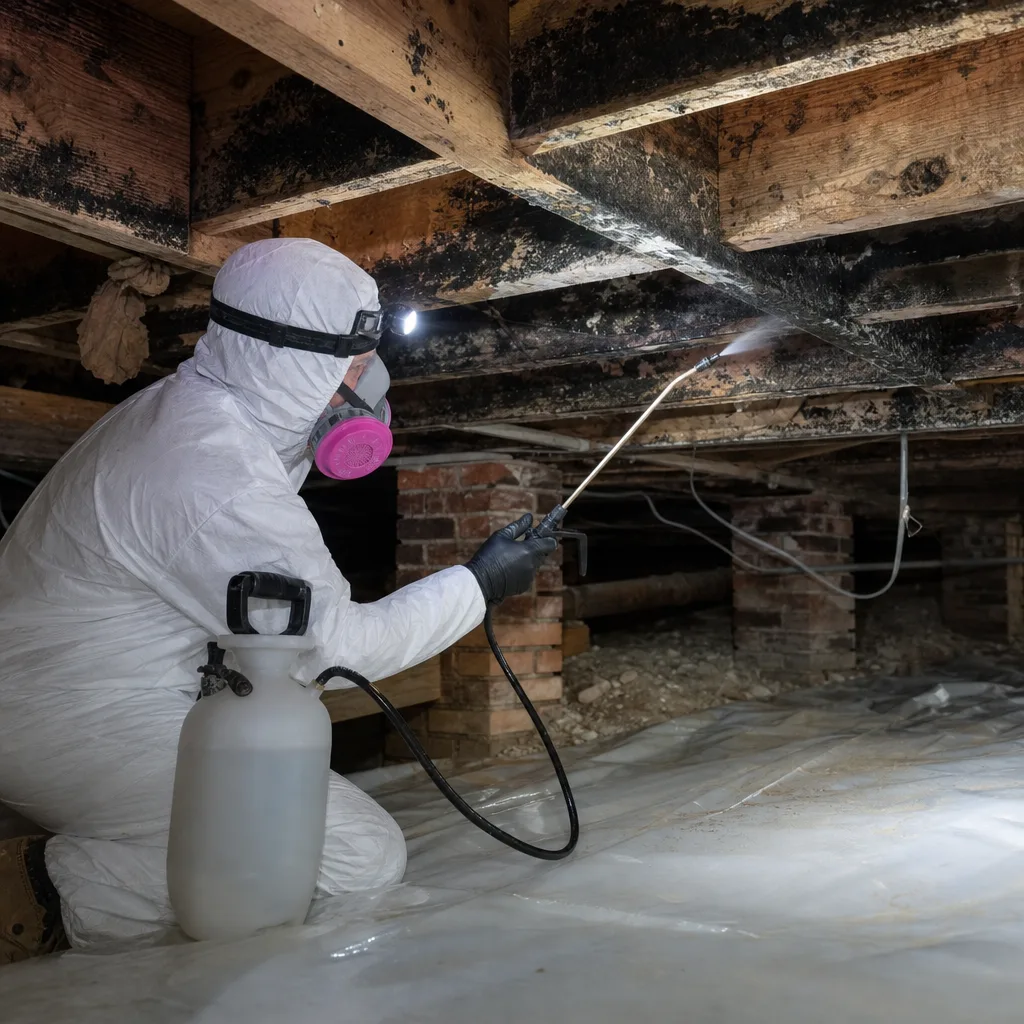
Professional mold remediation includes: containment with 6-mil polyethylene barriers, negative air pressure with HEPA filtration, antimicrobial treatment with EPA-registered products, removal of contaminated materials with bagging and sealed transport, and post-remediation verification including air sampling and moisture confirmation. The equipment alone, HEPA air scrubbers and negative air machines, costs $800-1,200 per week to rent. The training to use it effectively is not available to consumers.
We provide mold remediation in Puyallup with documentation to IICRC S520 standards, including a written scope before work begins, photo record on every visit, and post-remediation verification report. This documentation satisfies all major carriers serving Pierce County and is delivered under our 365-Day Done Right Promise.
Fire and Smoke Damage: No Viable DIY Path
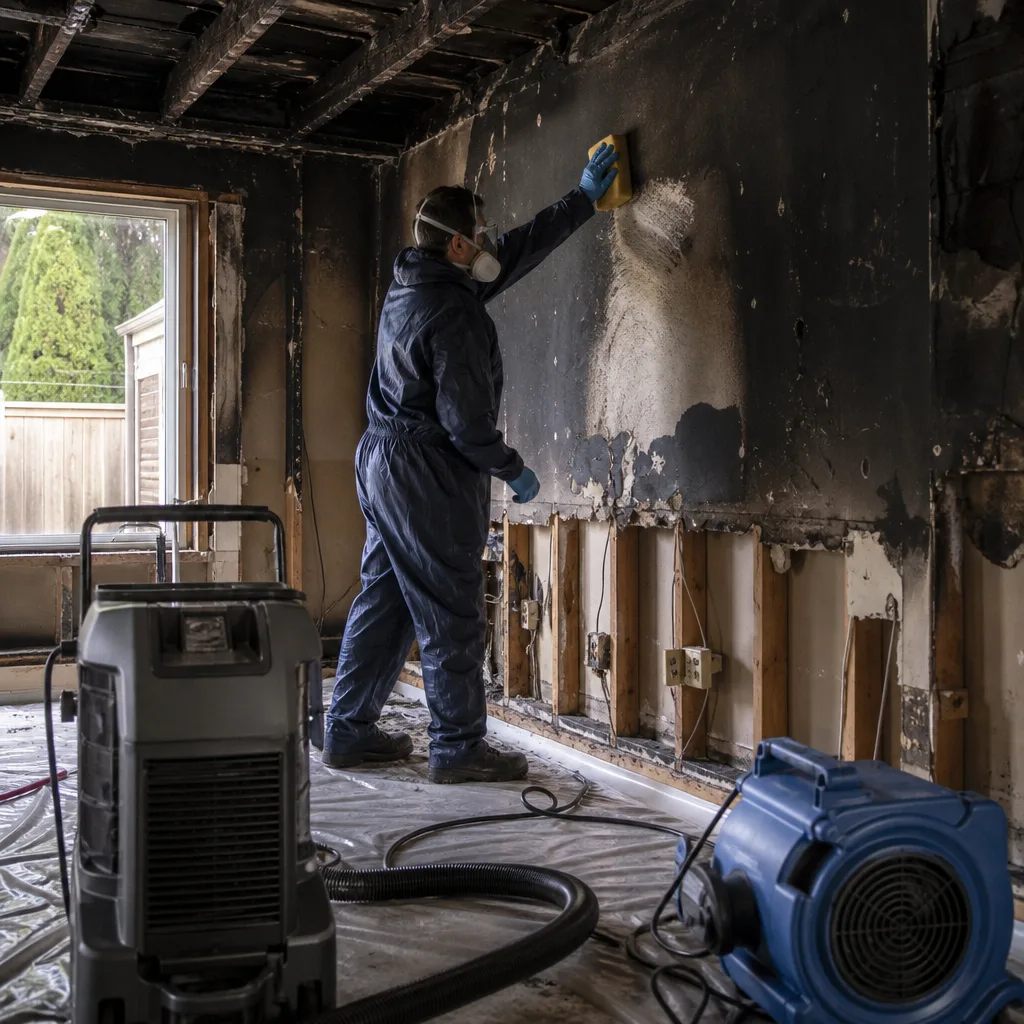
Fire and smoke damage restoration occupies a separate category from water damage because the damage mechanisms are chemical, not just physical. Smoke is not merely particles. It is a complex mixture of acids, gases, and particulate matter that continues to damage surfaces after the fire is out. The combustion of modern synthetic materials produces residues that require specific cleaning chemistry based on the fire type: protein fires from kitchen incidents, natural substance fires from wood or paper, and synthetic fires from plastics and petroleum products.
A homeowner cannot identify smoke residue type without training. Cannot select appropriate cleaning chemistry without residue identification. Cannot safely access structural areas compromised by fire without engineering evaluation. The safety considerations alone, including potential structural instability, electrical system compromise, and hidden ember pockets, make DIY fire restoration inadvisable in every case.
Documentation requirements for fire claims are also more extensive. Insurers require: inventory of damaged contents with pre-loss valuation, structural assessment by qualified party, smoke and odor mitigation plan with specified methods and products, and air quality verification before reoccupancy. These are professional services by definition.
In Puyallup, where many homes in the historic district and along the river corridor were built before modern fire codes, fire damage often reveals latent conditions: knob-and-tube wiring, balloon framing that acted as a chimney, or asbestos-containing materials in older construction. Disturbing these materials without proper abatement creates liability and health exposure that no homeowner should assume.
We handle fire and smoke damage restoration in Puyallup with technicians trained to IICRC S730 and RIA standards, using documentation protocols developed from our founder’s background in claims adjustment. Every job includes a written scope before work begins, photo record on every visit, and direct adjuster coordination.
A Clear Decision Framework for Puyallup Homeowners
After twelve years and more than 12,000 homes, we’ve refined the following decision rule. Explore more guides & resources for Puyallup homeowners dealing with damage restoration. It is not based on what a homeowner can attempt. It is based on what a homeowner can document and defend to an insurer.
DIY is viable only when all of the following are true:
- The water source is Category 1, clean water from a supply line or fixture overflow with no contamination
- The affected area is Class 1, less than 5% of surface area, with no porous material saturation
- The homeowner owns or can immediately acquire a calibrated moisture meter, dehumidifier with documented capacity, and air movers with documented CFM
- The homeowner can commit to 30-60 minutes daily for monitoring, recording, and documentation
- The homeowner understands the dry standards for affected materials and can verify achievement
- No structural materials are involved, no insulation is wet, and no water has migrated to adjacent spaces
- The homeowner maintains records for minimum three years
Professional restoration is indicated when any of the following are true:
- The water category is 2 or 3, or the source is unknown
- The damage class is 2, 3, or 4
- The affected area exceeds 10 square feet of porous material
- The water has been present more than 24 hours without active drying
- Structural materials, insulation, or wall cavities are involved
- The homeowner cannot produce moisture readings with date, time, and location documentation
- Mold is visible or suspected
- The damage resulted from fire, smoke, or requires biohazard handling
- The homeowner intends to file an insurance claim for any portion of the damage
This framework reflects the reality of Puyallup’s housing stock and climate. The South Hill’s newer homes with open plans and engineered materials experience rapid water migration that quickly escalates damage class. The valley’s older homes with basements and crawl spaces present humidity challenges that consumer equipment cannot overcome. The river corridor’s flood exposure introduces contamination risks that change water category without visible indication.
When professional work is indicated, the break-even calculation favors immediate engagement, not a failed DIY attempt first. Every day of inadequate drying extends the remediation scope. Every documentation gap increases claim risk. The homeowner who calls on day one pays the deductible and receives documented, warrantied work. The homeowner who calls on day fourteen pays the deductible, plus the cost of mold remediation, plus the potential cost of denied secondary-damage coverage, plus the delay in restoration completion.
Common Mistakes to Avoid
- Assuming visible dryness equals actual dryness. Surface dryness, confirmed by touch or visual inspection, means nothing for structural materials. We’ve measured 18% moisture content in wall framing that appeared completely dry to visual inspection in a Puyallup home on 94th Avenue. The mold colonized two weeks later.
- Renting equipment without understanding capacity ratings. A “commercial” dehumidifier at a rental center may be a consumer unit with cosmetic differences. Verify the pint-per-day rating at AHAM conditions (80°F, 60% RH) and at low grain conditions if available. If the rental center cannot provide this specification, the equipment is not suitable for structural drying.
- Failing to identify water category correctly. A dishwasher overflow that contained food waste is Category 2, not Category 1. A basement flood that passed through soil and landscaping is Category 3, regardless of how clear the water appeared. Category misclassification leads to inadequate sanitation and health exposure.
- Ignoring Puyallup’s specific humidity challenges. Running a dehumidifier in an unsealed space during a rain event is attempting to dehumidify the outdoors. Seal the affected area, run equipment continuously, and monitor ambient conditions. If ambient humidity exceeds 70%, consumer equipment cannot achieve the vapor pressure differential required for structural drying.
- Discarding materials without documentation. Every removed material is potential evidence in a claim dispute. Photograph before removal, record quantity and type, and retain disposal documentation. Insurers have denied claims for “excessive” removal where the homeowner could not demonstrate the material was unsalvageable.
- Delaying the decision while researching. The first 24-48 hours determine the damage trajectory. If you are uncertain whether DIY is appropriate, the uncertainty itself is an indicator. Professional assessment, including our free second opinion on any competitor’s written estimate, provides clarity without commitment.
- Accepting verbal assurances about coverage. Your agent’s verbal statement that “DIY should be fine” is not binding on the claims department. Documentation requirements are enforced by adjusters, not agents. Obtain the specific documentation requirements in writing before proceeding with DIY mitigation.
When to Call a Professional
Call a professional when any condition in the decision framework’s professional-indication list applies. Call immediately when water is still flowing, when electrical systems are involved, when structural integrity is uncertain, or when any occupant has respiratory conditions that could be aggravated by mold or particulate exposure.
In Puyallup, where winter storms overwhelm drainage systems and spring snowmelt raises the Puyallup River, water damage does not wait for convenient timing. The documentation you produce in the first 24 hours determines whether your claim is paid or disputed six months later.
DryMark Restoration Puyallup offers free estimates in Puyallup. Our live phone coverage answers every call, 24 hours a day, 7 days a week, with no voicemail on emergency lines. Every job is quoted in writing before work begins, Haven Standard, Clause 1, with a photo record on every visit and the 365-Day Done Right Promise. We also provide a Free Second Opinion on any competitor’s written estimate at no charge. Call (253) 447-5249.
Frequently Asked Questions
Washington standard homeowner’s policies do not exclude DIY remediation, but they require prompt mitigation with documentation of what was done. A homeowner who cannot produce moisture readings, equipment logs, and before-and-after photos keyed to a floor plan risks denial of secondary-damage claims. Most carriers prefer professional documentation because it reduces claim disputes. Call (253) 447-5249 for a free estimate - our documentation satisfies all major carrier requirements.
Our live dispatch answers every call immediately, and emergency response for active water damage is available across Puyallup including South Hill, downtown, and the river corridor areas. Response time depends on current call volume and weather conditions, but we do not use voicemail trees or next-business-day callbacks for active water damage. For reconstruction and non-emergency work, we schedule in writing after scope development, not on an emergency dispatch basis.
Cleaning addresses visible contamination on surfaces. Remediation addresses contamination that has penetrated materials or established biological growth. If moisture readings indicate material saturation beyond surface level, or if mold is visible on more than 10 square feet, cleaning is insufficient and remediation is required. The determination is made by moisture measurement and material assessment, not visual inspection alone. We provide written scope before any work begins so you know exactly which category applies.
We coordinate directly with your adjuster, providing the photo record, drying logs, and written scope in the format their department requires. Our documentation is developed to IICRC, RIA, and IFA standards and has been reviewed by adjusters from every major carrier serving Pierce County. You remain the policyholder and decision-maker; we handle the documentation burden that turns your restoration invoice into a payable claim.
Costs vary by damage class, affected square footage, and material types. Class 1 water damage in a single room with tile flooring typically ranges $1,200-$2,500 including extraction, drying equipment, and documentation. Class 2 damage with carpet and pad replacement extends to $3,500-$6,000. Class 3 and 4 damage involving structural materials, cavity drying, or controlled demolition ranges $5,000-$15,000 or more depending on scope. Every job receives a written price before work begins, Haven Standard, Clause 1, with no scope-creep additions. Call (253) 447-5249 for an exact quote - estimates are free.
We can assume work at any point, but the documentation gap created by the DIY period may affect claim coverage for secondary damage. The most expensive scenario we see is the homeowner who extracts visible water, runs inadequate equipment for three days, then calls when mold appears or odors persist. At that point, the scope includes mold remediation, material replacement, and potential claim disputes over whether the initial DIY period contributed to the secondary damage. Early professional engagement prevents this escalation. We also offer a Free Second Opinion on any competitor’s written estimate if you’ve received another quote.
The Bottom Line
The DIY versus professional restoration decision is not primarily about cost or capability. It is about documentation: the evidence that proves mitigation occurred, that materials reached dry standard, and that secondary damage was prevented rather than caused. In Puyallup’s humid climate, with construction types that range from historic balloon framing to modern engineered materials, the equipment gap between consumer and professional tools is decisive. The documentation gap between assumed and proven drying is what costs homeowners their claims.
If your damage meets all seven criteria for viable DIY, proceed with the documentation checklist and maintain records for three years. If any criterion is not met, professional restoration costs less on the first day when you account for equipment capability, documentation requirements, and warranty preservation. The Haven Standard exists precisely because we’ve seen what documentation gaps cost homeowners, and we built our company to eliminate them.
Written by Alicia Brennan, Owner at DryMark Restoration Puyallup, serving Puyallup since 2011.